




You are viewing 1 of your 2 free articles
Analysis: Share price falls reflect fears over length of war
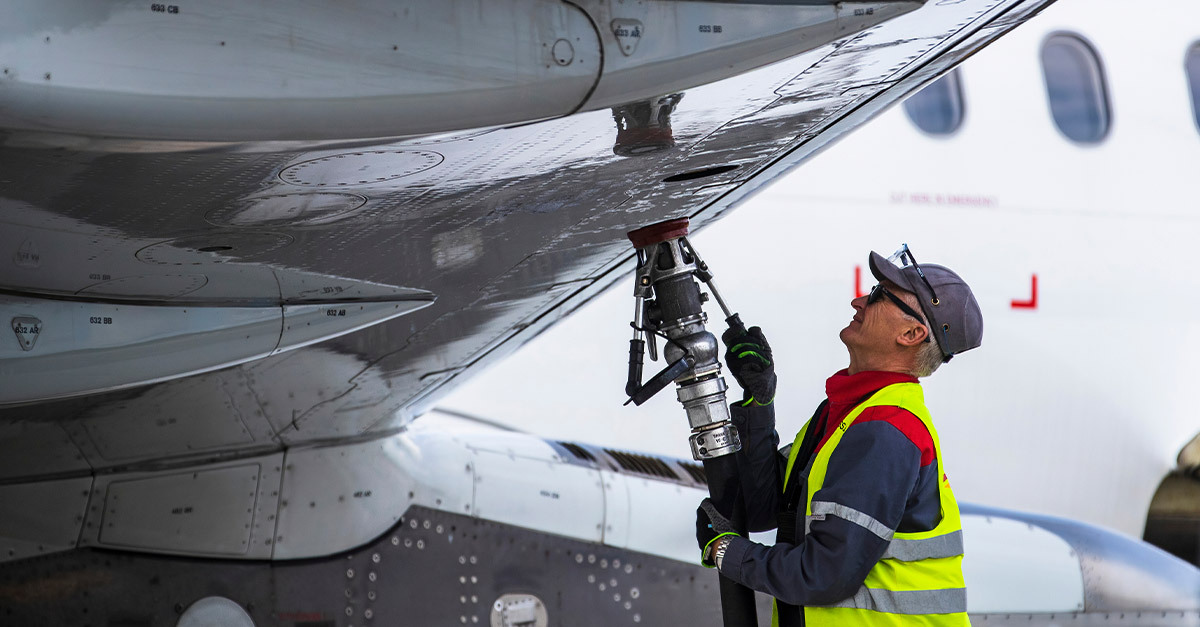
The impact of the Iran conflict on the price of oil and jet fuel is a threat not only to the travel industry but to the global economy, says Ian Taylor

A sharp decline in the share values of airline and travel groups reflects growing concern at the impact of the Gulf war on the price of oil and jet fuel.
The oil price was back above $100 a barrel on Tuesday, up from about $60 in late February, while the price of jet fuel has almost doubled since the war began.
EasyJet’s share price was down 24% on Monday, British Airways owner IAG was 23% down, Air France-KLM 33% and Jet2 17% down.
Tui shares had fallen 17% and On the Beach 20%. Wizz Air has been hit by a wave of short selling, where traders look to profit from a falling share price, after it issued a profit warning and main investor Indigo Partners sold a 10% stake.
The airline warned the war would cost it €50 million this month, tipping it into an annual loss. There are also fears jet fuel supplies could be hit. Iata area manager for the UK and Ireland Lara Maughan highlighted the flow of fuel as a “major concern” last week.
Speaking at the Corporate Travel Summit in London, she noted 25%-30% of jet fuel in Europe comes from the Gulf and said: “Are we going to see enough jet fuel? It’s a critical issue. The longer the war goes on, the bigger the issues we’ll have. Some airlines are hedged, but all are exposed to the pricing.”
Major US carriers face a more than $11 billion hit already as, unlike most European carriers, they don’t hedge by agreeing to buy fuel at prices set months in advance.
The US government now forecasts an average jet fuel price this year of $2.67 a gallon, 37% up on its February estimate, implying added costs of $11.6 billion.
However, Iata reports jet fuel in Europe averaged $4.57 a gallon, or $192 a barrel, last week.
United chief executive Scott Kirby warned within days of the war starting that the fuel price would have a “quick” impact on fares.
BA partner American Airlines has warned every $0.01-per-gallon increase in the fuel price will add $50 million in costs. Most airlines in Europe are well hedged for the next few months, but the higher prices will feed through eventually.
Institute of Directors chief economist Anna Leach, who also addressed the Corporate Travel Summit, warned there could be “permanent” effects on the costs of oil and insurance depending on “the nature of the peace that comes out” of the war and whether “risk is judged to be permanently higher”.
Deloitte chief economist Ian Stewart warned this week: “The risks to the global economy are mounting. A month or two with oil at $100 per barrel would probably be manageable. If oil got too much over $120 and threatened to stay there, the risks would mount significantly.”
More Content













Jacobs Media is a company registered in England and Wales, company number 08713328. 3rd Floor, 52 Grosvenor Gardens, London SW1W 0AU
© 2025 Jacobs Media
