




You are viewing 1 of your 2 free articles
Meet the locals living along Hurtigruten's iconic Svalbard Line
Could a cruise actually be the best way to connect with local culture?

Click here to download and save as a PDF
"It’s like being at the end of the world. One way, there’s just nothing; the other, all you see is land.” My guide, Ramona Remmen, has perfectly articulated my sense of wonder while looking out at the slate-coloured vastness of the Norwegian Sea.
We’re mid-tour of her home island of Sanna, just 1.2 square miles and the largest in the Træna archipelago, a collection of islands bordering the Arctic Circle. Sanna is one of seven ports on Hurtigruten’s northbound Svalbard Line, which sails from Bergen to Longyearbyen.
An archaeology graduate and now director of Træna Museum, Ramona is keen to share the secrets of her remote homeland. She proudly points out an old Nato coastal radar station perched on the highest of Træna’s outcrops, and lauds the region’s hiking.
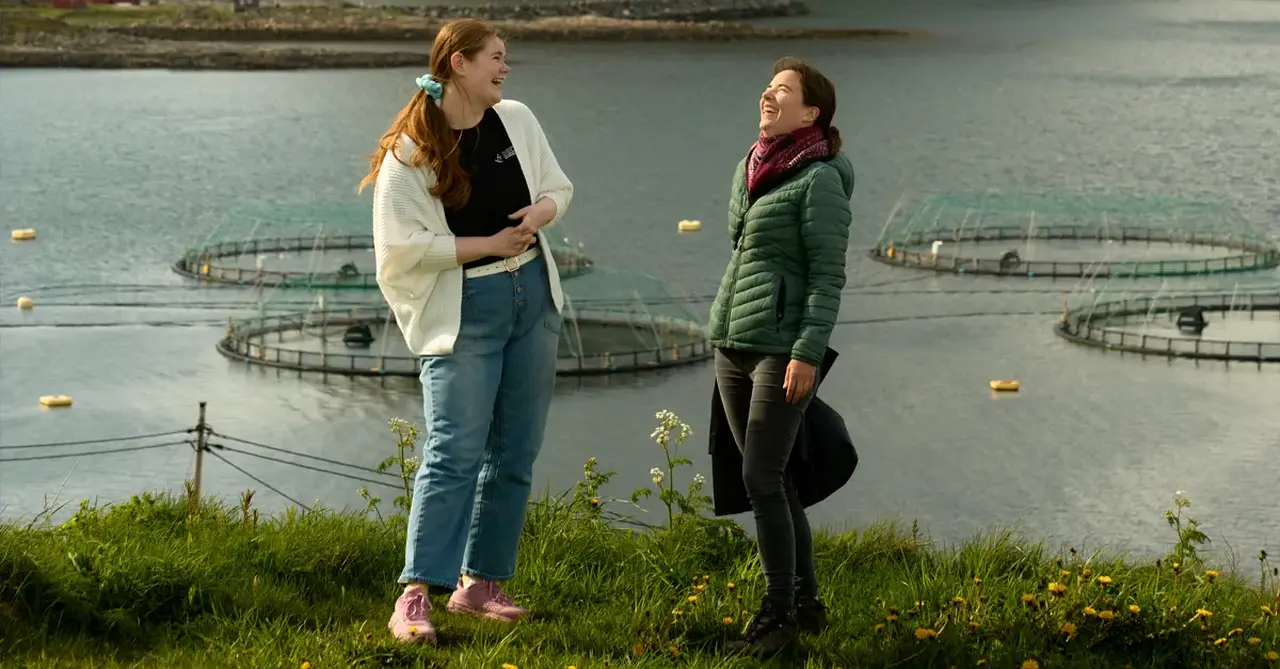
Writer Ally Wybrew (right) with Sanna guide Ramona Remmen at a seaweed farm. Image credit: Max Emanuelson.
Sustainable shore excursions
Though Ramona could hardly seem more enthusiastic to have us, it’s difficult to ignore the fact that my ship’s arrival has just deposited as many visitors on the islet as residents who live in the entire archipelago. Do locals really welcome 500 curious new faces, or are we just a nuisance?
“I think [cruise visits] have contributed to a wider sense of acceptance towards tourism as a business,” Ramona says as we stroll down the hillside back to town.
“Communication and information are the key. Making money off the tourism industry can quickly turn to mistrust, [but] there’s a lot of transparency.”
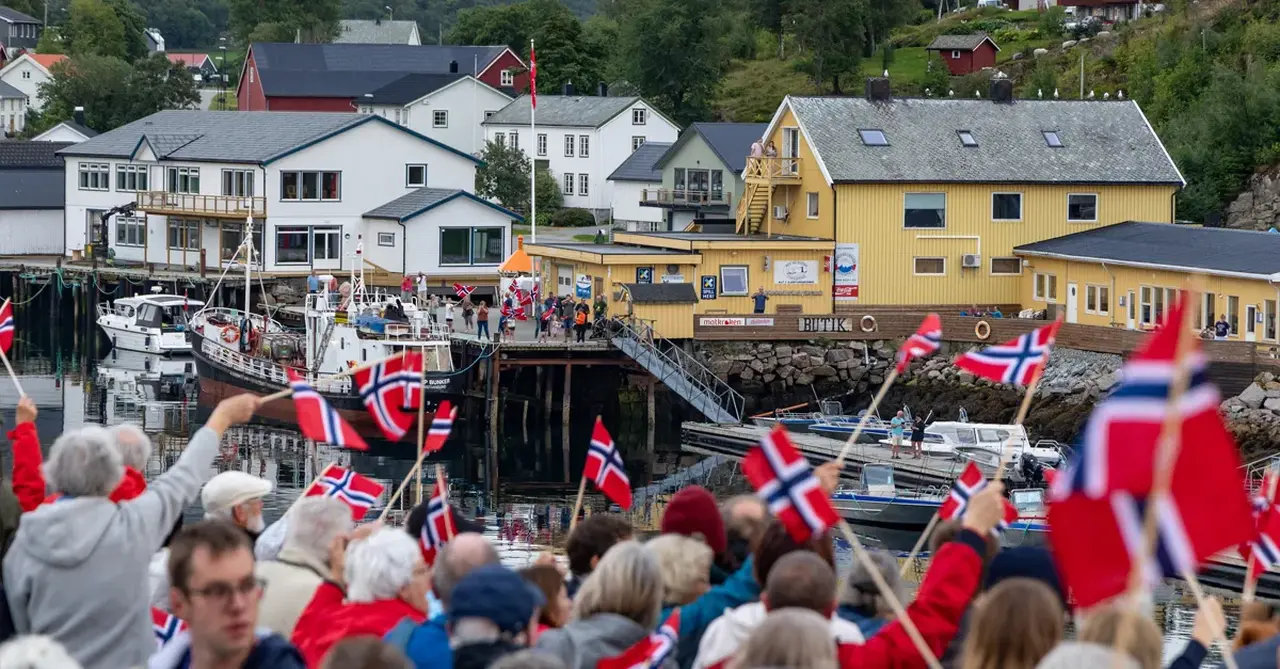
Bessaker, one of the villages in Hurtigruten’s Open Village excursion programme. Image credit: Michel Afflerbach/Hurtigruten.
She explains how the Træna tourism coordinator posts on Facebook when a ship is coming in, how many guests it’s carrying, what languages they speak and how long it’s staying in port.
They also publicly report the income the municipality makes as a result of each docking, something Ramona stresses is “very important for [locals] to see – so that we’re not being ogled at for no reason”.
Hurtigruten’s visits to Træna are part of the company’s Open Village concept, which aims to show guests rural Norwegian life by offering free excursions to lesser-visited villages such as Træna, Bessaker and Sæbø, while simultaneously connecting these outposts with the wider Norwegian economy.
Between explaining the nuances of archipelago life – being the only one in her year at school, why dating is a challenge and how hospital access works – Ramona recounts how she initially faced scepticism from residents worried about preparing products for 500 arrivals, then selling only a few.
In response, the municipality established grants to help local businesses mitigate the risk, and Hurtigruten pays about £19 per guest to each community every time it docks.
Few other cruise companies visit Træna, and when they do it’s only once or twice a season, so this location – with sweeping views, sightings of whales and orcas, plus meals of freshly caught shrimp and buttery flatbread lefse – is almost exclusively the preserve of Hurtigruten guests.
It’s hard to imagine other cruise lines negotiating not only this kind of access, but also the warm welcome that comes with it. That has been earned through a 133-year history serving this region via The Coastal Express, connecting Norwegian coastal communities with passenger and cargo traffic as well as delivering mail, medication and export goods.
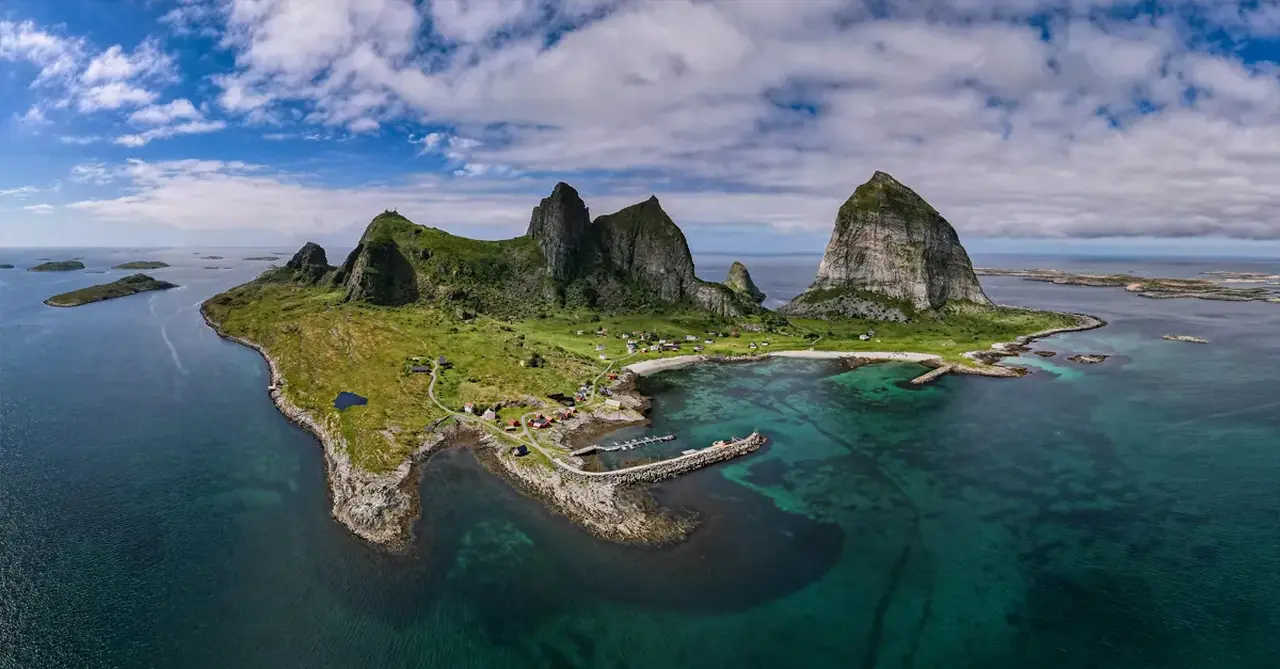
Sanna, Norway. Image credit: Michel Afflerbach/Hurtigruten.
Food on board Hurtigruten
It’s not just the excursions that feel authentic on this Signature Line sailing, part of Hurtigruten’s premium product, but the onboard experience too.
The gastronomic offering is forged around Norway’s Coastal Kitchen, a concept centred on hyper-local produce, close relationships with regional suppliers and menus designed around the regions visited on the route. On Trollfjord, three restaurants – Flora, Røst and Brasserie Árran – demonstrate this to delectable effect.
Diners at Brasserie Árran are greeted by the sight of glass cabinets of hanging reindeer meat and tanks housing king crabs. The menu features Norwegian classics such as gammelsteik (‘old steak’ – an aged roast reflecting the long curing process involved), Arctic char (a mild, red-fleshed fish sustainably farmed by Sigerfjord Fisk) and butare (a seaweed also known as wakame), a key ingredient in Norway’s surprising culinary scene.
As much as possible is locally sourced. In 2025, Hurtigruten procured up to 80% of its food from 85 Norwegian suppliers, while 62% of beverage offerings were also Norwegian – a figure that jumps to 90% if you discount wine. These drinks were obtained from 36 producers along the route.
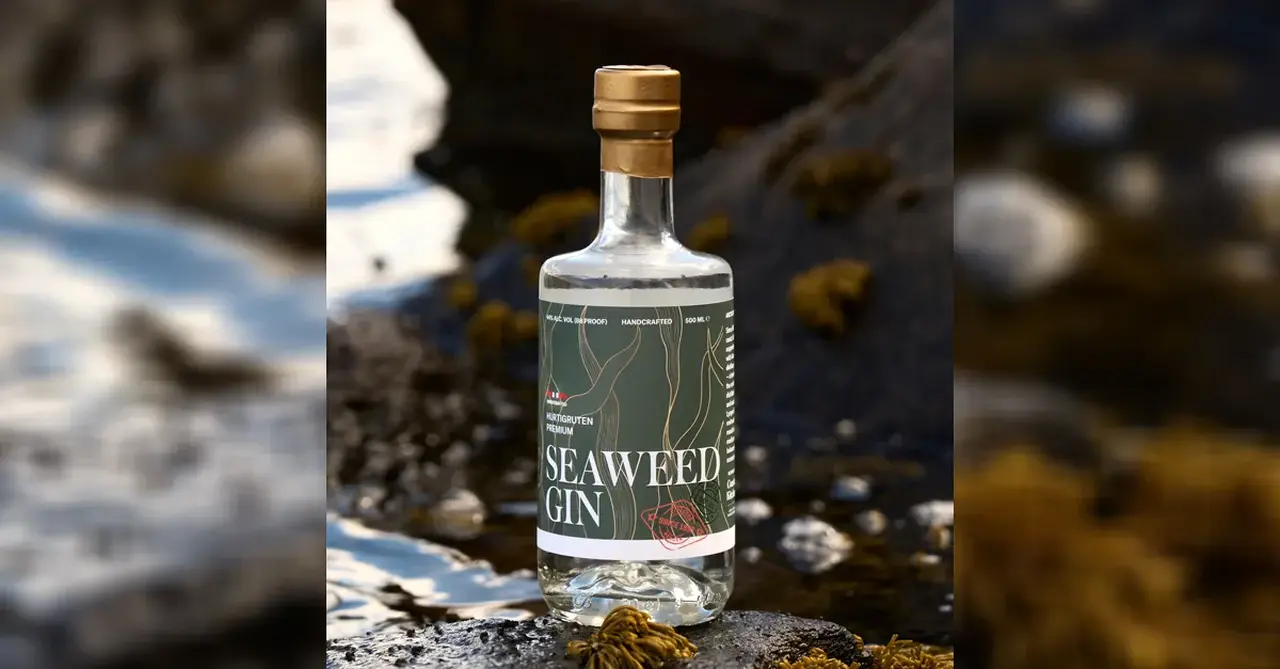
Aurora Spirit’s gin, made exclusively for Hurtigruten. Image credit: Max Emanuelson.
“I usually say we’re the angel investor of many small producers,” says Hurtigruten’s culinary director, Øistein Nilsen. “When they get a contract with us, we buy almost all their first and second-year stock, which means they can invest more. These communities welcome us because we’re there year-round.”
A case in point is Bivrost, a spirit brand produced at Aurora Spirit Distillery in Lyngseidet – the world’s most northerly distillery. Owner and manager Tor Petter W Christensen has been creating products for Hurtigruten since 2017, manufacturing tipples such as Bivrost Seaweed Gin and Hurtigruten Premium Aquavit, and supplying other spirits across the fleet.
Christensen says the Hurtigruten partnership has “helped introduce Bivrost to an international audience that seeks authentic experiences”, but it’s also a relationship built on a shared philosophy.
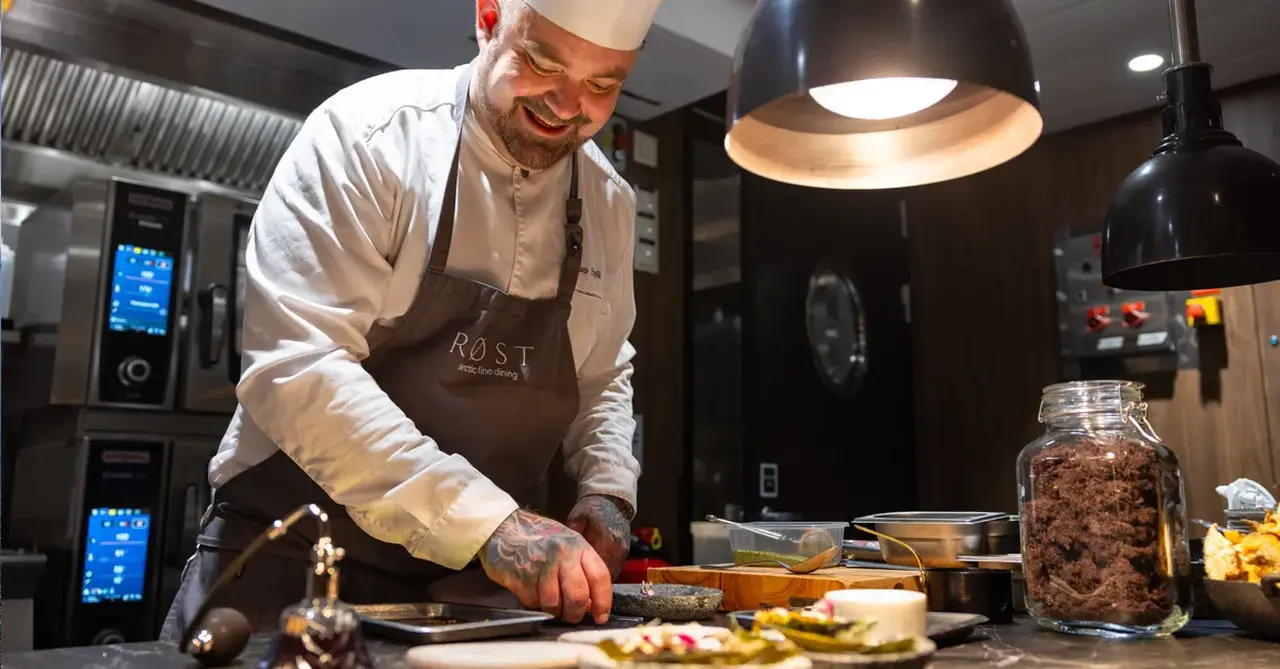
Meal prep at Røst restaurant on Trollfjord. Image credit: Espen Mills.
“As a company that has connected communities along the Norwegian coast for more than a century, Hurtigruten represents many of the same values we seek to express through our spirits: authenticity, craftsmanship, exploration and a strong connection to the Arctic region,” he says.
After a week on Trollfjord, it’s clear Hurtigruten comes as close to having a symbiotic relationship with local communities as it may be possible for a cruise company to get. In fact, I understand better now why the company prefers the term voyages to cruises.
The sailing was utterly cruise-worthy – leisurely, luxurious and with a feeling of exclusivity – but was truly a voyage through Norwegian culture, and an adventure intrinsically connected to the destination in a way I’ve yet to experience elsewhere.
Book it
Hurtigruten offers a 15-day round-trip voyage on its Svalbard Line sailing between Bergen and Svalbard, calling at 14 ports. Departures in May 2027 on Trollfjord or Midnatsol (varies by date) cost from £3,794 per person, based on two people sharing, and include all meals.
hurtigruten.com
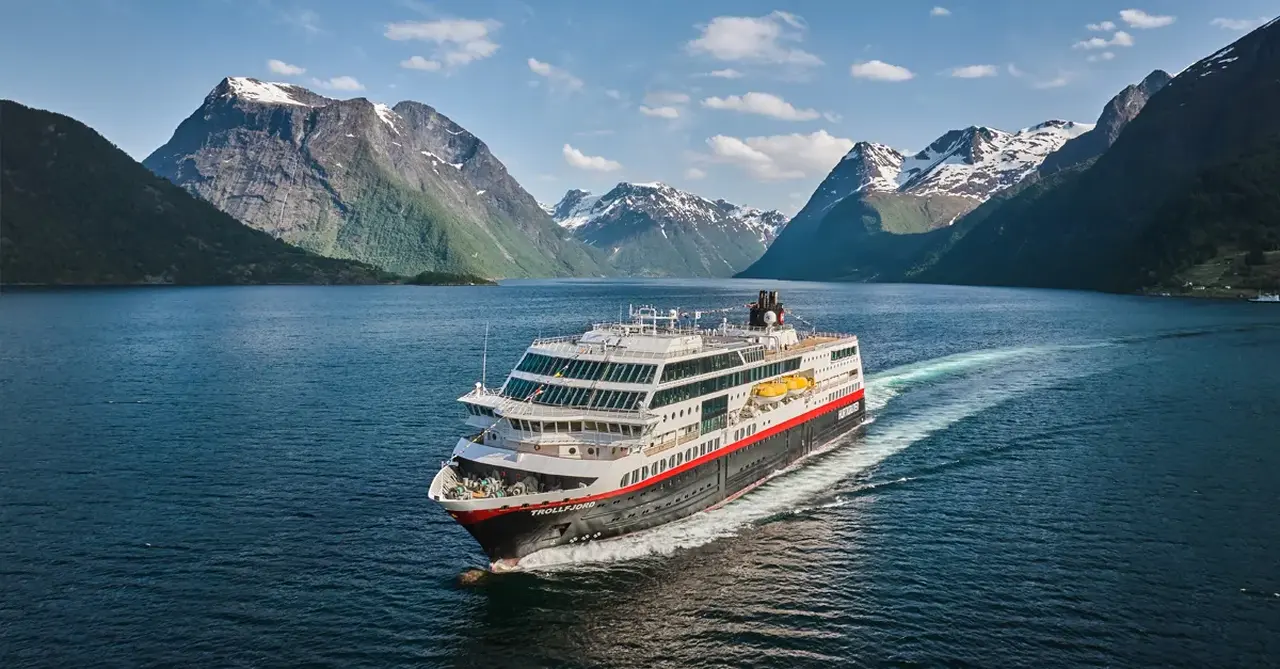
Hurtigruten’s Trollfjord. Image credit: Kristian Dale.
Hurtigruten’s environmental targets
Hurtigruten’s sustainability targets include building a ‘Sea Zero’ ship, capable of operating with zero emissions during normal service, using batteries as its main energy source.
But while that might feel like a lofty aspiration, some efforts are more grounded, such as reducing waste – in 2025, food waste from passengers was down 6% to about 60g per person – and creating memorable experiences for guests.
On the seven-day Culinary Voyage, guests enjoy a gastronomic tour of the Norwegian coastline, visiting a seaweed farm, female-run distillery and Arctic brewery, along with a visit to Myklevik Gård farm in Stamsund.
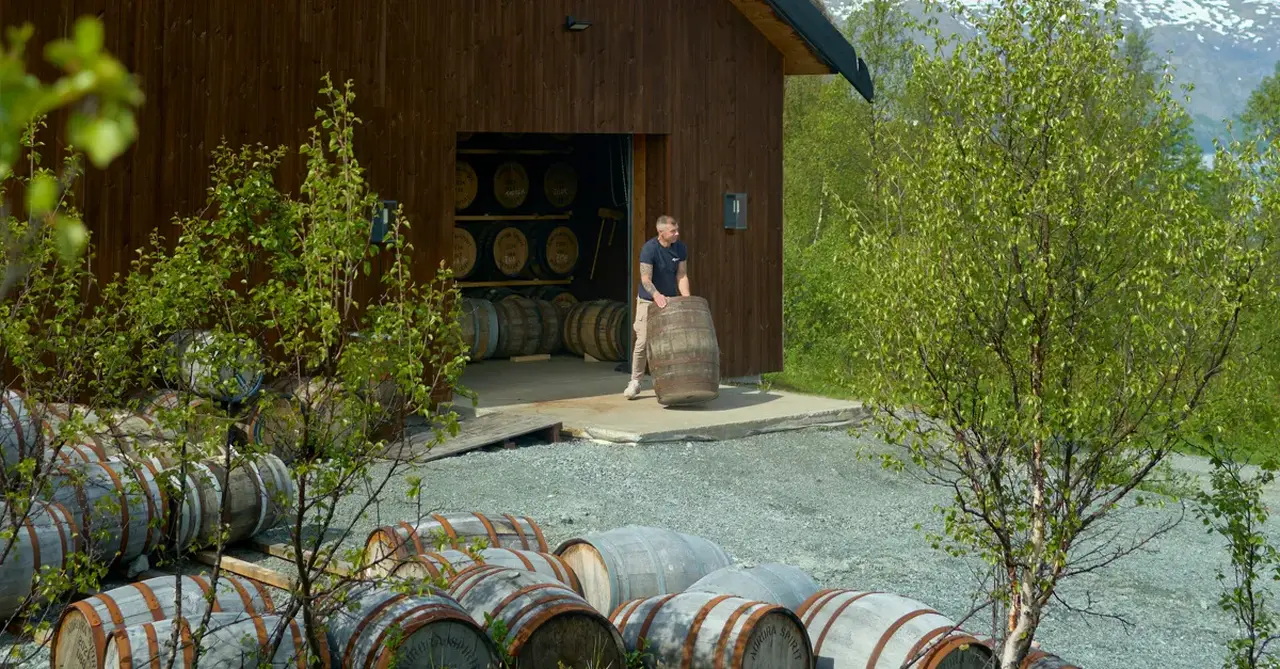
Aurora Spirit Distillery in Lyngseidet. Image credit: Max Emanuelson.
Each time a Hurtigruten ship docks in Stamsund, guests’ food waste is collected by farm owners Åshild and Gisle, put into a special reactor and transformed into nutrient-rich compost within 24 hours.
This in turn is used to produce food that Hurtigruten buys back from the farm. As Hurtigruten’s culinary director Øistein Nilsen puts it: “We’re making food people want, from food nobody wants.”
Meanwhile, visitors can tour the farm, meet the owners and tuck in to a family-style dinner made from foraged and locally grown ingredients, knowing they’re supporting a local business along the way.
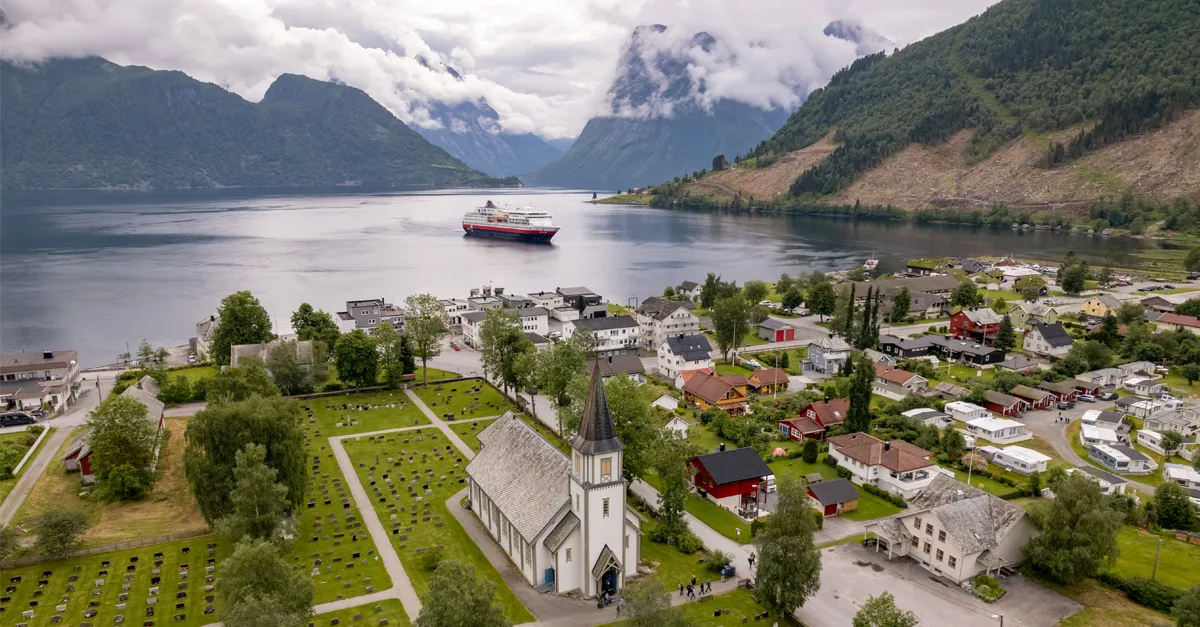
Lead image: A Hurtigruten ship moored at Sæbø in Hjørundfjord. Image credit: Michel Afflerbach/Hurtigruten
Related Content






Jacobs Media is a company registered in England and Wales, company number 08713328. 3rd Floor, 52 Grosvenor Gardens, London SW1W 0AU
© 2025 Jacobs Media
