




You are viewing 1 of your 2 free articles
Why this lesser-known part of Route 66 is now even easier to reach
With a new flight to St Louis and the centenary of Route 66, a lesser-known stretch of the Mother Road in Missouri is worth exploring

Click here to download and save as a PDF
The door slams and our tiny, capsule‑like carriage shakes. Heads ducked, we bump our way up the Ferris wheel‑style contraption, ascending 192m into the sky to reach our destination: the peak of the Gateway Arch, the tallest monument in the US.
More than twice the height of the Statue of Liberty, this is the landmark of St Louis. Arching over the city like a shiny metal rainbow, it’s drawn visitors since opening in the 1960s, and still uses its original, rather rickety, white tram carriages to shuttle them to the top.
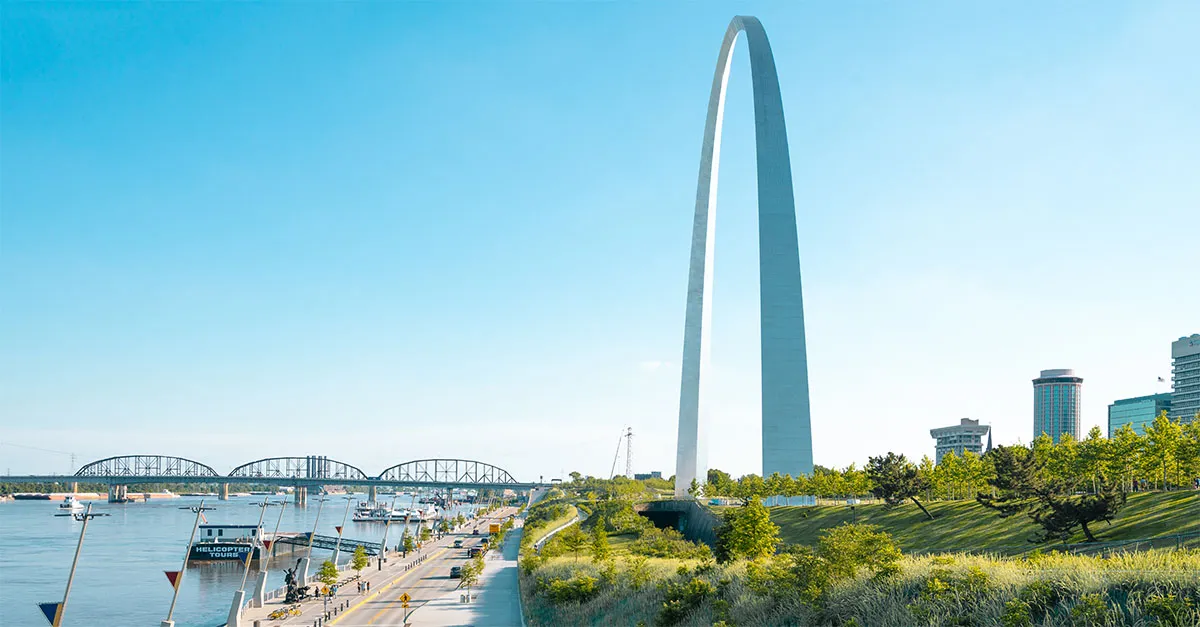
Gateway Arch, St Louis. Image credit: Aaron Fuhrman/Missouri Division of Tourism
It’s certainly an adventure, but it’s about more than just the views. Built to signify the role of St Louis as a gateway to the west, this has been a mainstay on Route 66 for decades, and marks the start of my trip along Missouri’s 300-mile section of the ‘Mother Road’.
I’m here to explore a lesser-known stretch of this legendary, 2,500-mile route, which meanders from Chicago all the way to Santa Monica, as it marks its 100th anniversary this year – and as British Airways gears up for its first non-stop service to St Louis, starting in April. I find myself enamoured with the sense of nostalgia it brings as I discover there’s a lot more to this oft-overlooked Midwestern state.
History of Route 66
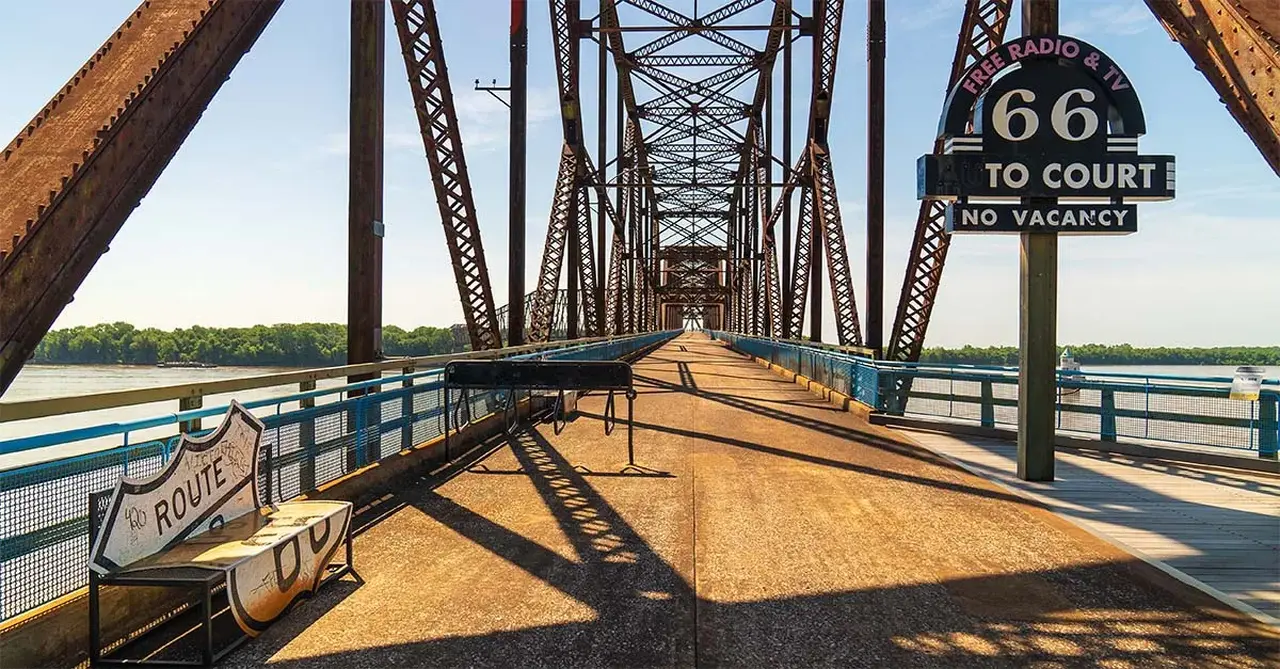
Our journey begins at the Old Chain of Rocks Bridge (pictured main) in St Louis. First opened in 1929, this now-pedestrianised crossing is a feat of engineering, famed for its unusual 22-degree bend midway over the Mississippi River.
Its chocolate-brown steel beams have been a landmark for Route 66 travellers since the 1930s, when many fled west in the wake of the Great Depression and the huge dust storms that ravaged farms across the region, known as the Dust Bowl. This westward migration helped to cement the Mother Road’s reputation in popular culture as the pathway to prosperity.
“This is where travellers would cross in search of a new life in California,” says Cat Neville, vice-president of communications at Explore St Louis. “For many, it was a symbol of hope.”
We glean more insights into the history of the route as we cross the state: how it flourished with the boom in car ownership, bolstered by a post-war freedom; how it marked the birth of widespread domestic travel, while also enabling bank-robbing gangsters like Bonnie and Clyde to make their rapid escapes; how it gradually fell into decline with the launch of the Interstate Highway System in 1956; and how it was eventually revived as a nostalgic route for travellers from across the world.
Things to do in St Louis, Missouri
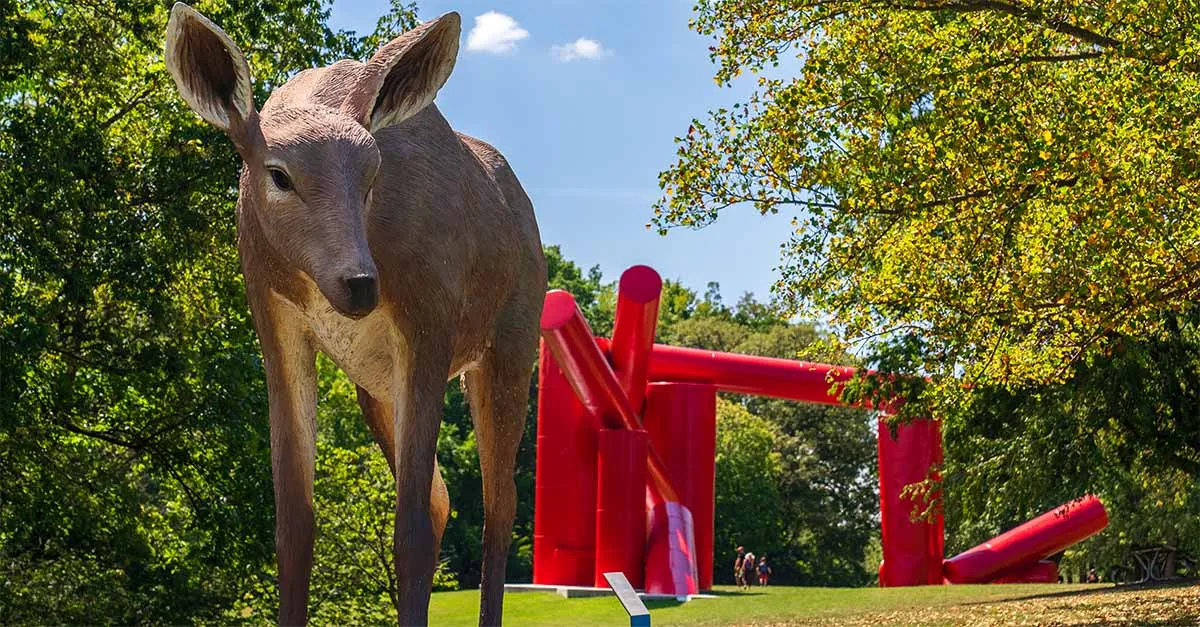
Laumeier Sculpture Park. Image credit: Mark Hermes/Explore St. Louis
On a tour of the National Museum of Transportation in St Louis, we see the types of cars that would have journeyed along the ‘Main Street of America’ in its golden era – from a 1927 Ford Model T to an orange Chrysler worth £1.5 million.
But it’s the quirky roadside attractions, 1930s motels, small rural towns and historic drive-in diners that really have me enchanted. Just outside St Louis, there’s the Laumeier Sculpture Park, a sprawling plot of landscaped greenery dotted with art installations.
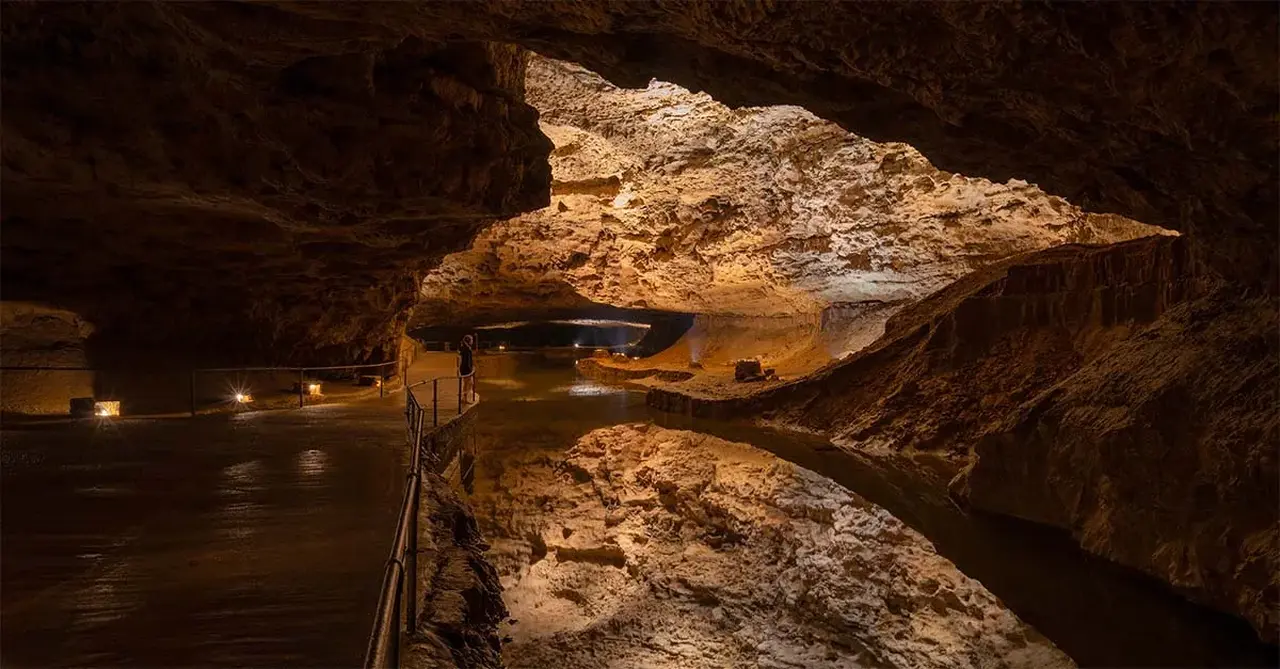
Meramec Caverns, Missouri. Image credit: Aaron Fuhrman/Missouri Division of Tourism
From here, we continue to the Meramec Caverns, a labyrinth of underground caves first opened as a Route 66 attraction in 1933. Glittering stalagmites rise up like tiny castles between its inky pools while water droplets trickle gently down the walls, making it an atmospheric setting for several films and even TV classic Lassie.
Route 66 Neon Park. Image credit: Aaron Fuhrman/Missouri Division of Tourism
Next come the Ozark Mountains, passing small towns such as Cuba and Waynesville, where artist Jax Welborn leads us along a street lined with old-fashioned shops. “I think of Route 66 as one big, 2,500-mile national park,” she says. “It’s the people that really keep it alive, and everybody here supports each other.”
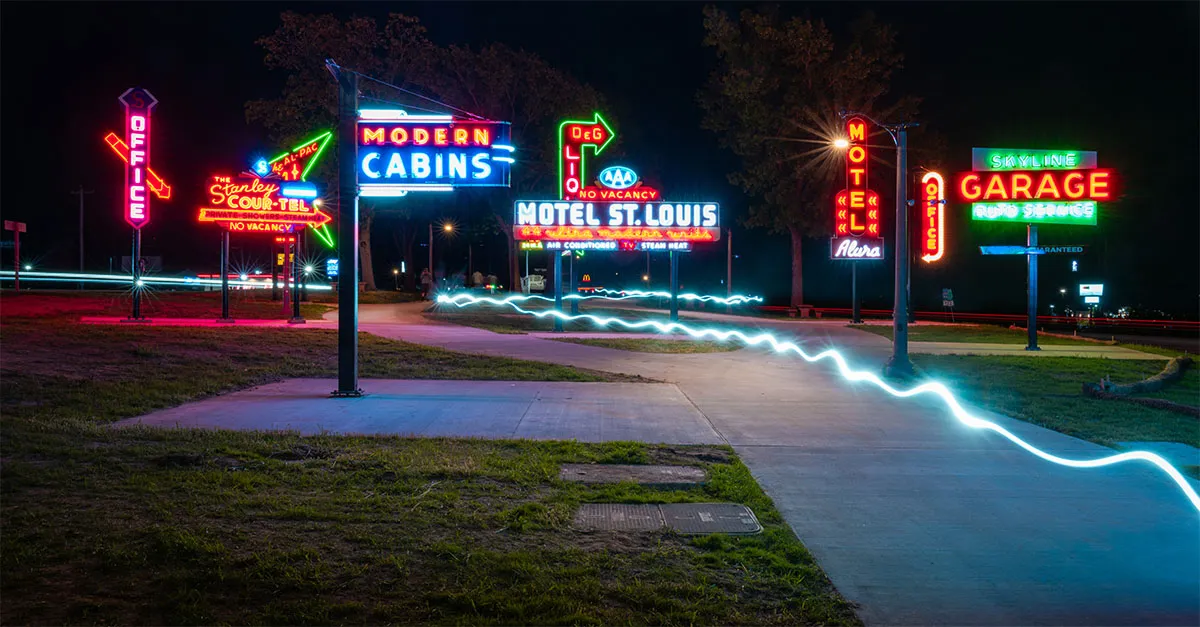
In nearby St Robert, we visit the new Route 66 Neon Park, where a collection of original road signs rescued from various locations glow in flashes of neon blue and red against an indigo sky.
Birthplace of Route 66
Red Oak II. Image credit: Amon Focus
It’s not just the small towns that give Missouri’s stretch of the Mother Road its charm, though. The next stop on our journey is Springfield, the third-largest city in the state, marked out by its central square, where the Wild West’s first shootout took place.
This is also the official birthplace of Route 66, as the spot where the highway got its name in 1926. We learn this and other interesting facts on a visit to History Museum on the Square, which traces the rise and fall of the Mother Road up to its eventual closure in 1986.
It’s also the home of the Gillioz Theatre, a masterpiece of Spanish colonial revival architecture that opened the year the route was inaugurated. We tour the theatre, glimpsing opulent chandeliers, intricate friezes and gold-hued pillars as we learn how Elvis Presley once hid in the back row.
More recently, it’s become a favourite haunt for Missouri-born star Chappell Roan, who shot one of her music videos here.
It’s these stories, and the reverence for so faithfully preserving the region’s history, that fascinate me about Route 66. And as we continue along the route to Red Oak II, an hour’s drive west, we encounter even more.
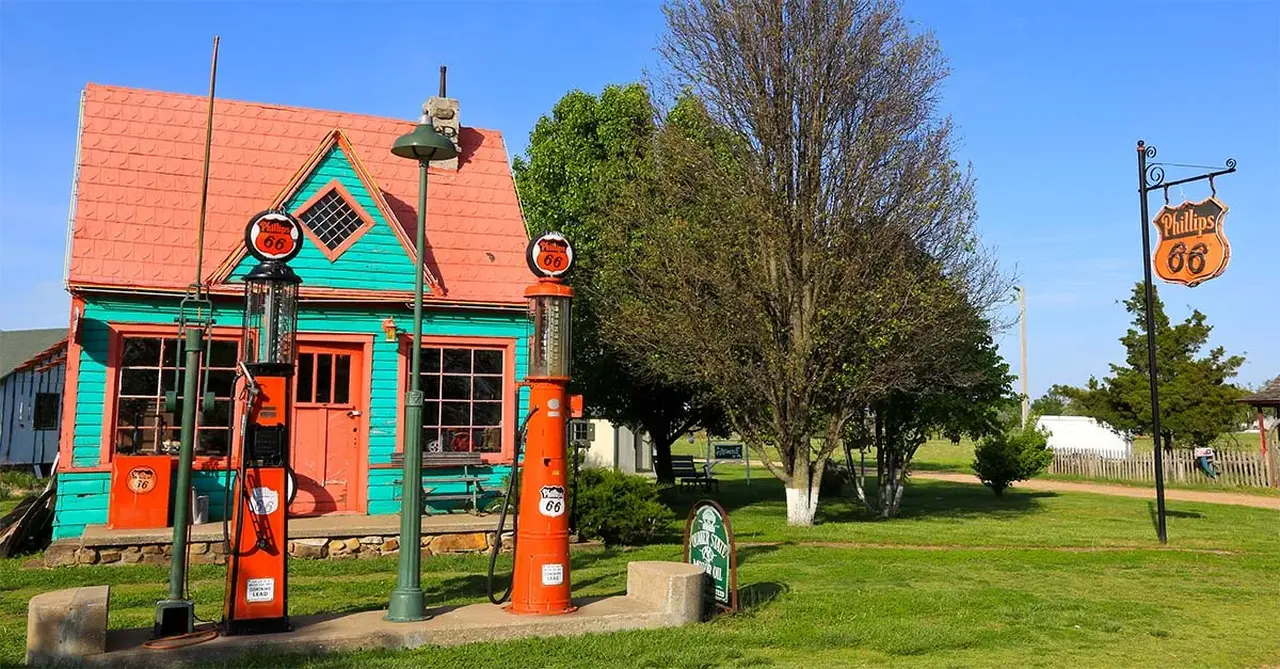
Brought to life under the vision of local artist Lowell Davis, this cluster of old-school, colourful slatted houses is a recreation of the original Red Oak, a ghost town that was abandoned after the Second World War.
Many of the town’s original 19th-century buildings were moved here in the 1980s, including a schoolhouse, town hall and a ‘house of ill repute’, scattered across a 60-acre carpet of greenery. Wandering among them feels like entering a time machine, which characterises much of my trip along the route.
What to see in Joplin, Missouri

The writer in Schifferdecker Park. Image credit: Laura French
Another half-hour drive west, we get to Joplin, where our journey on the route comes to an end. This is the home of the Tri-State Marker – standing at the crossroads of the Oklahoma, Kansas and Missouri borders – and Schifferdecker Park, where huge paintings sprayed graffiti-style onto the street surface offer 3D illusions to mark the Route 66 Centennial.
But the most intriguing sight comes as something of a side note, when we pull up outside a modest-looking, honey-coloured apartment.
“Outlaws Bonnie and Clyde hid here for 12 days in the 1930s,” says Patrick Tuttle, director at the Joplin Convention & Visitors Bureau. “They killed two police officers in a shootout, and a metal detector found lead in the tree. I grew up next door,” he adds. “Now you can rent it on Airbnb.”
It sums up just how close you can get to the history – from the macabre to the more playful – along Missouri’s stretch of the Mother Road. For clients who want classic charm, retro style and a few Route 66 fanatics to meet along the way, this underrated state is classic Americana at its most quintessential.
Book it
Purely America offers an eight-day Heart of Route 66 self-drive from St Louis to Kansas City via Lebanon, Springfield and Joplin from £1,399 per person, based on two sharing for travel in November, including compact car hire, accommodation and flights to St Louis, returning from Kansas City, via Atlanta.
purelytravel.co.uk
America As You Like It has a 14-night The Best of Route 66 self-drive from Chicago to Santa Monica from £1,925 per person, including flights, room-only
accommodation and car hire in low season, including two nights in St Louis and one in Springfield.
americaasyoulikeit.com
Visit Missouri offers travel resources and information at visitmo.com
Fast fact
British Airways’ new St Louis link from Heathrow, operating four times a week this summer, starts on April 19, with return fares from £529.
3 of the best Route 66 food spots
Salt + Smoke BBQ, St Louis: Missouri is famous for its barbecue and this modern, industrial-design restaurant (pictured below) serves some of the best in St Louis – think ultra-tender pulled pork and beef brisket doused in sweet, homemade bourbon sauce.
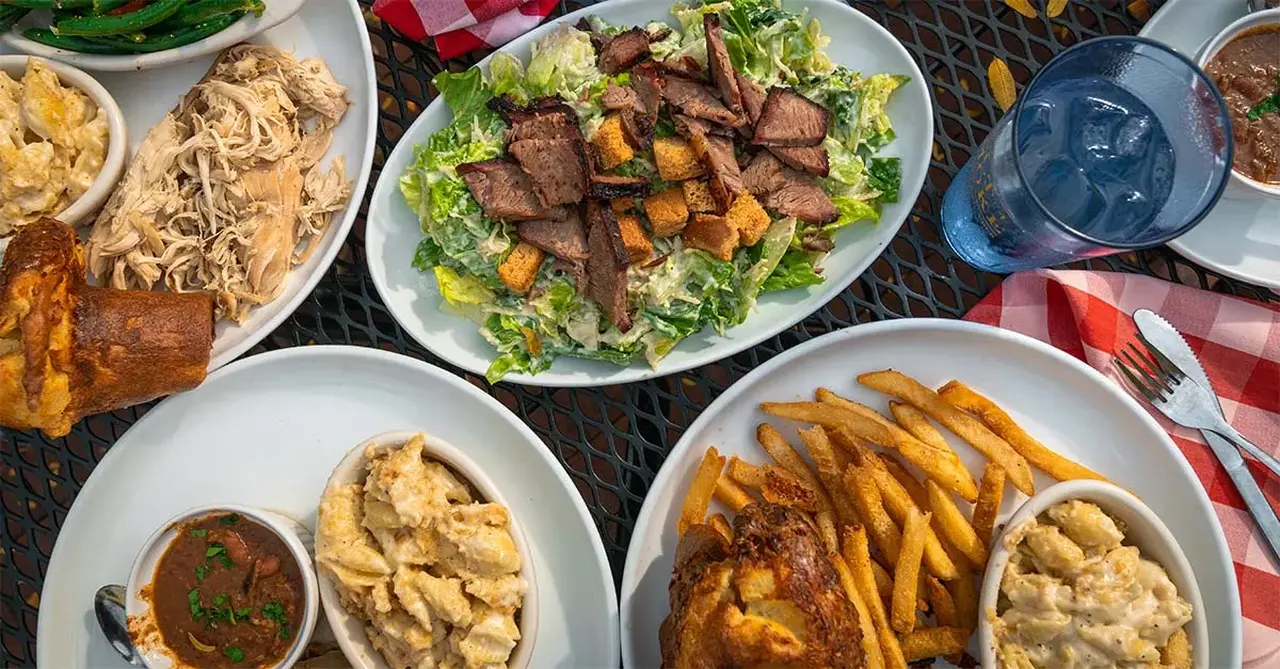
Image credit: Aaron Fuhrman/Missouri Division of Tourism
Elm Street Eatery, Lebanon: This local, low-key favourite is a great spot for a traditional Midwest breakfast – try the biscuits and gravy and share the cinnamon roll, a giant, warm, gooey spiced bun that was one of the best I’ve ever tasted.
College Street Cafe, Springfield: Now a Route 66 institution, this chequered roadside diner is old-school Americana at its best, with retro memorabilia and giant burgers, sandwiches and skillets served at its bar-side stalls.






Jacobs Media is a company registered in England and Wales, company number 08713328. 3rd Floor, 52 Grosvenor Gardens, London SW1W 0AU
© 2025 Jacobs Media
