




You are viewing 1 of your 2 free articles
Hiking in Cyprus on Involved Holidays' first-ever fam trip
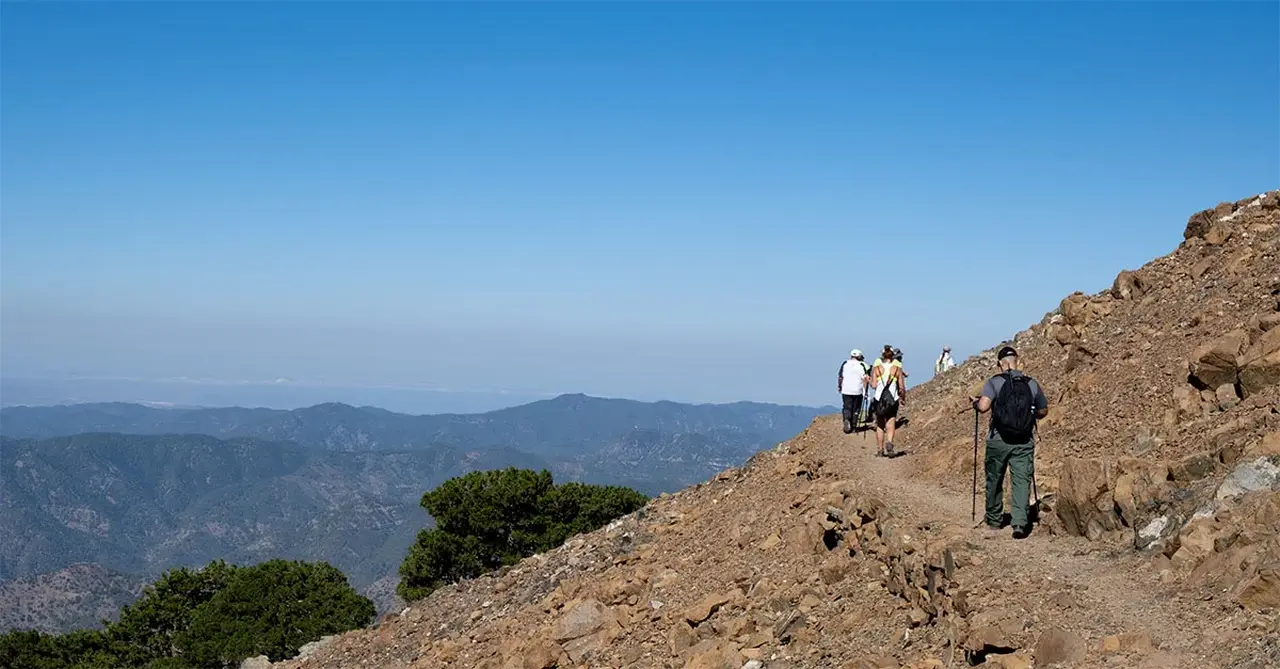
The balmy island of Cyprus offers a walk down memory lane for one writer

Click here to download and save as a PDF
Having been lucky enough to spend my early years in Cyprus, where my parents served in the British Army, I have fond memories of my dad skiing in the Troodos Mountains in the morning then enjoying an afternoon dip in the Med. So when walking specialist Involved Holidays invited me to join 11 agents on its inaugural fam trip in October, I leapt at the chance to explore the island.
It was a 20-minute transfer from Paphos Airport to the Athena Beach Hotel, where Aristos Diomedous, general manager at parent company Constantinou Bros Hotels, proudly introduced his home region. “Our island has 11,000 years of history,” he said, adding that Cyprus’s 326 days of sunshine a year mean walking and trekking on the island between October and May is “paradise”.
Things to do in Paphos
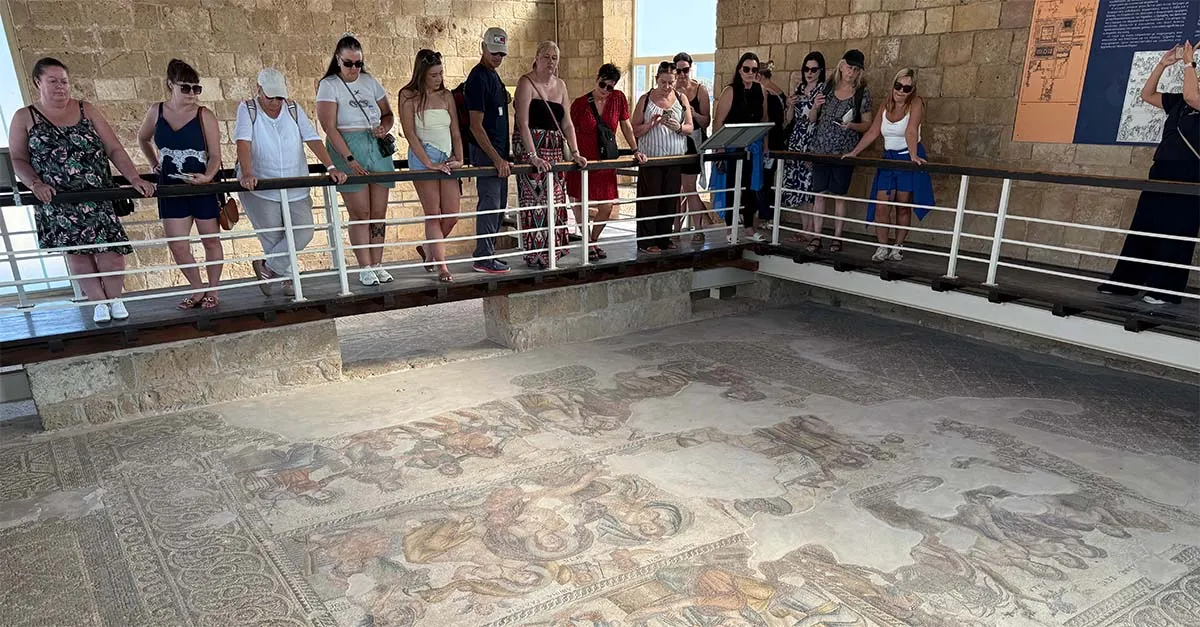
The agents admire the mosaics in Paphos Archaeological Park. Image credit: Mark Richardson
Our first walk helped us orient ourselves in Paphos.
We caught a bus to Paphos Archaeological Park with our Involved Holidays guides – Panicos Neofytou and Leanne Williams – to explore Greco-Roman villas and beautifully preserved mosaic floors.
Panicos recounted Greek myths and the early history of Christianity, before we broke off into groups to explore the harbour and enjoy the 20-minute coastal stroll back to the hotel.
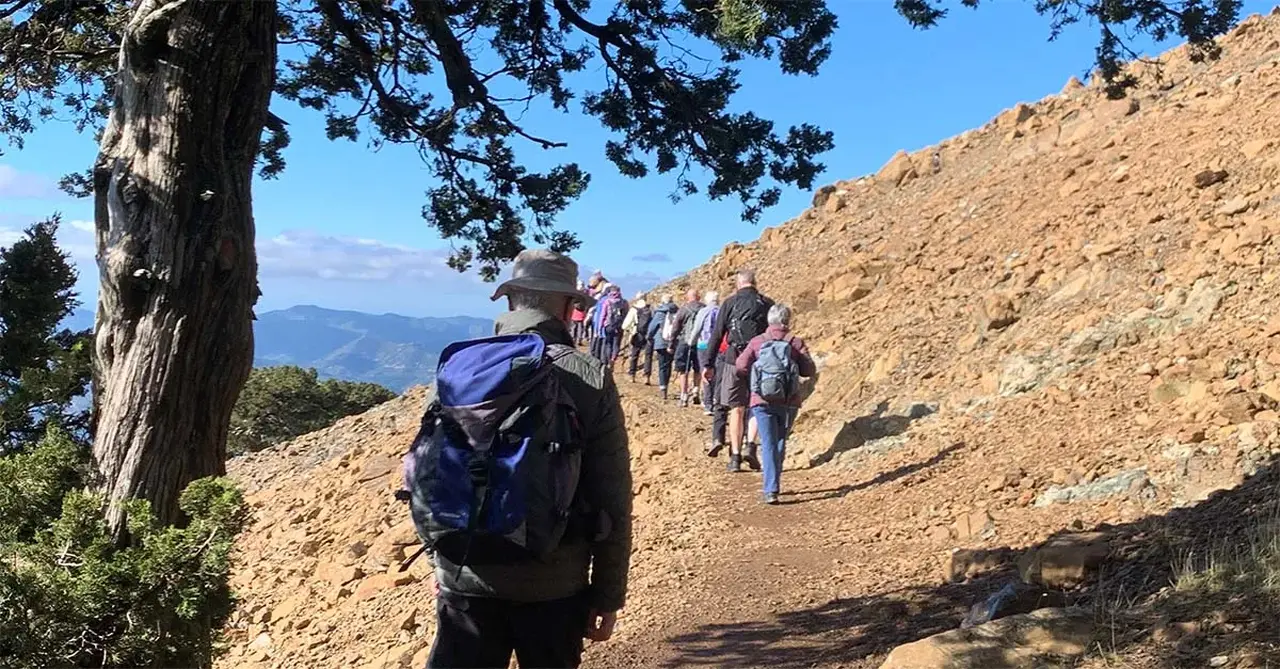
Walking on the Artemis Trail, Cyprus
The real walking began next day, as we headed into the Troodos Mountains. On the way, Panicos regaled us with stories about the island’s history and landscape – Cyprus is named after the copper mined there from as early as 4,000BC – and he described endemic wildlife such as the mouflon, a shy sheep with big horns. His comprehensive list of local plant life included lavender, rosemary, juniper, acacia and oleander – and olive, cypress, avocado, mango, papaya and almond trees.
As we ascended, we saw blackened tree stumps left behind by the deadly wildfires that struck southern Cyprus during July’s heatwave, before the landscape shifted into alpine-style forests of pine, cedar and oak amid crops of walnuts, cherries, plums, apples and figs.
Hikes in the Troodos Mountains
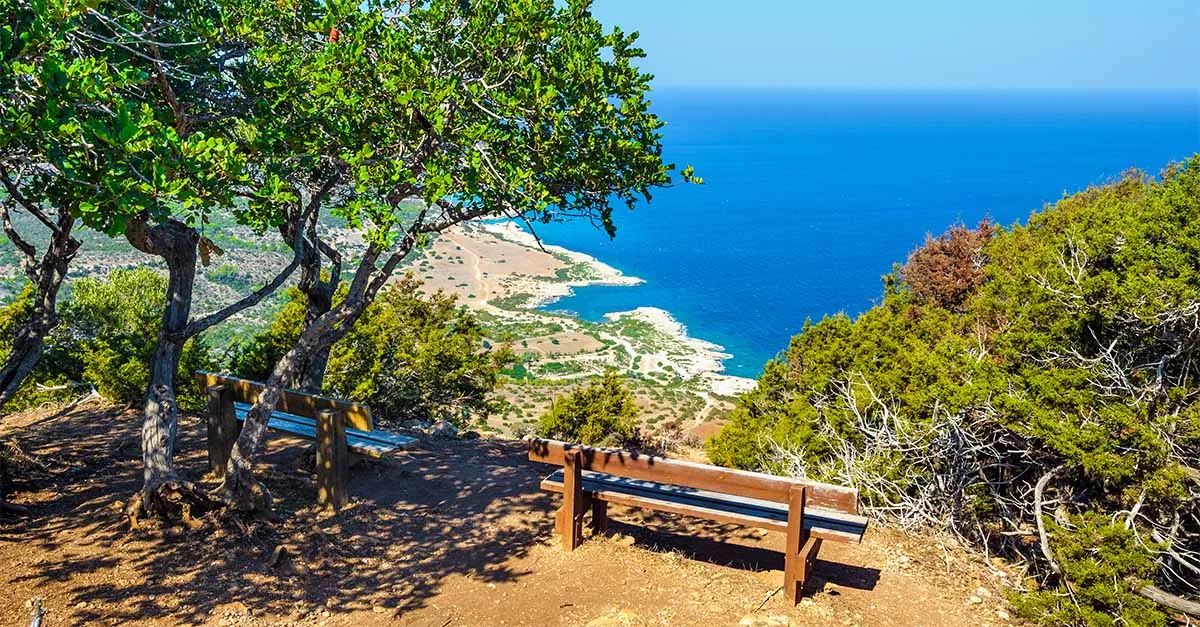
View of the sea in Cyprus. Image credit: Shutterstock/Roman Evgenev
You can ski in Troodos for two months a year, and even in March, Panicos was accompanying walkers with snow on the ground. During a break in the journey, I chomped on a carob pod as he told me how its seeds were once used for measuring gems – giving us the word ‘carat’.
Now used more commonly as a substitute for chocolate, it tasted like an ancient version of a chocolate-flavoured protein bar.
We reached the circular five-mile Artemis Trail, named after the goddess of hunting, around the summit of Mount Olympus by mid-morning. The trail is mostly flat and wooded, with spectacular views as far as the coast.
The sunny weather meant my extra hoodie remained in my rucksack – but the previous week had been cold even for autumn, with temperatures down to 7C.
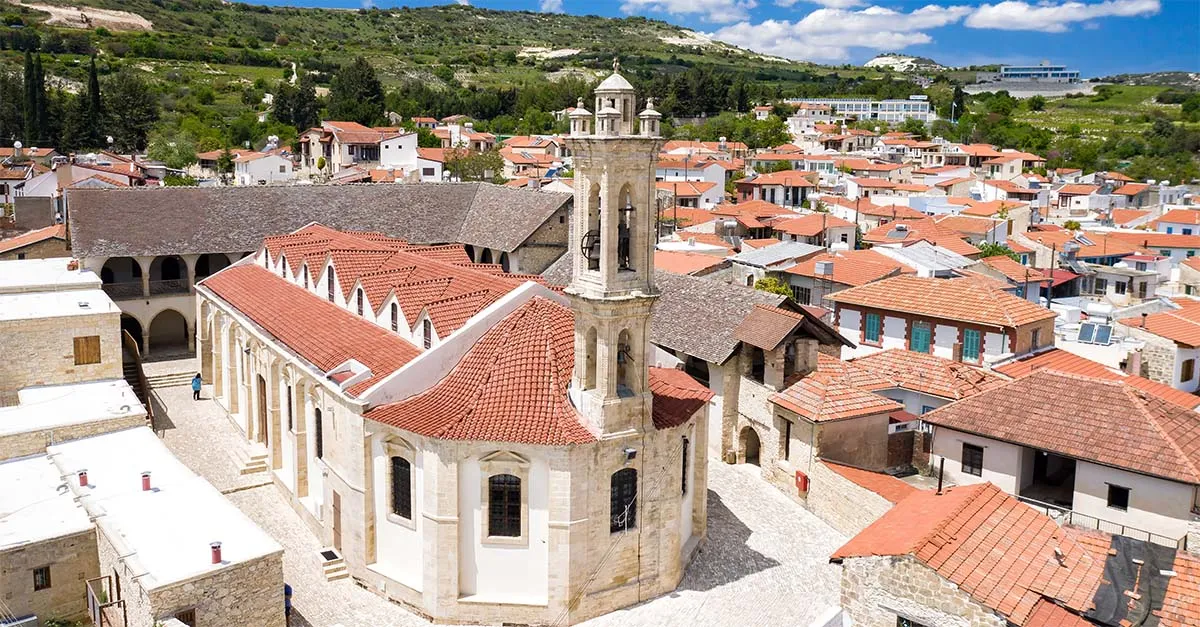
Monastery of the Holy Cross, Omodos. Image credit: Shutterstock/kirill makarov
Having worked up an appetite, we headed for lunch in the sleepy mountain village of Omodos – famous for its wine and the Monastery of the Holy Cross, said to have been founded in the fourth century by Saint Helen after she left a fragment of the True Cross deep in Cyprus’s mountains.
Leanne told us about village souvenirs – lace, crafts, cushions and jewellery – and specialities such as stifado, a beef stew with red wine, sizeable souvla chicken or pork kebabs, along with breads, nuts and halloumi.
On our return to the hotel, we stopped for photos by Aphrodite’s Rock, where the Greek goddess is said to have emerged from the waves.
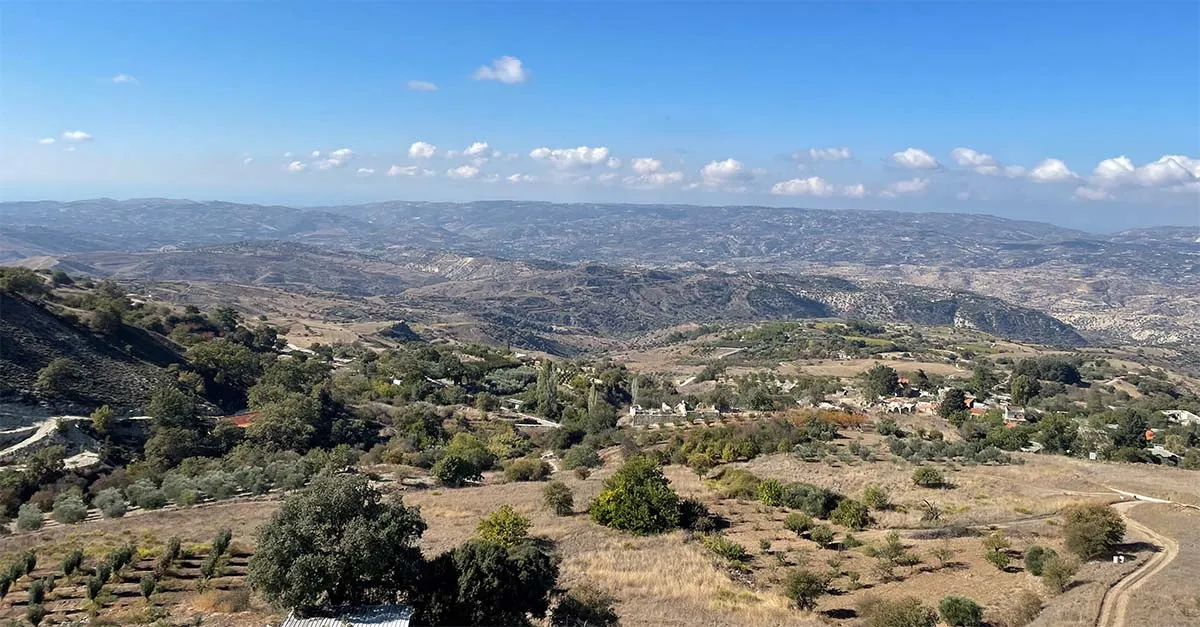
The view from Kolios Winery
Our final day took us to the rugged Akamas Peninsula, on the island’s western tip. En route to Kolios Winery, Cyprus Tourism guide Mary Patroklou explained that the island is one of the world’s oldest wine-producing regions, with the industry dating back 5,500 years.
Commandaria, said to be the oldest named wine still in production, was believed to have been served to English king Richard the Lionheart at his wedding in Cyprus in 1191.
New openings in Cyprus
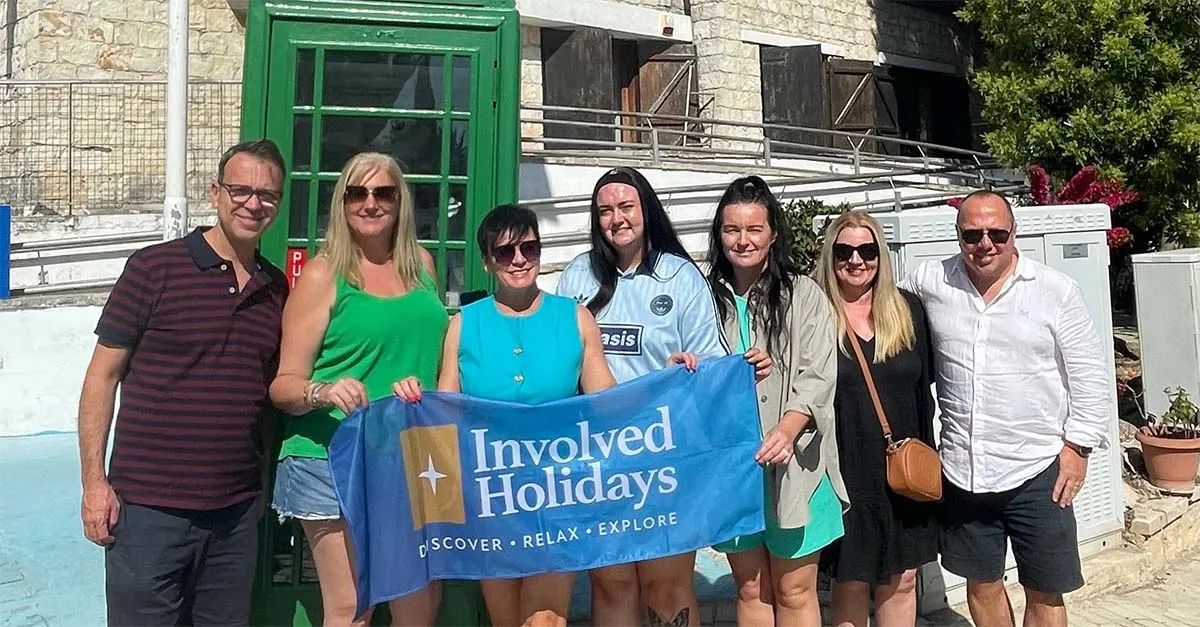
Some of the fam trip group in Kathikas
By contrast, Mary said modern Cyprus is evolving quickly, with recent additions including the opening of the Innia-Lara Turtle Museum and the pedestrianisation of trendy Upper Paphos.
“Cypriots live to eat,” she continued, and we certainly saw that writ large at every meal, with so many dishes of salad, houmous, halloumi and kebabs, we could barely fit all the plates on the table.
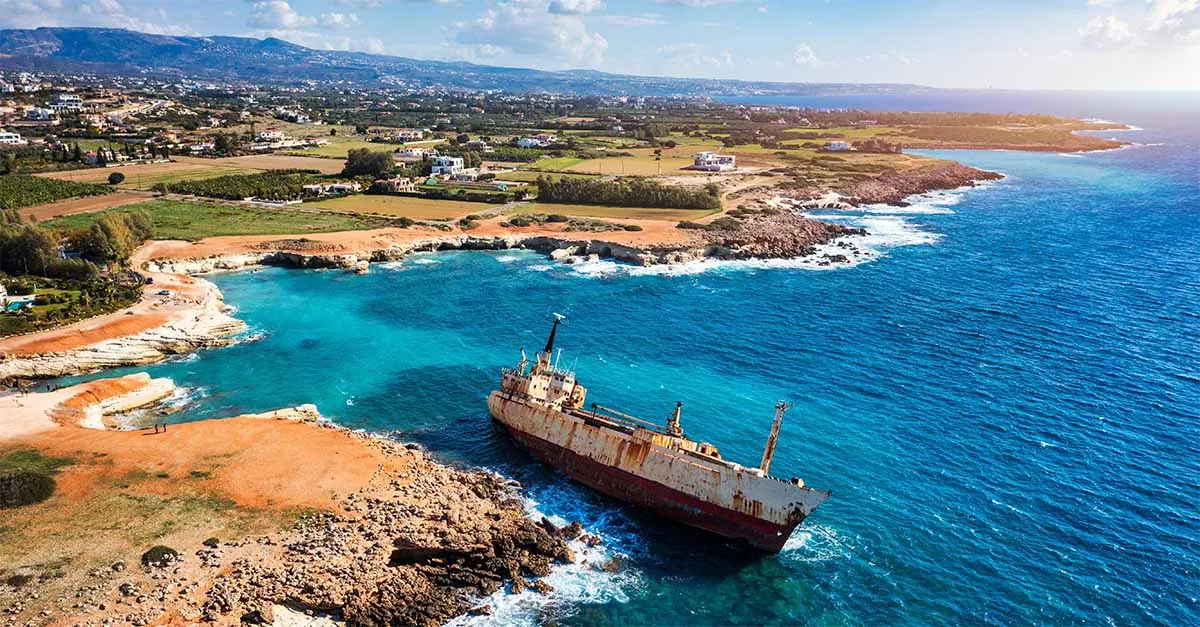
The Edro III shipwrecked in Paphos. Image credit: Shutterstock/DaLiu
After visiting the turtle museum – an educational centre that shows how the creatures are being protected – there was more feasting at a taverna in the vine-growing village of Kathikas, and a photo stop at Edro III, a cargo ship that ran aground in 2011 and is now an eerie attraction off the shore of Coral Bay.
As the trip came to an end, I reflected on what had been a splendid showcase both for Involved Holidays and the region.
It felt like walking in the footsteps of my much-missed dad, so I bought a bottle of Commandaria – one of my parents’ favourite tipples – to bring home a taste of Cyprus, along with my memories.
 The writer and her brother in Cyprus
Book it
Involved Holidays offers a seven-night solo walking holiday in Cyprus from £1,199, departing December 2, 2026, including half-board accommodation at the Athena Beach Hotel, three guided walks, transfers and flights.
Agents’ views

Cassie Brown, senior travel consultant, Dawson & Sanderson, Consett
“I was very impressed with the hotel and the local guides are great – they’re incredibly knowledgeable. My solo customers would be in capable hands with Involved Holidays.”

Jackie Lothian, travel consultant, Not Just Travel
“Troodos was a highlight and the climate is great. It’s so easygoing, walking at your own pace, and the holiday is such good value for money. I’d come on this holiday myself.”

Jacqueline Baird, personal travel consultant, Hays Travel
“I loved every bit, as it was so relaxed and flights from regional airports are a bonus. The hotel staff are lovely and the extras that come with Elite Class are a real benefit. Plus, the food is amazing.”
Selling tips

Richard Forde, sales director, Involved Holidays
❂ We offer “holidays with walks” rather than “walking holidays”. A typical week-long package includes guided walks on three alternate days, so clients can relax or do their own activities on the other days.
❂ The tours especially suit older travellers, such as those in the Women’s Institute, University of the Third Age or walking groups. So as well as contacting solo customers, get in touch with local groups.
❂ Departures are available from up to 19 regional UK airports.
Hotel review: Constantinou Bros Athena Beach, Paphos
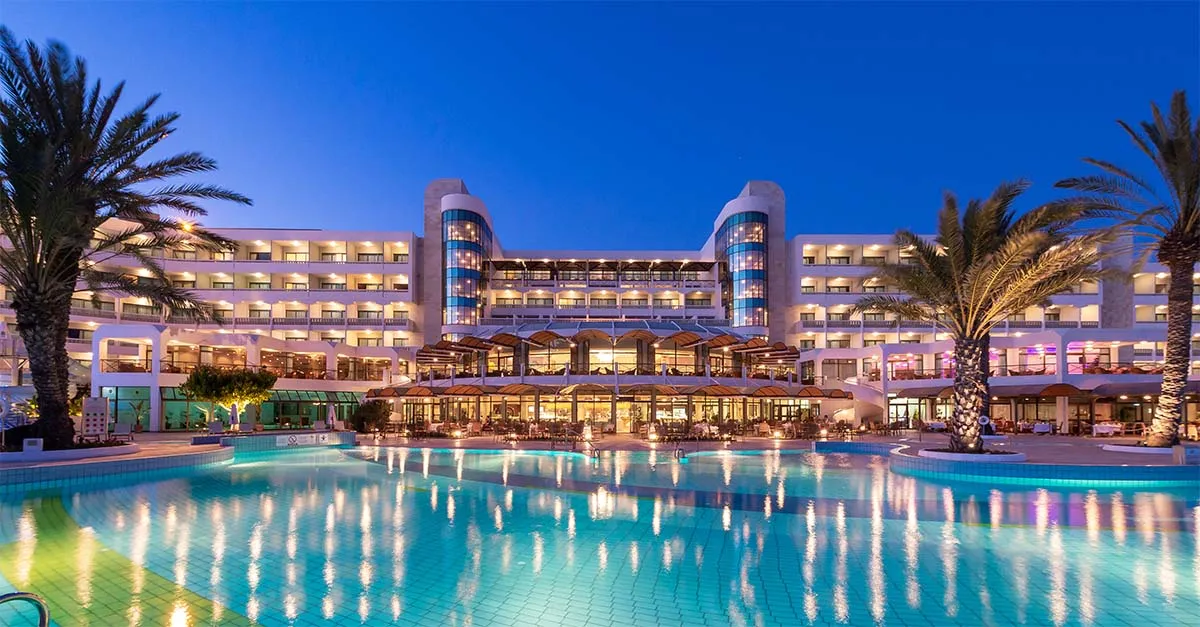
Situated on Pachyammos beach, this family-friendly hotel was perfect for exploring the region, and there were plenty of options for activities on non-walking days.
As Elite Class guests, we received sparkling wine at check-in and access to enhanced public areas, such as the poolside Leda restaurant and St Andrew’s rooftop bar.
My spacious room’s sea view was ideal for spectacular sunsets. Several of the agents agreed that the four-star hotel felt more like a five-star property, thanks to its range of restaurants and entertainment, as well as its stellar service.
We also dined at sister hotels the Pioneer Beach and Athena Royal Beach (both a short walk along the same stretch of coast as the Athena Beach).
All three properties have been recently extended and upgraded, and at the Athena Royal Beach, we watched a cookery demonstration – another activity that Involved Holidays can include in its tailor-made itineraries.
athena-cbh.com
Lead image credit: Shutterstock/Michalakis Ppalis












Jacobs Media is a company registered in England and Wales, company number 08713328. 3rd Floor, 52 Grosvenor Gardens, London SW1W 0AU
© 2025 Jacobs Media
