




You are viewing 1 of your 2 free articles
Explore the authentic side of Oman, from rural villages to roses
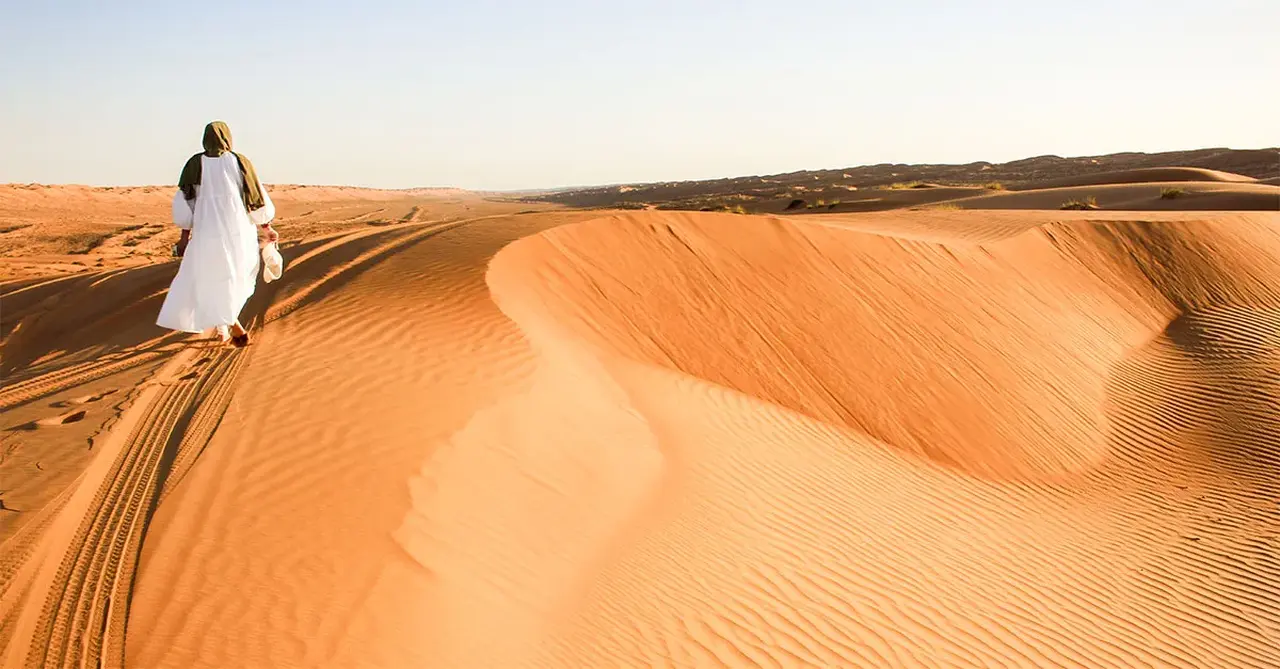
The ancient landscapes of Oman show a different side to the Arabian Peninsula

Click here to download and save as a PDF
Rippling over the limestone creeks carved into the Jebel Akhdar mountains, the adhan echoes through the thin, still air. Despite being miles from the nearest mosque, I can hear the resounding call beckoning Omani worshippers for one of their five daily prayers. These songs have reverberated around this mountain range for centuries, uninterrupted in the near-silent plateaus.
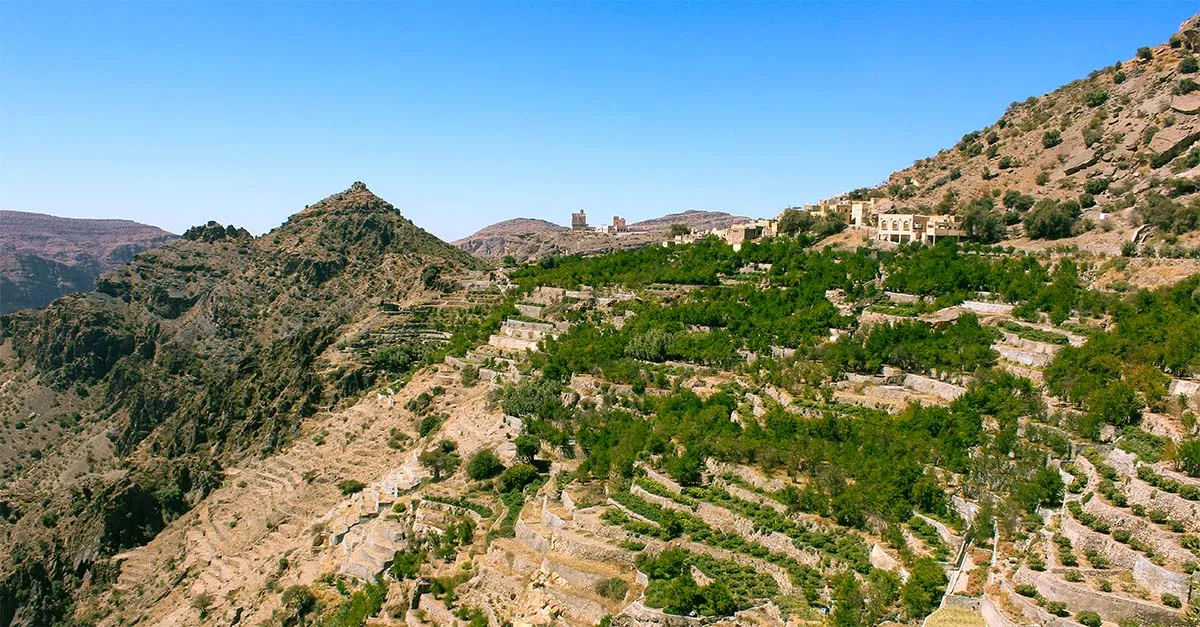
Jebel Akhdar. Image credit: SJ Armstrong
The villages wrought into the desert rock have stayed similarly unchanged. The sand-hued homes are still fragranced by fuchsia roses and heavy-limbed pomegranate trees. I’m walking Jebel Akhdar’s Three Village Hike, a three-hour loop trail that winds between the remote mountain outposts of Al Aqr, Al Qyn and Ash Shirayjah.
As we tiptoe along a precipitous, raised canal edge, my guide Ali turns to me and asks: “Do you see these streams? We call them aflaj – a system that we have used to bring water to the villages and to the plants for thousands of years.”
He tells me that the streams feed the roses, pointing ahead to the next stage of our journey.
Al Aqr, Oman
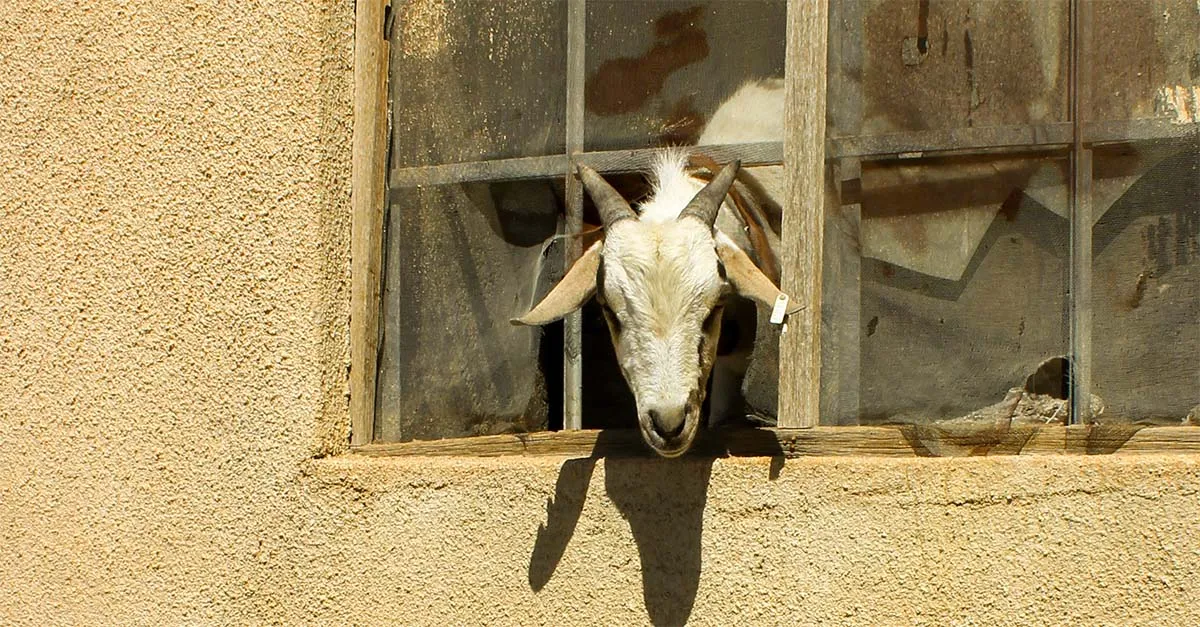
Al Aqr, Oman. Image credit: SJ Armstrong
I could smell the fragrant flower gardens of Al Aqr long before the village came into sight. Its stone walls are unassuming, with more goats than people sticking their heads out of the glassless windows to gawk at any passing hikers.
Interlaced with shocking pink damask roses, the town’s lush greenery is peppered with basket-wielding pickers collecting the petals that perfume Oman’s ubiquitous rose water – infused into coffee, tea, fragrances and even linens.
As we follow the rise and fall of the mountain trail, the irrigated ridges of well-nourished gardens drop neatly down into the valley from the brink of Al Aqr. Feeling the effects of the searing sun, I stop to watch white butterflies flutter between flower-laden trees as I make my last ascent up slender, rock-wrought steps.
What to see in Oman
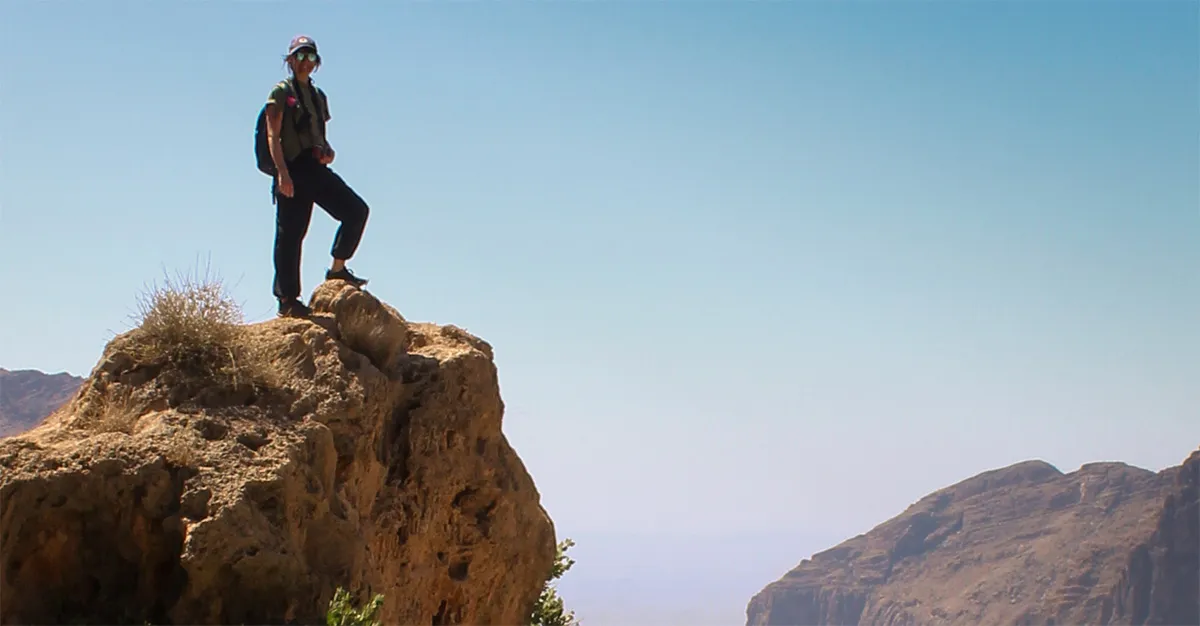
Hiking on Oman’s Three Village Hike. Image credit: SJ Armstrong
The next morning at sunrise, I watch through the minibus window as the verdant vegetation clinging to the mountainsides thins out, replaced by sparse desert shrubbery set against a dramatic backdrop of the Jebel Akhdar foothills’ tawny rocks.
We’re descending towards the vast Arabian sands that envelop the Omani interior. From the flat, dusty plains that stretch out to the haze of the horizon, we travel on in search of towering dunes. Veiled by the desert’s steep banks are Arabia’s lush oases, known in Arabic as wadis.
For millennia, these reprieves from the formidable heat sustained nomadic travellers toiling on their cross-desert voyages in search of water and shelter.
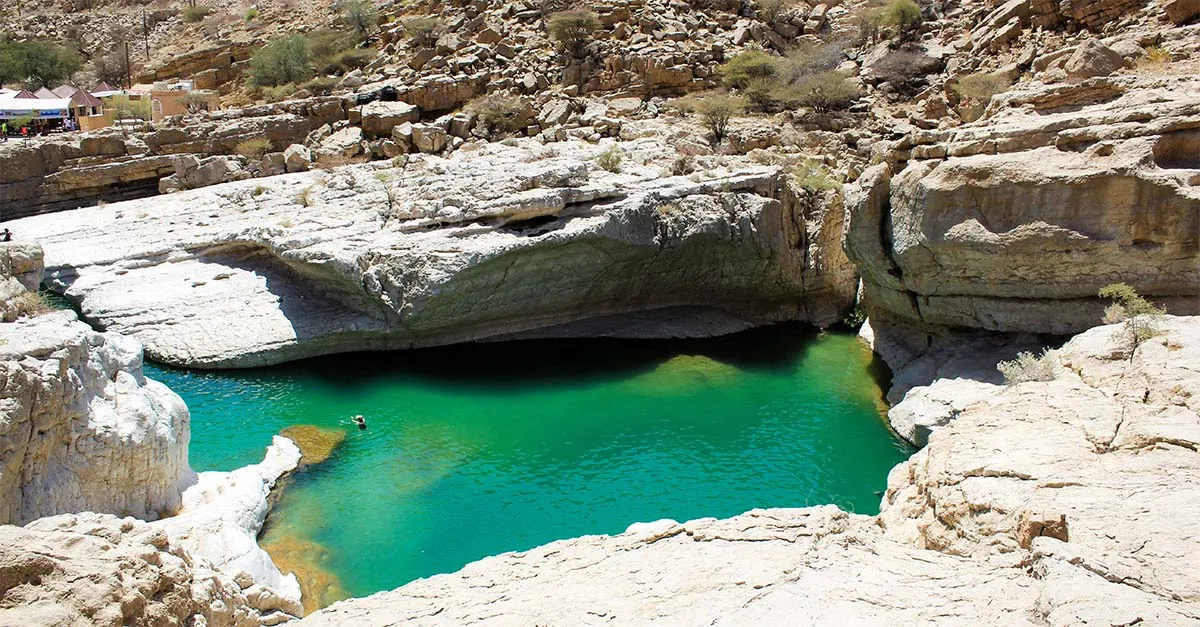
Wadi Bani Khalid. Image credit: SJ Armstrong
Tracing their scorched steps, I wade out into the bright-blue shallows of Wadi Bani Khalid. It’s a peaceful swim in an oasis that cleaves through stark desert stone, segmented into cool, shaded riverways and warm lagoons filled with languishing visitors.
History of Oman
Oman’s long and storied history goes beyond its nomadic, tribal roots; clients can get a sense of its past in its urban centres as well as its rural villages. After flying into the cosmopolitan capital Muscat – host city of next year’s Aito Overseas Conference – and driving for 90 minutes, I stood at the gates of Nizwa, a historic city overshadowed by its imposing 17th-century fortress.
The town’s streets are reminiscent of the kasbahs of North Africa, with slender alleys accented by pointed arches, and windows designed to catch the breeze. From the crenellated sandstone ramparts of the fortress turret, I can map out Oman’s natural allure: lush palms, mountain foothills and the unfathomable vastness of the Arabian sands.
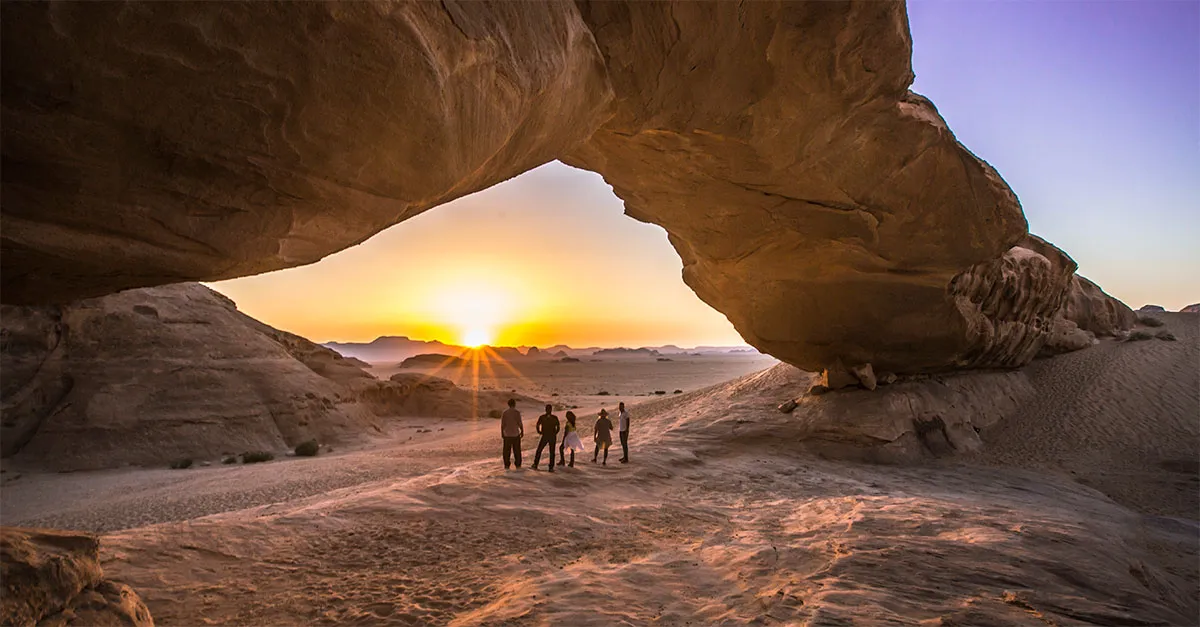
There is no part of the Arabian Peninsula so historic and intrinsically tied to the culture of Oman as the dunes, where I settle in to watch the sunset.
My vantage point over A’Sharqiyah Sands (known until recently as Wahiba Sands) is shifting constantly underfoot, like a miniature mountain in perpetual motion. This is the traditional home of the original Arab tribes, the Bedouins and the resilient Omani people who wrenched a livelihood from an arid expanse. Watching the orange sun merge with the golden dunes, I cherish the silence.
As I head back to Muscat, its skyscrapers begin to rise from the desert sands. This time, it’s Oman’s modern attractions that draw me in, specifically the astonishing Sultan Qaboos Grand Mosque, completed in 2001. Beneath its spiralling minarets, carved arches and white domes, the marriage of Oman’s rich Islamic heritage and modern prosperity is proudly on display.
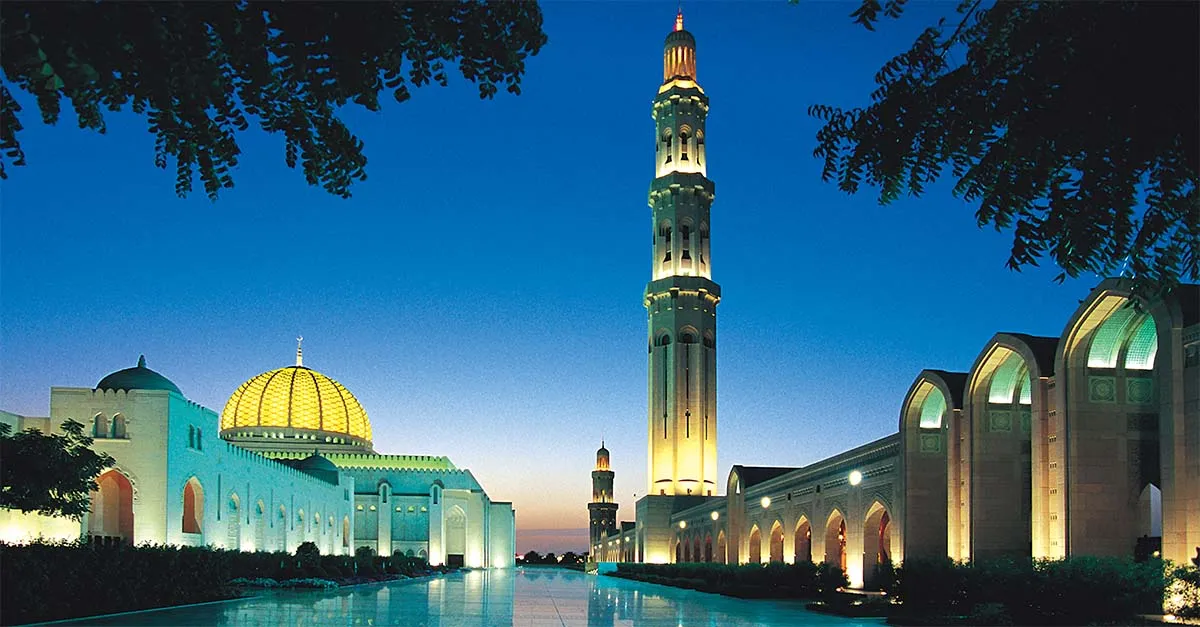
Sultan Qaboos Grand Mosque, Muscat
Book it
Cox & Kings’ nine-night small-group tour Oman: An Arabian Odyssey features overnight stops in Muscat, Ras al Hadd, A’Sharqiyah Sands and Jebel Akhdar. Prices start at £3,935 per person, based on two sharing, including Oman Air flights from London, B&B accommodation in four-star properties, some other meals, listed excursions and guides.
Audley Travel’s 14-day Ultimate Oman tour, priced from £6,695 per person based on two sharing, takes travellers to Muscat, Nizwa, A’Sharqiyah Sands, Ras al Jinz and Salalah. The price includes ground transport, accommodation, listed excursions and flights.
audleytravel.com
Top tip
Learn more about the sultanate’s many selling points – including its diverse microclimates – by completing Visit Oman’s five-module course with Online Travel Training (OTT).
Where to stay in Oman
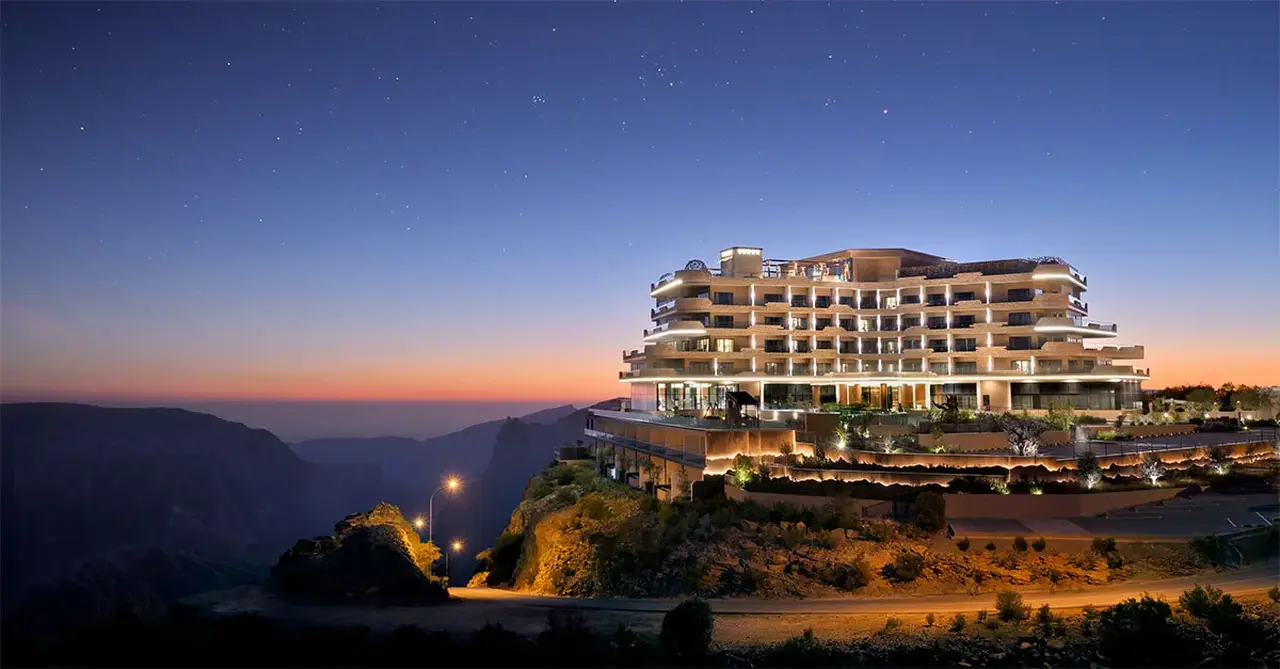
Image credit: Nicolas Dumont
Hotel Indigo, Jabal Akhdar Resort & Spa
Above the dramatic crag of the Al Hajar mountains, this luxury escape is situated in relative solitude. Clients can recover from mountain hikes in the spa, or with a cold beverage and a glorious view from the terrace. From £218 per night for canyon-view rooms.
ihg.com
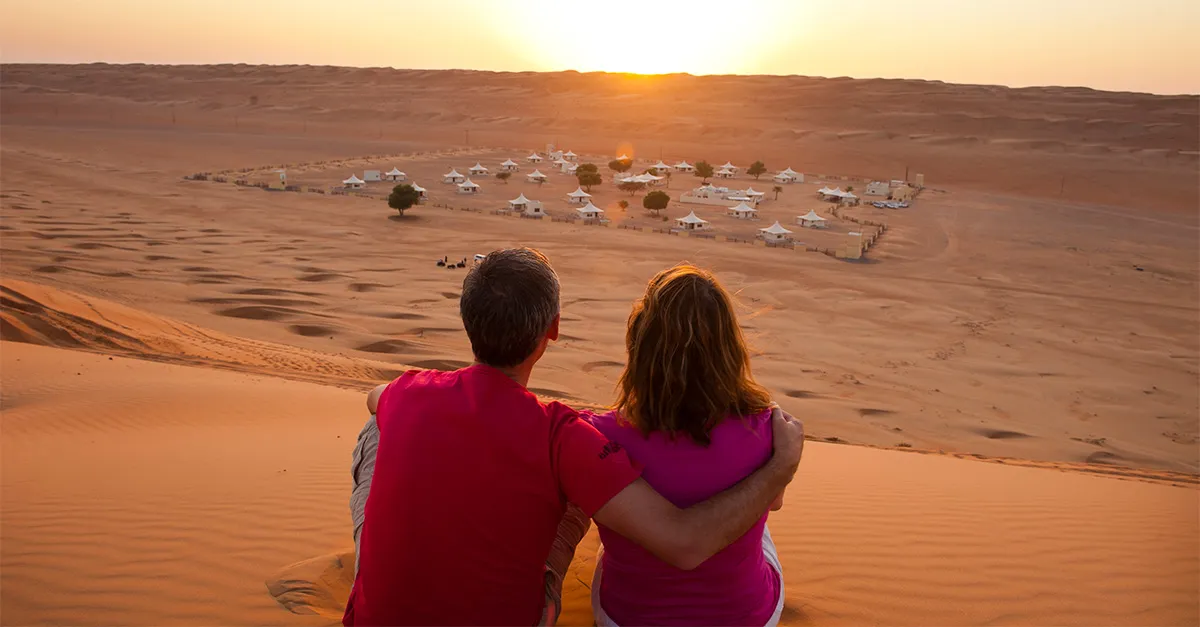
Desert Nights Resort Camp, A’Sharqiyah Sands
Tucked between undulating dunes, this camp offers a luxury tented stay in traditional Omani style. Exhilarating excursions in the dunes and extraordinary stargazing are also big attractions. Rates start at £114 a night in a Deluxe Villa.
omanhotels.com
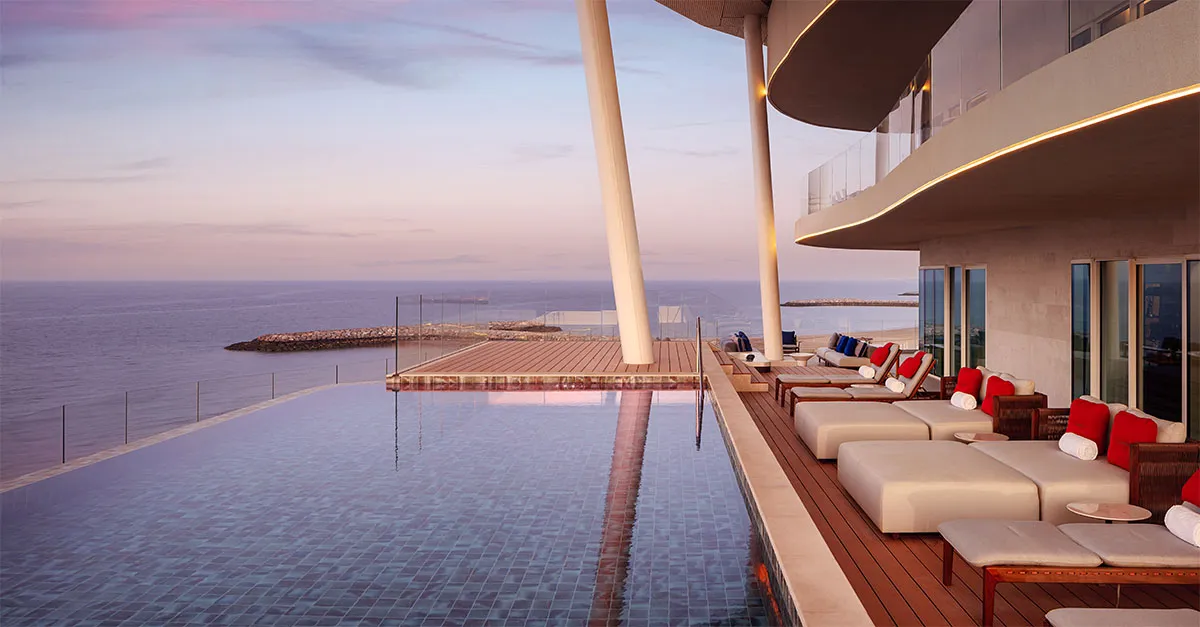
Image credit: Jiri Lizler
The St Regis Al Mouj Resort, Muscat
Forgoing none of the luxury amenities that travellers expect from the region, The St Regis Al Mouj Resort pairs spectacular sea views with excellent restaurants, high-end boutiques and a sumptuous spa. Nightly rates from £338 for a Deluxe Sea View room.
marriott.com
3 of the best sights in Oman
Nizwa Fort
Constructed by the imperious and pious Imam Sultan bin Saif bin Malik Al Yarubi in the 17th century, this impressive fortress was once one of the most intimidating structures in the Arabian Peninsula.
Impenetrable to any conquerors concerned about being doused in boiling date juice from above or flung into deep, inescapable pits below, it was the crowning jewel of the religious city of Nizwa.
Birkat al Mouz
The semi-abandoned hillside village just west of Nizwa earned its place on ancient maps due to its complex, well-preserved irrigation systems.
Its aflaj canals – a Unesco-listed treasure – are a remarkable testament to the ingenuity that allowed the ancient Omanis to thrive in the harsh Arabian climes.
Sur
Oman’s shoreline has always been central to the country’s survival, economy and cultural identity. In Sur, a city in the south, its shipwright heritage and seafaring history are prominently on show.
Visit the Dhow Factory & Museum to walk the wooden deck of a traditional ship and explore the maritime history of the Arabian Gulf.
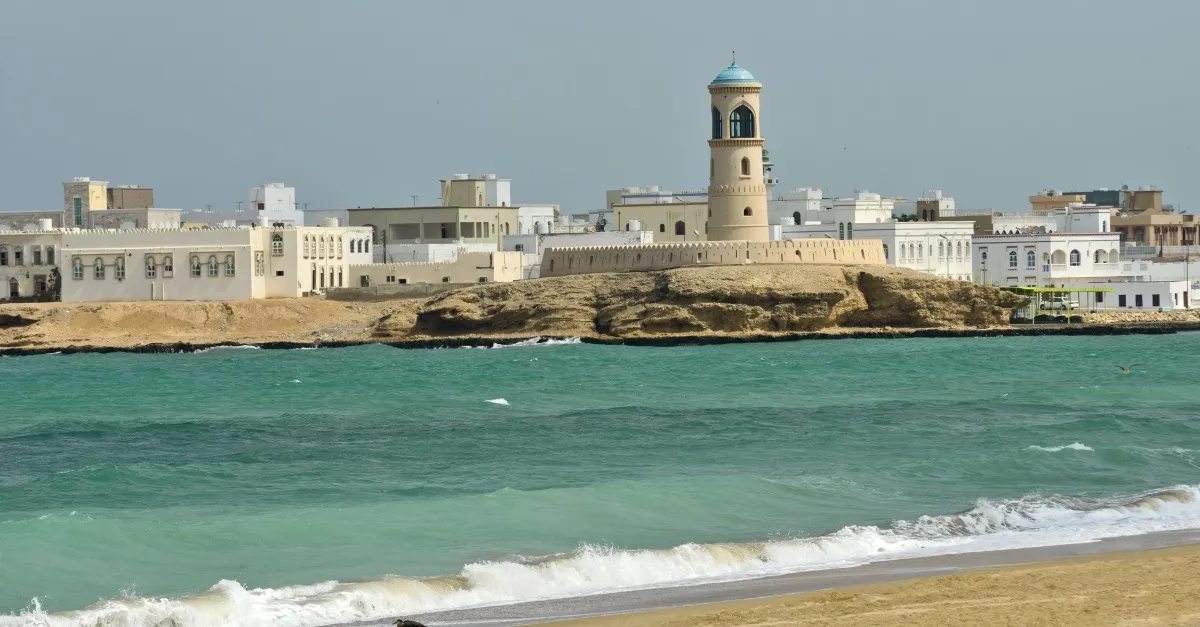
Sur, Oman. Image credit: Visit Oman/Himanshu Pandya
Lead image credit: SJ Armstrong











Jacobs Media is a company registered in England and Wales, company number 08713328. 3rd Floor, 52 Grosvenor Gardens, London SW1W 0AU
© 2025 Jacobs Media
