




You are viewing 1 of your 2 free articles
Why Indigenous-led tours are the best way to learn about Australia
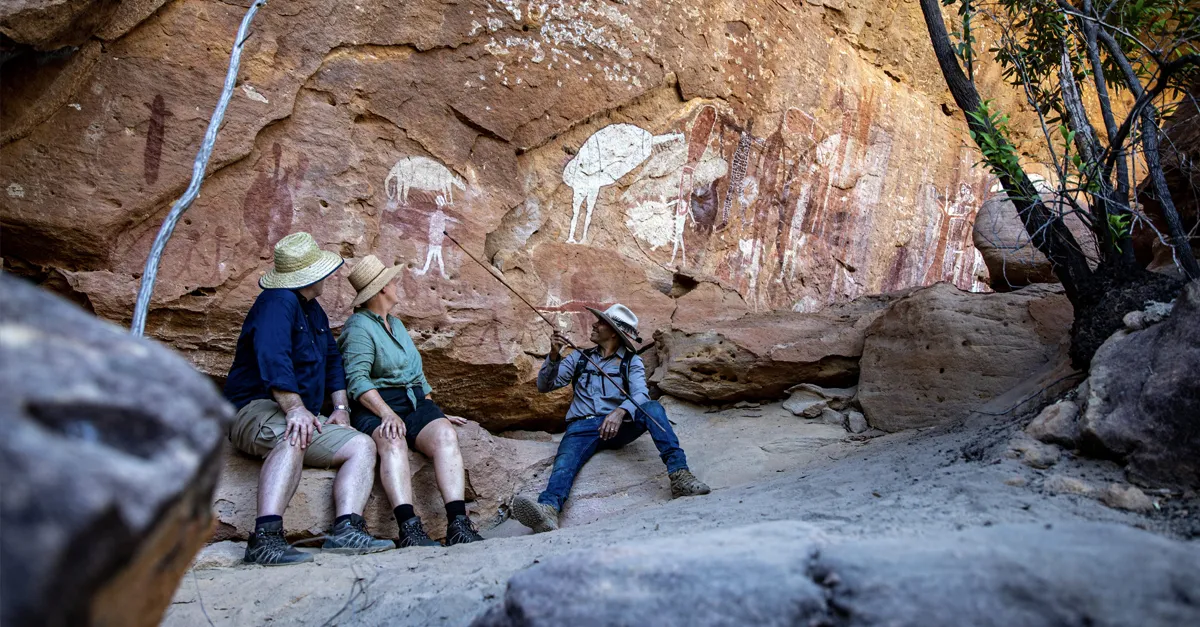
Indigenous-led tourism experiences are central to getting a true taste of Queensland

Click here to download and save as a PDF
There’s an 8ft-tall kangaroo looming over me. He’s mid-hop, one eye focused on the horizon. I step closer to take in his unusually long hind legs and front paws sprouting six digits.
His white body, most likely painted using kaolin, a chalky type of clay, dominates the cavern that shelters me from the scorching Queensland sun.
At least 450 images decorate the sandstone in an area aptly named Magnificent Gallery. I make out spirit figures, emus, possums, barramundi, turtles and wallabies.
According to my guide, Johnny Murison of Jarramali Rock Art Tours, some date back 2,000 years and are being considered for Unesco protection thanks to their global and cultural significance.
Rock art in Queensland
I’m deep within the Laura Basin in Tropical North Queensland, where Quinkan rock art sites chronicle the lives of the Kuku-Yalanji people.
Like most of Australia’s Indigenous population, their story has been marred by forced removals, violence, disease and killings under British colonisation. At eight years old, Murison’s great grandmother was taken from her home and brought up at a mission on Palm Island, off the Queensland coast.
A proud Kuku-Yalanji man, Murison has been guiding small groups of visitors to see the rock art on his ancestral land since 2017. There are, he says, 10,000 sites here; he’s found a hundred so far.
“I have a way to go, but I’d be happy to locate a thousand of them,” he laughs. “I just hope I can bring more employment and opportunity to my family and community.”
I’m among a group of four spending two nights with Murison on his ancestral land. As well as hiking to rock art galleries, we’ve been swimming under waterfalls and in rock pools, learning about the leaves and barks once used as food, medicine and shelter, and spotting wallabies forage in the bush.
In the evenings, we sit around a fire watching blood-orange sunsets, grilling barramundi and sipping beer while having a ‘yarn’ about ancient medicine men. Each night, I’ve fallen asleep under a blanket of thousands of stars, listening to the calming hum of the cicadas. It has all brought me close to a culture and wildlife I never expected to experience.
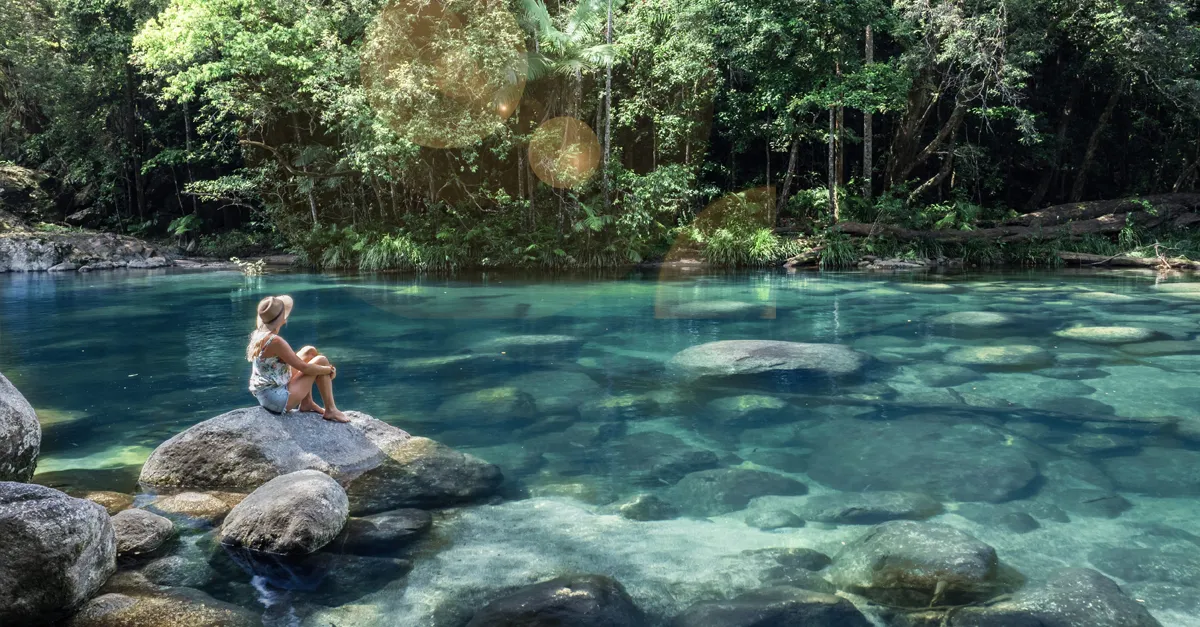
Mossman Gorge, Queensland. Image credit: Tourism and Events Queensland
Indigenous guided walk in Queensland
Heading east, I stop at Mossman Gorge on the outskirts of the 180-million-year-old Daintree Rainforest, where I opt to take a 1.5-hour guided Ngadiku Dreamtime Walk with Kuku-Yalanji guide Angelina Sipi.
We begin with a traditional Welcome to Country ‘smoking’ ceremony, involving the burning of native foliage to ward off bad spirits.
On the walk, Sipi dives into the Dreamtime stories steeped in this ancient rainforest, while identifying humpies (traditional shelters) and the vegetation that has customarily been used as medicine by her people.
The Daintree covers less than 0.2% of Australia’s landmass, she tells me, yet is home to around 30% of the country’s native frog, reptile and marsupial species. Our ears remain attuned to the distinct call of a golden bowerbird throughout.
When Sipi declares that we’ve all earned a sweet bush tea and pulls a tea-towel-wrapped plate of damper (campfire-baked bread) from her backpack, everyone is delighted. We finish at a creek in the river, where I slip under a small cascade and allow the cool, fresh water to soothe my tired shoulders.
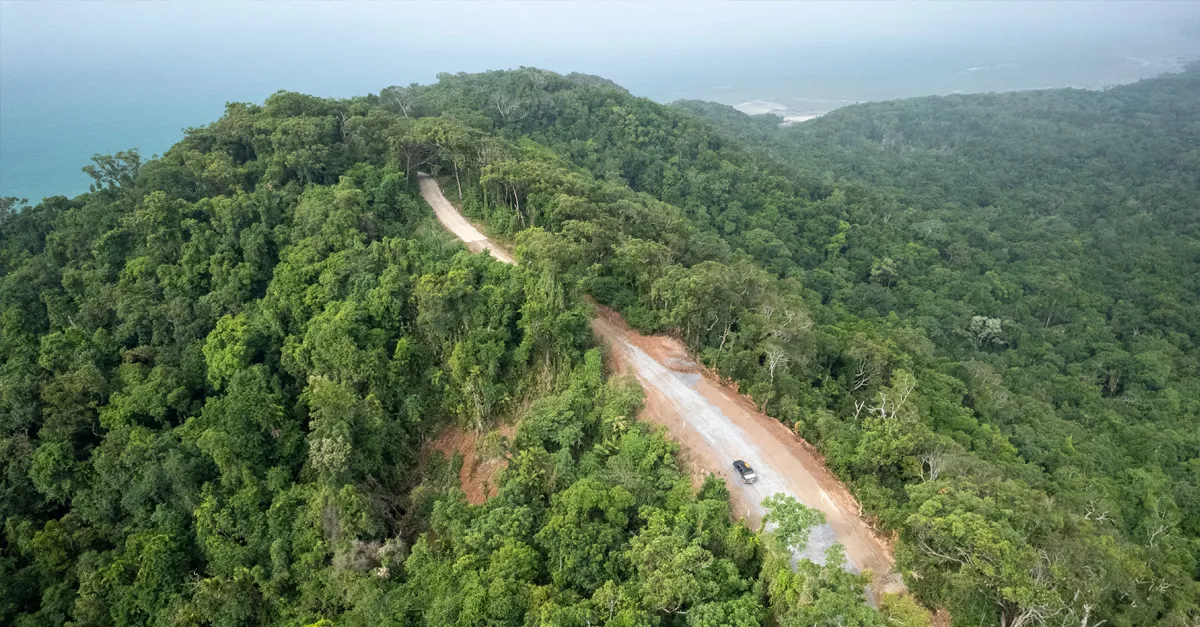
Daintree Rainforest. Image credit: Tourism and Events Queensland
Indigenous Australian stories
Near Port Douglas, Juan Walker’s Walkabout Cultural Adventures has been a trusted institution for Indigenous storytelling along the jalun, bana and bubu (sea, water and land) for more than 20 years.
Jumping into a small van with his friend and guide, Aaron Port, I join 10 other curious travellers heading north to Cape Tribulation. En route, we pause to spy on grazing kangaroos, scrub fowl and even a crocodile. I learn that koalas aren’t found in these tropical climates.
On Thornton Beach, we taste nuts and seeds from the trees and thickets fringing the sand. Port laughs as I bite wincingly into a cheesy-smelling noni fruit that is said to ease high blood pressure and lower cholesterol.
Everyone in the group takes turns squeezing serum from a silver wattle stem onto their hands in a bid to keep the mosquitoes away. And at Cape Tribulation, we take it in turns to carve a fallen beach hibiscus branch into a spear.
“We share our traditions, so more people can understand the culture of our community,” Port tells me as we arrive at our final stop.
As we go in search of the endangered cassowary along the boardwalks of the spring-fed creeks and mangrove forests, Port explains how the world’s third-tallest bird has dwindled due to habitat loss from agriculture expansion and residential development.
He raises a finger to his lips. “The cassowary might be tall, but it is also shy,” he whispers. However, my highlight comes not from a sighting of the elusive flightless bird, but rather at the very end of the day, when we find ochre pigments – black from charcoal, red and yellow from iron oxide – along the rocks at Cape Tribulation. Port blends the residue with water to create a paste and decorates our cheeks.
It’s a special moment that reminds me just how Queensland’s native landscape and Indigenous culture will forever be entwined. You can’t fully experience one without the other.
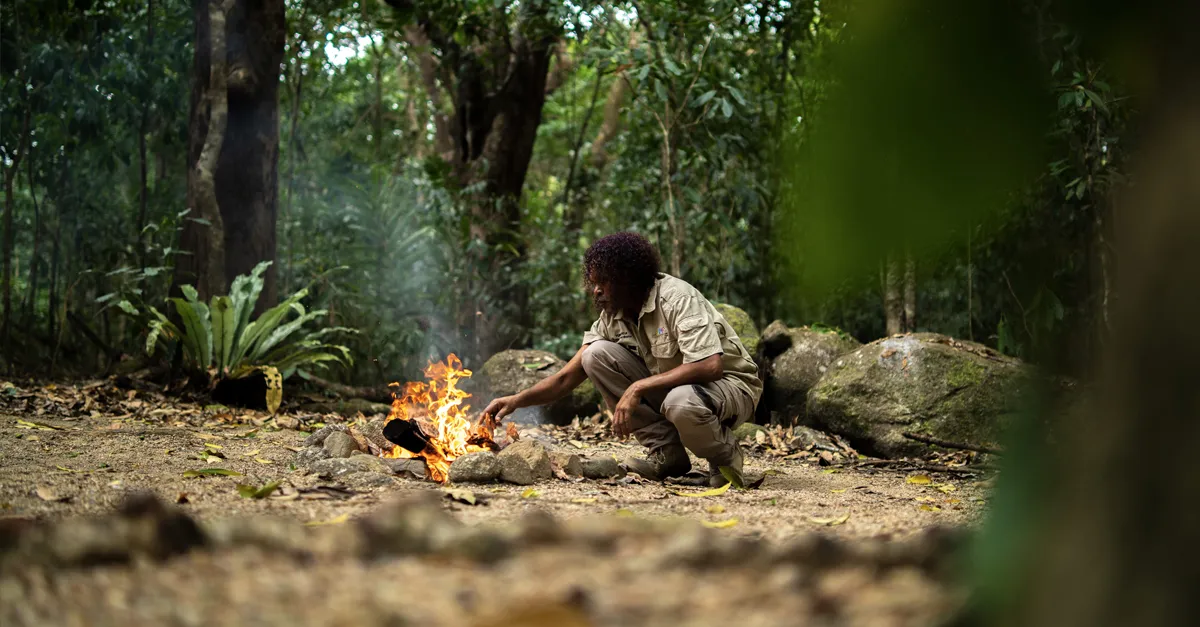
Making fire at the Mossman Gorge Cultural Centre. Image credit: Tourism and Events Queensland
Book it
Intrepid Travel’s five-day Best of Cairns, Great Barrier Reef & Daintree tour dedicates a day to the Daintree and Mossman Gorge, including the Ngadiku Dreamtime walk. Prices start from £1,197.
intrepidtravel.com/uk
Jarramali Rock Art Tours, which works via trade partners including the Luxury Lodges of Australia collection, offers a two-night, all-inclusive tour priced from about £726 per person. A helicopter return trip from Cairns is available on request and is priced per person.
jarramalirockarttours.com.au
Audley Travel has a 16-day Exploring Queensland itinerary that includes a day in the Daintree Rainforest and Mossman Gorge with a Kuku-Yalanji guide. Prices start from £19,130 per person, based on two sharing.
audleytravel.com/australia
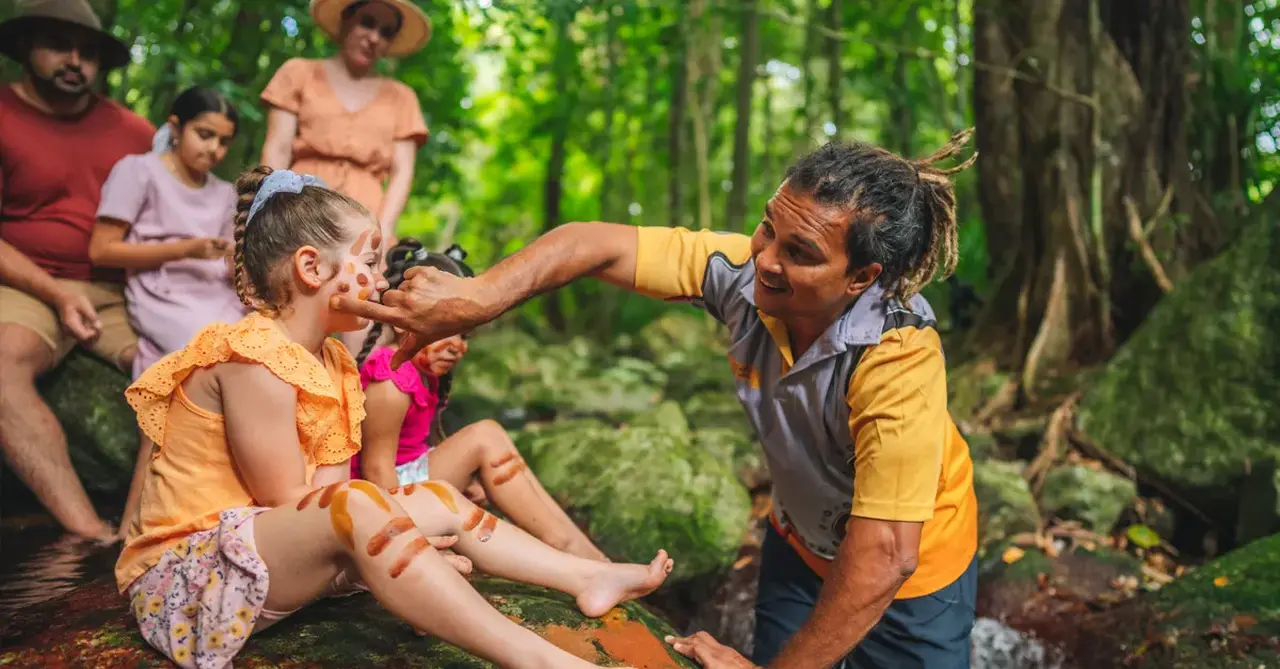
Indigenous Australian body painting. Image credit: Tourism and Events Queensland
Do and don’ts when booking an authentic Indigenous experience
Do check out Tourism Australia’s Discover Aboriginal Experiences list of verified Aboriginal-owned and run businesses at discoveraboriginalexperiences.com
Do ask if a tour is 100% Indigenous-owned before confirming a booking; this is usually clearly stated on the company website.
Don’t book a tour that’s run by non-Indigenous stakeholders. It hinders the economic potential for Indigenous-owned businesses.
Lead image credit: Tourism and Events Queensland/Phil Warring





Jacobs Media is a company registered in England and Wales, company number 08713328. 3rd Floor, 52 Grosvenor Gardens, London SW1W 0AU
© 2025 Jacobs Media
