




Exploring Kazakhstan on a new escorted tour
Nomad culture, Silk Road heritage and spectacular landscapes come together in Kazakhstan

I’ll admit it: I knew next to nothing about Kazakhstan beyond what Borat taught me. I can safely say his education wasn’t the most accurate. This enormous country – the largest landlocked in the world, and the ninth-biggest overall – is a mix of many things, it turns out.
Nomadic heritage, vast steppe landscapes, Silk Road history and the legacy of former Soviet rule all come together across a mountain-meets-desert backdrop, intermingling with modern cities, ancient settlements, outdoor adventures and hearty food.
On a recent trip exploring the country on Regent Holidays’ new 11-day Culture & Cuisine of Kazakhstan tour, I was pleasantly surprised by just how much there was to explore here. From camel farms to canyon landscapes, I found myself in awe of it all.
What to do in Almaty, Kazakhstan
Our exploration began in Almaty, the country’s former capital and still its biggest city, set against the snowcapped peaks of the Trans-Ili Alatau mountains. The city was largely flattened by an earthquake in 1911, meaning much of the modern-day centre was built during the Soviet era.
Kazakhstan was part of the Soviet Union from 1936 to 1991, and Russian is still the most widely spoken language. Today, sleek cafes and restaurants lace treelined streets, with several intriguing attractions to explore – among them the elaborate, lemon-yellow Ascension Cathedral, which is one of the only buildings to have survived the earthquake.
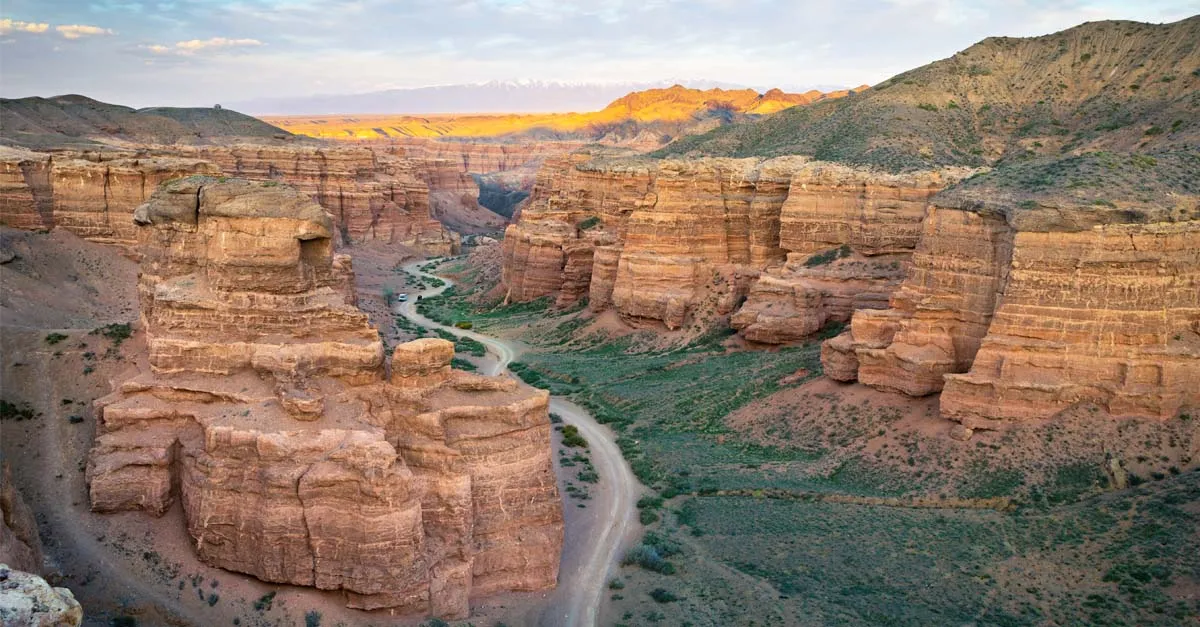
However, the surrounding region was the real draw for me. A three-hour drive from the city took us to Charyn Canyon National Park – a red-ochre desert landscape stretching across nearly 500 square miles, where you could be forgiven for thinking you’d stumbled into Arizona.
Giant sandstone rock formations soared like sandcastles above dusty, honey-hued tracks, surrounded by a sea of undulating hills.
We embarked on a gentle hike past more towering rocks and jagged outcrops in the Valley of Castles, en route to the Charyn River, a cerulean stream trickling through the desolate valley. The sound of the water blended with gentle birdsong as we indulged in a spread of local delicacies and Kazakh wines laid out by our guides.
See Kazakhstan’s sunken forest
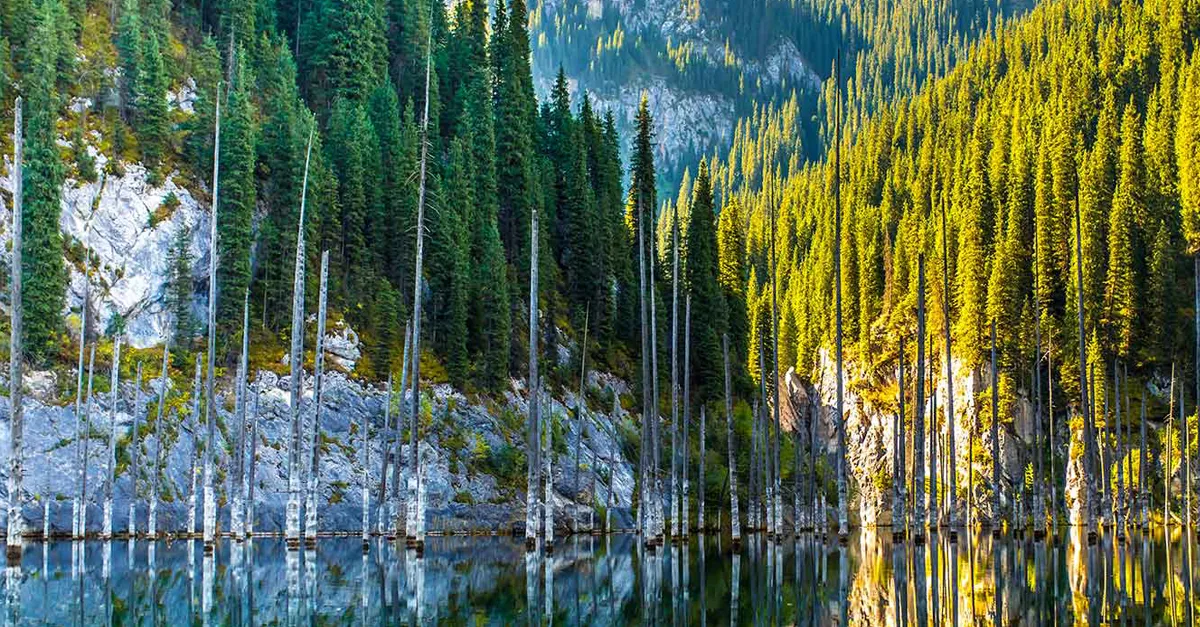
Lake Kaindy, Kazakhstan. Image credit: Global Air
Beyond the canyon, Kazakhstan has plenty more to offer on the nature front – not least Lake Kaindy. A two-hour drive away, this ‘sunken forest’ is one of the country’s most extraordinary draws, set in the heart of the Tian-Shan mountains.
Tree branches rise from a pool of deep teal water, a haunting remnant of the 1911 earthquake, which caused the valley to flood and turned the forest into a natural dam.
Today it’s an ethereal scene, a mirror-flat sheet of water flecked with turquoise and gold, tucked between fir-lined slopes and punctuated by a ghostly cluster of branches – and it is nothing short of mesmerising.
It’s not just Kazakhstan’s landscapes that charm, however. This is a country of myriad cultures, and on a visit to a nearby Uyghur family home that night, we learnt more about the country’s nomadic heritage, huddling in a colourful yurt to sample the likes of beshbarmak – a hearty meat noodle stew, which is Kazakhstan’s national dish – before gathering round a campfire with our gracious hosts, a blanket of stars glistening overhead.
Cultural experiences in Kazakhstan
These touches elevated the tour well beyond the ordinary, yet there was more to come farther south as we flew to the city of Turkistan, considered the country’s spiritual capital.
Here, we were welcomed into another local home to learn how to make traditional tandyr nan – a type of flatbread – kneading mounds of dough before cooking them in an outdoor tandoor oven, then sampling our creations as we heard from local saddle-maker Zhanbolat and his son, Nurdaulet.
On another evening, we visited a wood carver’s workshop, learning more about the carving process as well as the meaning behind the various pieces while our host, Gauharbek, played traditional Kazakh songs on a handcrafted, stringed instrument known as a dombrya.
Just outside the city, we stopped at a family-run camel farm passed down through five generations, sampling fresh camel’s milk and local delicacies as we got a glimpse into the ongoing significance of camel herding in the country.
This slice of rural life gave me an appreciation for the respect for tradition that still rules here, and a sense of the many cultural layers that make up modern-day Kazakhstan.
Silk Road sights
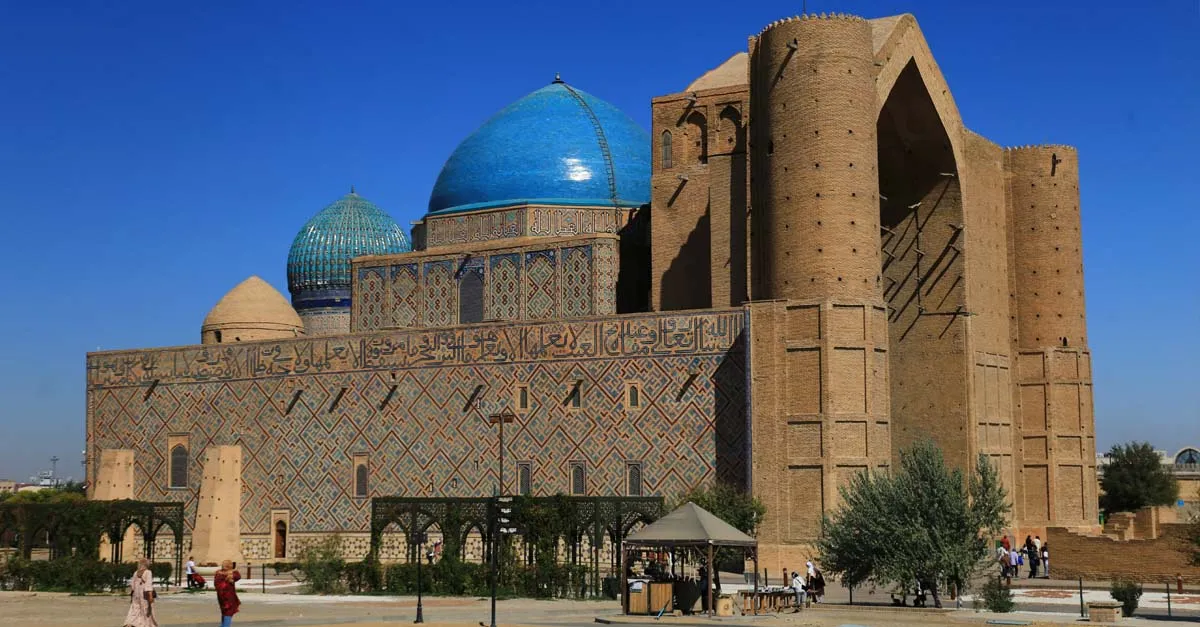
Mausoleum of Khoja Ahmed Yasawi. Image credit: Daniyar Berdal
It wasn’t just the camels and craft heritage that brought us to Turkistan: first settled by Turkic nomads, this was a key trading point on the Silk Road for hundreds of years. It’s also long been the country’s holiest city thanks to its main masterpiece, the Unesco-listed Mausoleum of Khoja Ahmed Yasawi, a giant mosque and mausoleum and a key destination for pilgrimages.
Built in the 14th century under Timur, a fearsome ruler of Central Asia, in homage to his spiritual teacher, it shimmers with turquoise tiles and is topped off with the largest dome in Central Asia.
We visited just a handful of its 35 rooms before exploring the neighbouring 12th-century Hilvet underground mosque, where Sufi poet and philosopher Yasawi lived underground for his final years, providing spiritual teachings to his students.
Our final glimpse into history came on a visit to nearby Otrar, an ancient city turned archaeological site founded more than 2,000 years ago.
Another major point on the Silk Road, this once-flourishing hub thrived in the 11th and 12th centuries, when caravans would pass through, paying visits to its bazaars, mosques, baths and madrasahs (schools).
The city was destroyed when Genghis Khan invaded in 1219, leaving behind a cluster of medieval ruins, according to our guide, Serguey. It then became the final resting place for military leader Timur, who died here two centuries later while on a mission to conquer China.
Today, the remains of its city walls, bathhouses and gate remain, studding a stark, biscuit-coloured desert landscape that few seem to know about, judging by the fact that we were the only ones there.
It was another fascinating glimpse into the many stories that have shaped Kazakhstan across the centuries, and I left with a yearning to know more. This huge, sparsely populated country is impossible to sum up in just a few words – the only way to understand it is to visit.
If you’ve got clients searching for an off-the-beaten track escape where they can have extraordinary landscapes, abandoned cities and intriguing cultural attractions largely to themselves, it’s the place to recommend. It felt like I had uncovered a whole history. I’d never known, and a reverence for tradition and celebration of a multi-layered heritage that is the real magic of Kazakhstan.
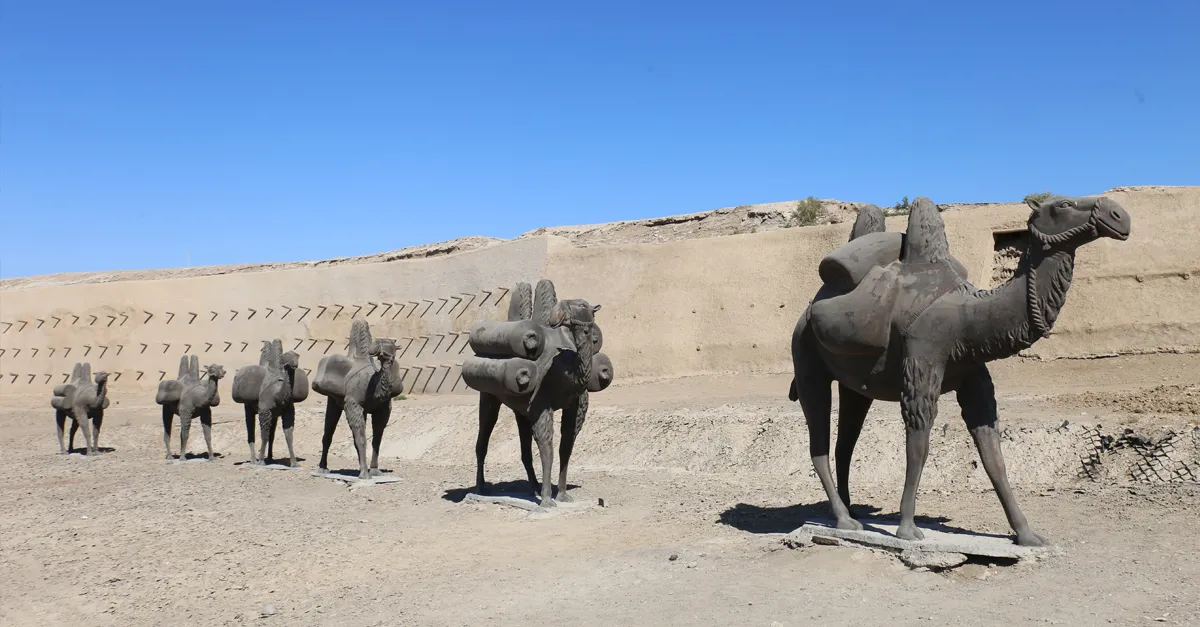
The city of Otrar. Image credit: Daniyar Berdal
Book it
Regent Holidays’ new 11-day private Culture & Cuisine of Kazakhstan tour costs from £3,770 per person, based on four travelling together, including direct Air Astana flights from Heathrow to Almaty, B&B accommodation, internal flights and transport, private guides, activities and some meals. The operator can also tailor-make trips in the country for clients keen on its adventurous side, including a 10-day Kazakhstan on Foot itinerary and a new Peaks & Powder ski holiday.
regent-holidays.co.uk
Soviet history in Shymkent
For clients interested in learning more about the history of Soviet oppression in the country from the 1930s to the 1980s, recommend a visit to the Museum of Victims of Political Repression, in the city of Shymkent, about two hours from Turkistan. It’s sobering but insightful.
There are photos of executed victims on the walls and insight into tragic events including the Kazakh famine, when nomadism was repressed, resulting in an estimated 1.5 to 2.3 million deaths from 1930 to 1933. Plus exhibits on the labour camps that followed and the road to Kazakhstan’s eventual independence in 1991.
Ask the expert
“Kazakhstan is still relatively unknown, but it’s gaining popularity as travellers seek more off-the-beaten-path destinations. We’ve seen an increase in bookings over the past year, and I believe it has immense potential. The country is a melting pot of different cultures, has a very rich history and is also great for nature lovers with its diverse landscapes.
We launched our new Culture & Cuisine of Kazakhstan itinerary because we wanted to emphasise cultural experiences such as sharing home-cooked meals with local families, participating in wine tastings, taking cookery classes and visiting markets. Kazakh people are known for their warmth and generosity, and I’ve always felt very welcome there.”
Andrea Godfrey, head of Regent Holidays
Lead image credit: Shutterstock/Sergey Dzyuba




Jacobs Media is a company registered in England and Wales, company number 08713328. 3rd Floor, 52 Grosvenor Gardens, London SW1W 0AU
© 2025 Jacobs Media
