




You are viewing 1 of your 2 free articles
Architecture and animals in Sri Lanka's sustainable heartlands
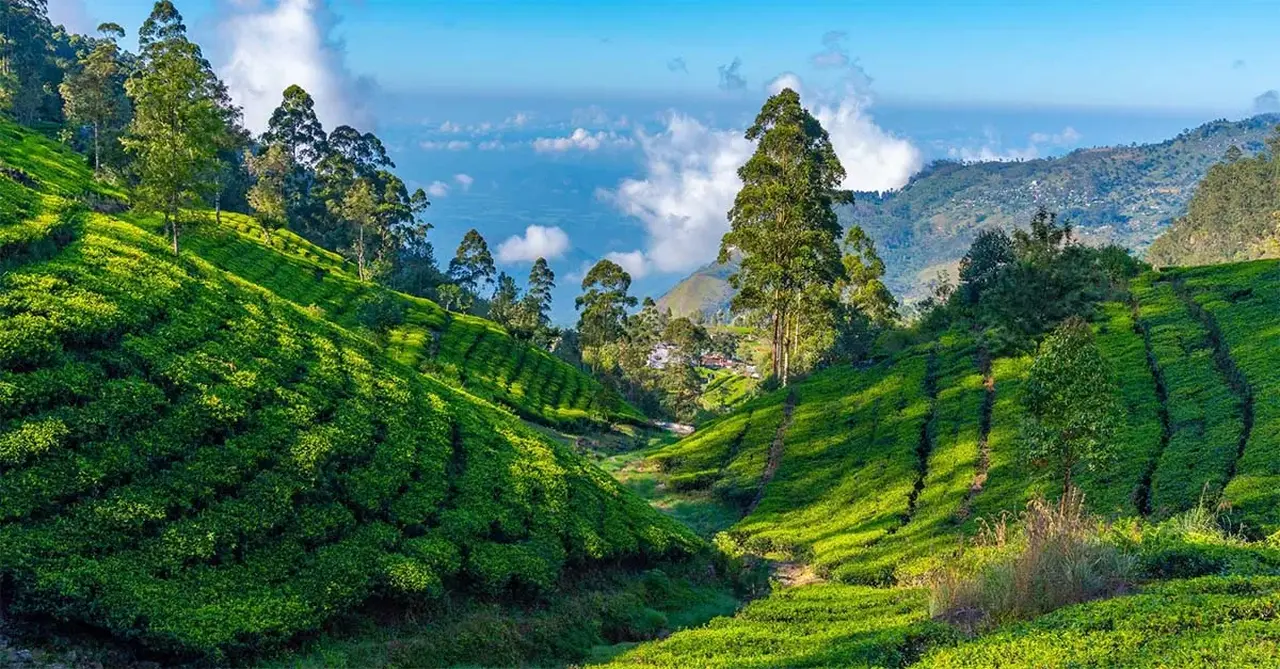
Sri Lanka’s sustainable ethos comes from a deep appreciation for nature and wildlife

Click here to download and save as a PDF
Before breakfast, my Sri Lankan travel companions, Chitral and Nandana, drink a glass of warm water ‘for detoxification’. Instead of tea or coffee, this Ayurvedic practice known as usha pana chikitsa is crucial to their wellbeing routine. Ayurveda and Buddhism are deeply intertwined throughout this island nation, supporting physical and mental balance.
“Warmed water is important to promote digestion,” says Chitral Sirirathne, management assistant at the Sri Lanka Tourism Promotion Bureau, before he drains a large glass.
I stick to tea – lots of it. Although Ayurvedic medicine favours non-caffeinated brews, Sri Lanka has been exporting world-class Ceylon tea since 1867. The Amba Estate in the Uva Highlands is an organic farm and guesthouse surrounded by forests and tea fields, offering tastings and a daily tour.
Tea is rich in polyphenols – particularly antioxidant catechins – and I learn about the camellia sinensis plant while surrounded by this stunning landscape. It’s a revealing stop on my journey through Sri Lanka’s western and southern coastal plains and into the central highlands.
Sustainable architecture in Sri Lanka
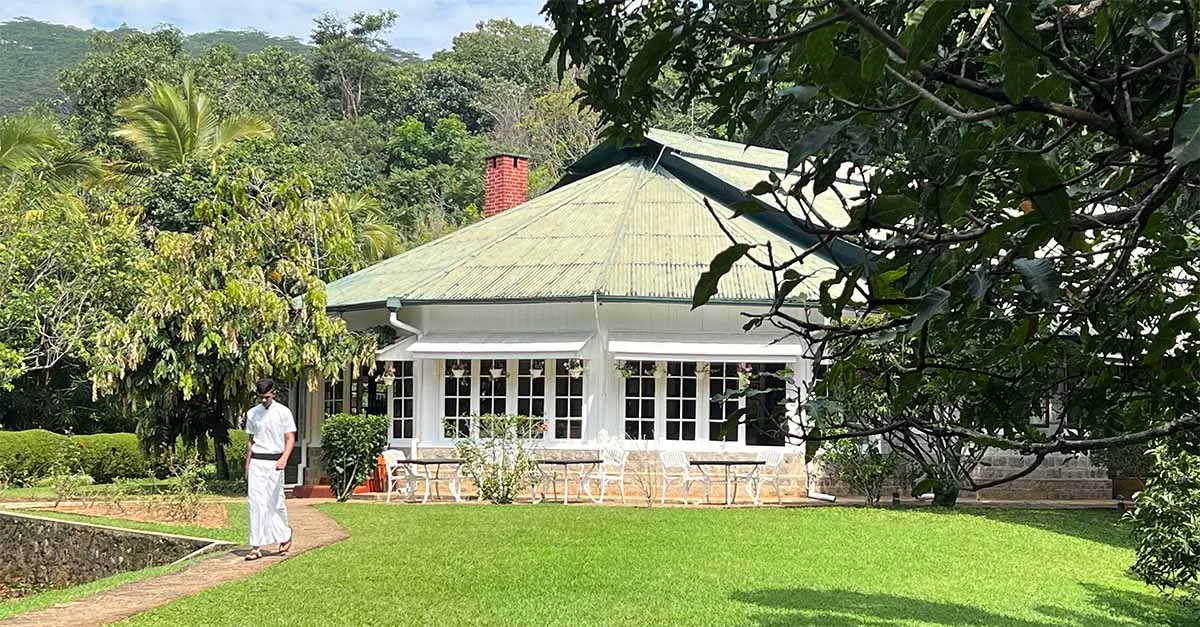
Mountbatten Bungalow, Kandy. Image credit: Beverley Watts
I’d started my journey in the capital, Colombo, where the 19th-century Gangaramaya Temple complex, with its museum and library, is a fascinating introduction to Buddha’s teachings about living in harmony with nature.
Sri Lanka’s renowned architect Geoffrey Bawa planned the meditation temple of Seema Malaka inside this shrine. The late visionary designer incorporated natural light and ventilation in all his projects and used renewable local materials long before these became buzzwords in sustainable architecture. Bawa’s ‘tropical modernism’ style is the epitome of climate-responsive design.
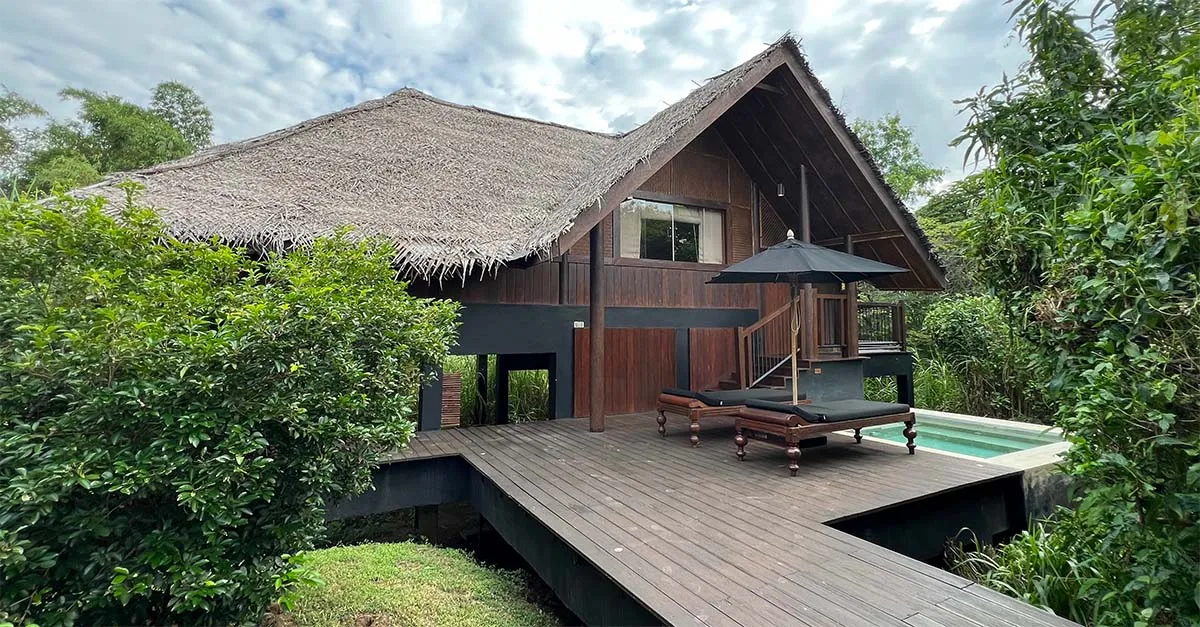
Jetwing Vil Uyana, Sigiriya. Image credit: Beverley Watts
These principles go back further than you might think. At Sigiriya, an ancient fortress erected between 477 and 495 AD on the erosion-resistant rock of an extinct volcano, King Kashyapa’s royal builders were aware of the need for sustainability and water management.
This fifth-century Unesco World Heritage Site near the town of Dambulla made the best use of natural formations and collected monsoon rains to fill a network of reservoirs.
“Look, you can see the traces of the first-ever ‘pool bar’,” says tour guide Nandana De Silva, pointing to the vestiges of an awning frame that shaded an octagonal pond 1,500 years ago.
I climb to the top of Sigiriya before dawn to watch a spiritual sunrise, interrupted only by the buzzing of a drone that is quickly curtailed as peace reigns supreme here.
Wildlife in Sri Lanka
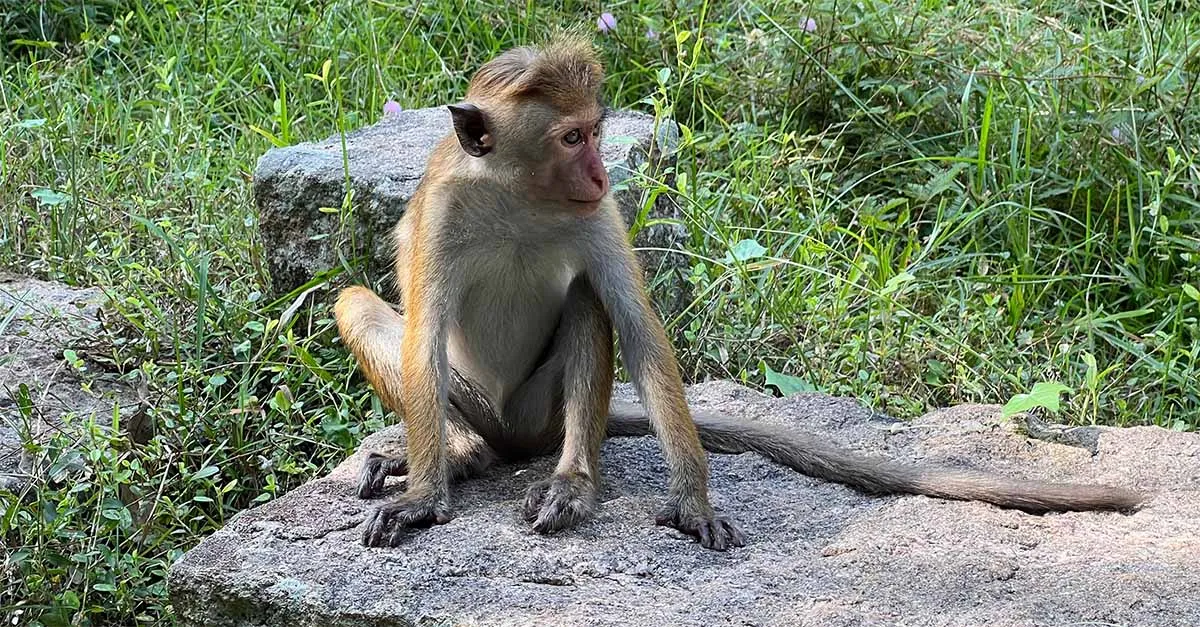
A monkey in Sri Lanka. Image credit: Beverley Watts
Around 40% of Sri Lanka remains forested and the country is a biodiversity hotspot, with elephants, leopards, peacocks, monkeys and the shy, nocturnal loris. The Elephant Transit Home at Udawalawe National Park rehabilitates orphaned baby elephants and injured adults.
I’d love to feed one of the boisterous calves but, quite rightly, human interaction is minimised. Feeding time – four times a day – is highly entertaining and the emphasis is on encouraging the elephants’ return to the wild.
Rather more tranquil is Peradeniya’s Royal Botanic Gardens farther north in the ‘sacred city’ of Kandy. Not only a lovely place to walk, it also plays a key role in biodiversity conservation through research and education.
Indigenous specimens on site include the hora tree, whose wood remains strong under water and was used for shipbuilding over millennia.
Another native species, the kithul palm, produces sap that is boiled down into pure dark-brown treacle and poured over creamy buffalo curd (yoghurt), which I find utterly delectable. As is a juicy vegan burger – made from Sri Lanka’s national fruit, the jackfruit – whose slow-cooked flesh is perfectly seasoned with turmeric, cardamom and ginger at Cafe Chill in Ella.
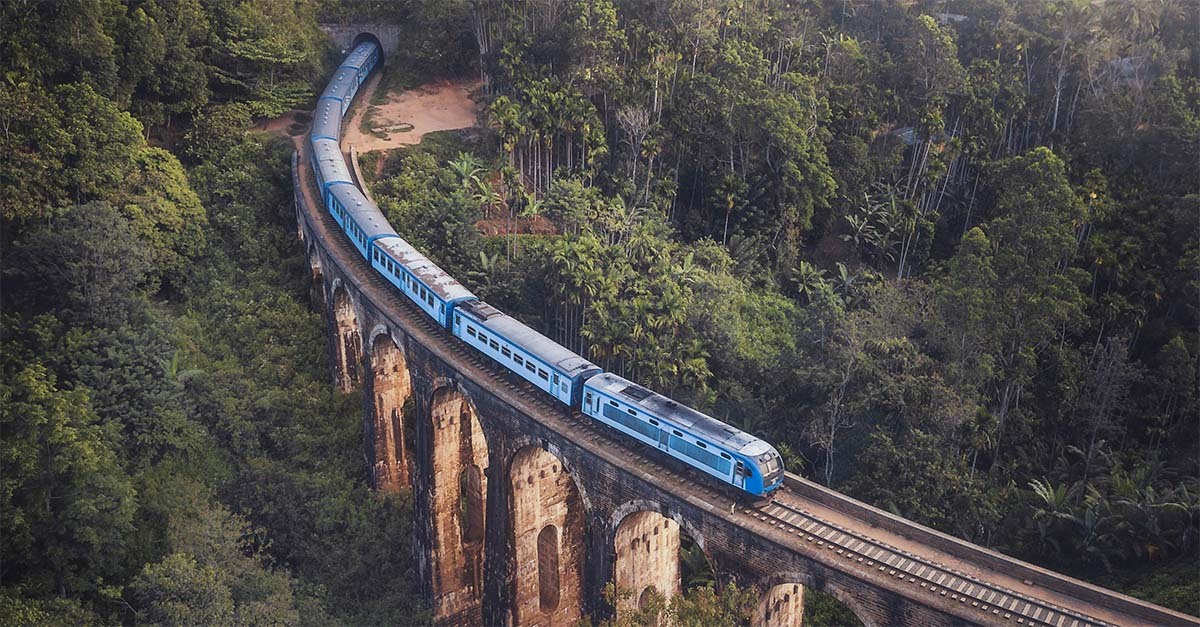
Nine Arch Bridge near Ella. Image credit: Shutterstock/Oliver Heinrichs
The Kandy to Ella scenic train ride is an iconic trip for clients with time to appreciate the scenery, passing by mountains and lakes with non-stop photo-taking opportunities en route. But the shorter journey from Haputale to Nanu Oya also has plenty of panoramic views travelling through the scenic highlands.
I secure my ticket at Haputale station’s 1893-built booking office, with no other soul but a lone dog on the platform at 6am. It’s another peaceful early morning that feels like a gift – and just like the daily hot water ritual, it’s a detox for the soul as well as the body.
Book it
Travel Gallery offers a nine-night journey staying three nights each at Monkey Tail Homestay, Amba Estate and boutique property Rosyth Estate, all organic tea farms. The price starts at £1,835 per person based on two sharing, economy flights, full-board accommodation, cooking classes, guided walks and local transport.
Audley Travel has an 18-day trip taking in the Cultural Triangle, tea country, Udawalawe Elephant Transit Home and Galle, from £5,720 per person based on two sharing, with flights, transfers, accommodation and activities.
Sri Lanka Tourism Promotion Bureau offers more information and resources at srilanka.travel
Where to stay in Sri Lanka
Jetwing Vil Uyana
At this property in Sigiriya, I stay in a luxurious thatched dwelling next to paddy fields and a lake where a mugger crocodile known as Heidi patrols. Naturalist Yesitha Rodrigo, the hotel’s experiences and sustainability lead, assures me Heidi is timid and prefers to keep to herself.
Reassured, we go out at night to find the elusive loris, and he reveals that this was one of the filming locations for the BBC’s David Attenborough documentary Blue Planet II. I can see why, as I spot the tiny bushbabylike primates high in the trees while a nimble ring-tailed civet dashes by.
Jetwing also invests in solar energy, and the ethos of being connected both to the local community and the surrounding environment shines through at every turn. Thatched chalets for two people start from £200 per night.
Thema Collection’s Mountbatten Bungalow
Mountbatten Bungalow Set close to Kandy, the former colonial residence of Lord Mountbatten, King Charles’s uncle, is now locally owned and eco-focused. My accommodation was a comfortable garden chalet set high in the hills. I’d already fallen in love with the period furnishings of the retro reception and lobby area, along with the hilltop hideaway feel. Chalets for two start from £185 per night.




Jacobs Media is a company registered in England and Wales, company number 08713328. 3rd Floor, 52 Grosvenor Gardens, London SW1W 0AU
© 2025 Jacobs Media
