




You are viewing 1 of your 2 free articles
How to see Tropical North Queensland through Indigenous eyes
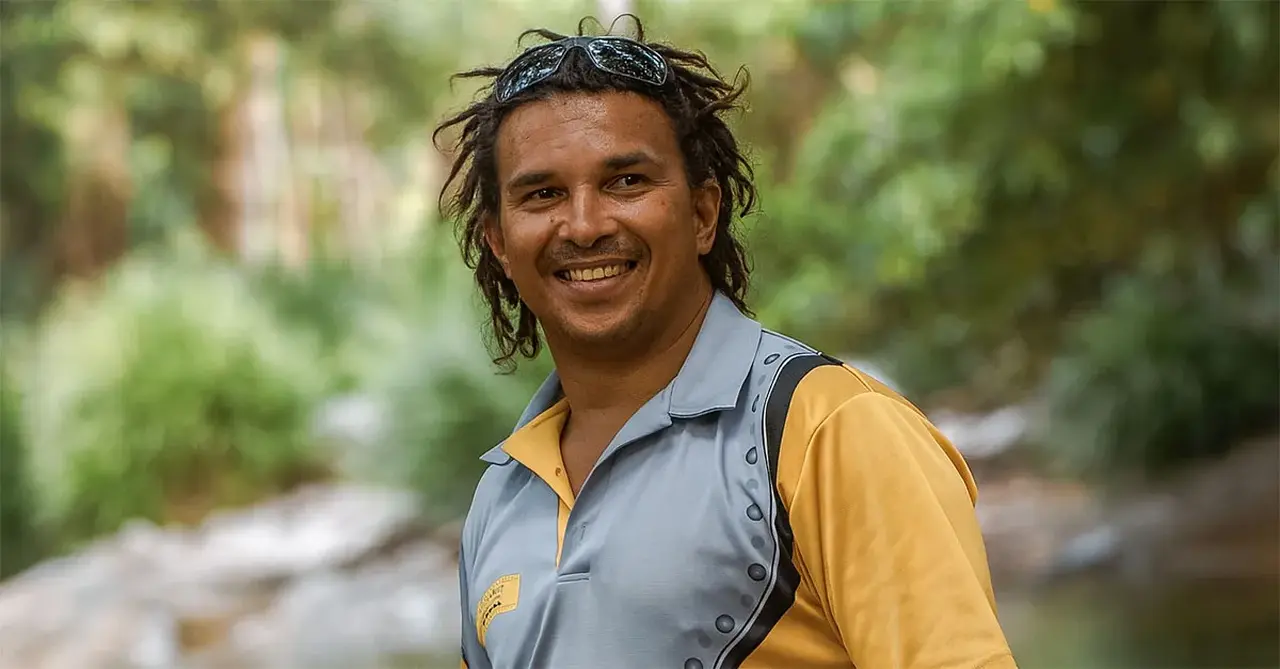
We want to educate visitors through stories and experiences, says Juan Walker

Click here to download and save as a PDF
Q. You’re a Kuku Yalanji man, part of one of Australia’s many Indigenous cultures and based in Tropical North Queensland. How did you connect with your heritage growing up?
A. As a kid, my grandparents made sure my brothers and I knew about our culture. My grandfather learnt the Kuku Yalanji language and culture as a boy in the Aboriginal camps in the Daintree Rainforest and wanted to pass that on. But he recognised we’re not going to be living like that anymore, so he still encouraged us to go to school.
In the afternoons, after school, we’d spend time with our grandparents, watching my grandmother weaving and getting out in nature. Our school mates wanted to learn as well, including our non-Aboriginal friends, so my grandfather started teaching it as part of the school system. He knew culture keeps you grounded. You need to know where you come from to stay strong.
Q. How did your tour company, Walkabout Cultural Adventures, come about?
A. After high school I had the best of both worlds – a good education and knowing my culture – so I wanted to get a job. I became a rainforest guide at Daintree Ecolodge, where I learnt guiding skills and how to run a business.
I was there for nine years, running the lodge in my last year, before I felt like a change. I went on holiday to South America in 2008 to meet Indigenous people in the Amazon, and came up with the idea for Walkabout Cultural Adventures.
Q. Where do you take guests on your Queensland tours?
A. We visit lots of environments on our tours, including rainforests, freshwater rivers, estuaries, beaches and the Great Barrier Reef. We want to educate visitors on how our people living there look after it, through cultural stories and experiences to help them see the land the way we do and how it was traditionally used.
We have two tours (each can be either a half or full day): one exploring the Daintree Rainforest and the other Cape Tribulation. We’ll do lots of experiences, like teaching Aboriginal art techniques, seeing the medicinal qualities of plants or walking barefoot on the coastal flats trying to spear mud crabs (pictured).
Our groups are a maximum of 11, so there’s a better chance of having one-on-one time with people. Private charters are also available.
Q. What do you wish visitors understood better about your culture?
A. That not all Aboriginal cultures are the same. Australia is a big place, so everyone and everywhere is different. There are 250 languages actively used; before European contact, there were 800 languages and up to 1,200 dialects.
After Covid-19, the Queensland government launched the Thrive programme to involve more Indigenous people in the tourism industry.
With that and the First Nations Tourism Plan developed by Queensland Tourism Industry Council, we now have around 40 Indigenous operators in Tropical North Queensland. And there are plans to grow that by 20% in time for the Olympic Games in Brisbane in 2032.
Q. How can agents help clients understand that an Indigenous experience should be a core part of an Australia trip?
A. I think the best way for agents to sell the product is to come to Queensland and experience it for themselves. They’ll understand what we do, the stories we teach people and get the full picture.
Q. What kind of clients are these experiences best for?
A. Our primary clientele are couples but they can appeal to anyone. As a small operation, we can adapt our itineraries, making sure people do things that will maximise their participation to have fun and learn about the place.
› Find trade resources to help you learn more about Aboriginal experiences in Queensland at teq.queensland.com
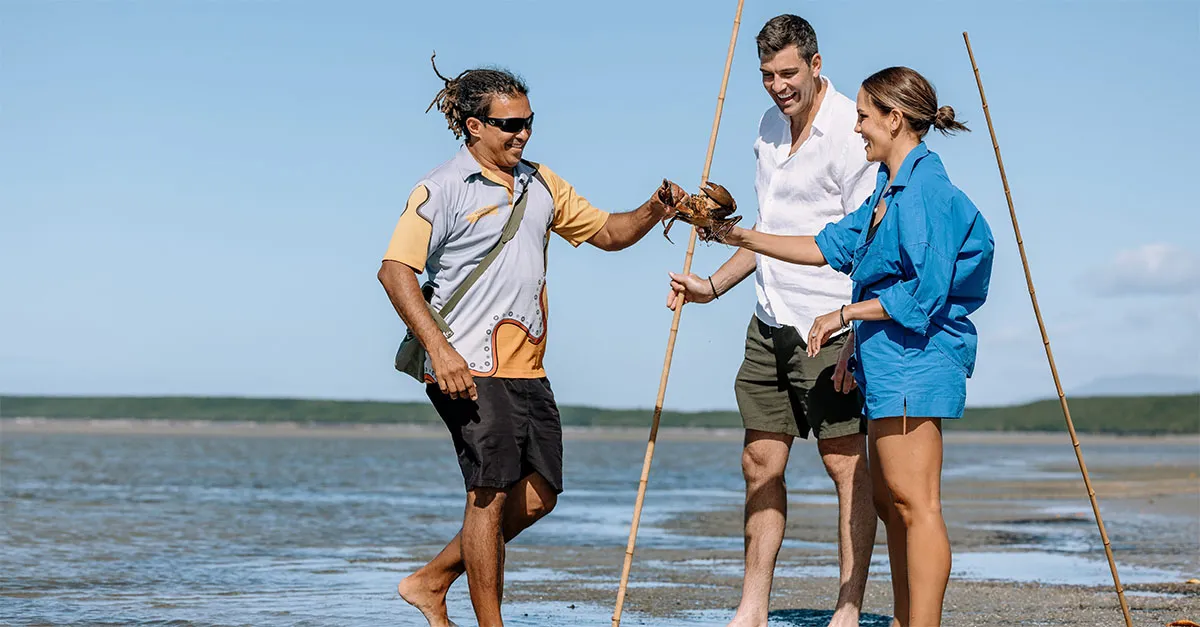
A coastal walk with an Indigenous interpreter. Image credit: Tourism Australia/Jarrad Seng
Juan’s Queensland highlights
I find being near water very healing. There’s a beautiful section of the Great Barrier Reef in the north with two of my favourite places to go in salt water – Mackay and Undine coral cays. On the mainland, for the fresh water, I love Mossman Gorge.




Jacobs Media is a company registered in England and Wales, company number 08713328. 3rd Floor, 52 Grosvenor Gardens, London SW1W 0AU
© 2025 Jacobs Media
