




Special Report: Iata urges urgent review of SAF mandates
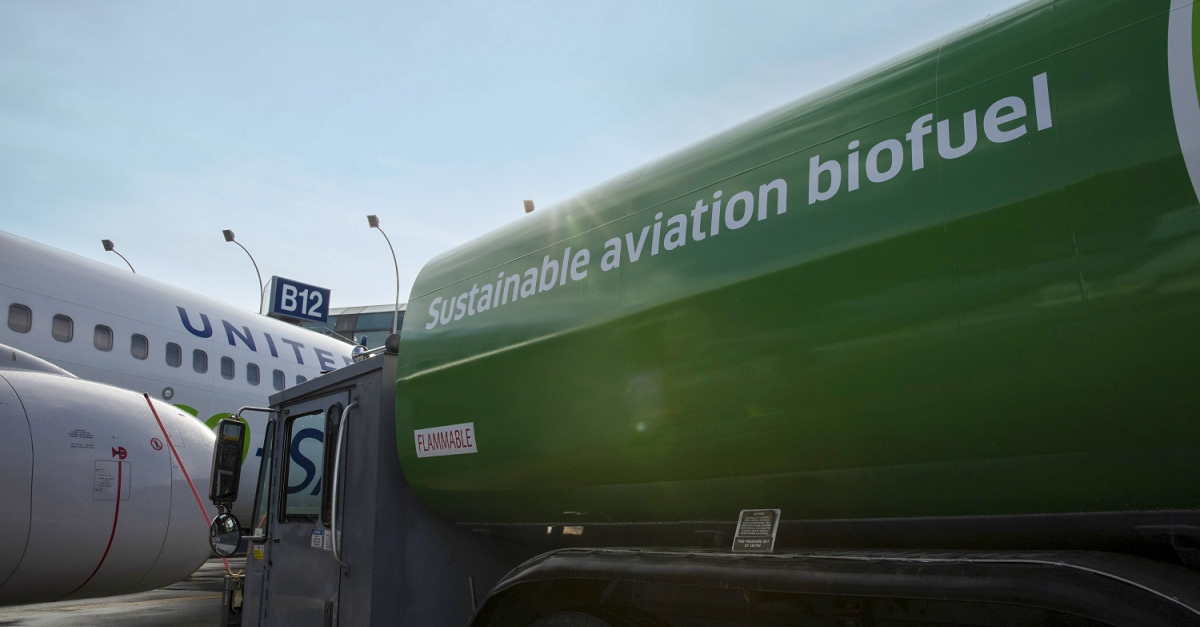
Iata director general Willie Walsh has called for an urgent review of the UK and EU sustainable aviation fuel (SAF) mandates which came into force last year, arguing they have inflated the price of SAF without stimulating the supply.
Walsh highlighted “worrying developments” and said: “I’m disappointed at the pace of progress. We’re not seeing SAF produced in the volumes we hoped or expected.”
He noted: “We said when we committed to Net Zero by 2050 that it would be extremely challenging and expensive. It will be more challenging now. The regulation has not been helpful. Mandates have led to huge increases in price [of SAF].”
Walsh accused fuel suppliers of “price gouging and ripping us off”, saying: “If you mandate a product that is in short supply, it will increase in price. Airlines that need to comply with the mandates can’t get the supply. Governments will have to review these mandates.”
He suggested the UK mandate target of 10% SAF use by 2030, which some airlines have committed to across their operations, is “now impossible to achieve” and said: “The EU’s 6% SAF target will be challenging, [but] 10% SAF use by 2030 is beyond the reach of most airlines. SAF is not available. A lot of airlines will have to re-assess their commitments.
“About 70% of airlines have made commitments on SAF use by 2030. There is just no way those commitments can all be met. We’re not seeing the supply stimulated.”
Walsh noted fuel suppliers pay the costs of compliance with the mandates but “just pass them on”, saying: “They’re in a position to adjust the price to protect themselves.
“This is a wake-up call. SAF is just not available. The regulators need to look urgently at what is happening versus what they thought would happen.”
Walsh said Iata had not set a 2030 target for SAF use “because what we thought achievable wouldn’t look ambitious”.
Global SAF production is forecast to reach 2.4 million tonnes (MTs) in 2026, up from 1.9 MTs in 2025. That was almost double the 1 MTs produced in 2024 but represented only 0.6% of global jet fuel consumption while adding $3.6 billion to airline fuel bills.
SAF is forecast to comprise just 0.8% of the world’s aviation fuel supply in 2026.
Carriers ‘could face squeeze on fossil fuel’
Airlines could also face an increasing squeeze on the supply of jet fuel at some airports in Europe given the rate at which oil refineries are closing, even as they struggle to secure adequate supplies of SAF.
That is according to Iata chief economist Marie Owens Thomsen, who described SAF mandates as “a problem” but said: “There have been big changes even in the fossil fuel market. We have concerns about a shortage of supply at certain airports.”
An estimated one in five refineries are forecast to close by 2035, mainly in Europe, due to falling demand for petrol and diesel as vehicles increasingly switch to electric power.
Owens Thomsen noted jet fuel comprises just 8.7% of refinery output and said: “Oil products compete for refinery capacity and jet fuel demand, being one of the smaller components, won’t be enough to justify refinery capacity. We face a threat of limited access to fossil fuel.”
Increased SAF production would help, she said, although “how we get SAF to airports is potentially a significant sticking point”.
However, 59% of renewable fuel projects announced to date and due to be operating by 2030 have seen “nothing happen” since being announced, according to Owens Thomsen, with 29% in operation and only 12% under construction. She noted: “All the projects would need to start in 2026 to hit existing targets.”
‘It’s not about a lack of money’
The failure to invest sufficiently in SAF production is “not about a lack of money” but “how capital is allocated”, Owens Thomsen insisted.
She noted an estimated $217 billion was invested in AI in 2025 when “no one knows how much profit it will deliver” and said: “If we could capture that money for SAF production. we could fund everything we need to 2036.”
Owens Thomsen pointed out investment in oil earns investors “about a 20% return” when the return on SAF “is below 5%”, arguing: “We need help because of the lower profit margin.”
She said: “Oil companies just say there is not enough profit [in SAF]” and suggested “I don’t know why there isn’t more outrage at the oil companies over this. Every country continues to support producers of fossil fuels, amounting to $1 trillion a year. Imagine if that was put into renewables. It would be a completely different scenario.
“The world is saying we must have an energy transition. Governments say they are going to do it., but they don’t.”
You have viewed both of your 2 free articles this month as an unregistered user
To continue reading free of charge, please
If you have registered previously, please complete your details to login:
More Content














Jacobs Media is a company registered in England and Wales, company number 08713328. 3rd Floor, 52 Grosvenor Gardens, London SW1W 0AU
© 2025 Jacobs Media
