




You are viewing 1 of your 2 free articles
EU deal on e-gates will not kick in until autumn at earliest


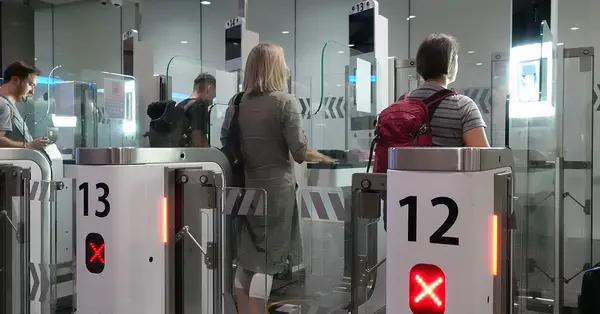
Industry leaders welcomed the prospect of an end to long queues at EU airports following this week’s agreement between the UK and the EU on e-gates, but those travelling this summer will not see the benefits.
Unveiling the deal on Monday, prime minister Sir Keir Starmer said British travellers would be able to use e-gates when they travel through passport control – rather than having to wait in line for passports to be stamped – and called for EU member states to act “without delay”.
However, an ‘explainer’ document issued by the UK government makes it clear that the deal will not kick in until the EU’s biometric Entry/ Exit System (EES), now due for launch in October, is introduced.
The document states: “The commission has confirmed there will be no legal barriers to e-gate use for UK nationals travelling to and from EU member states after the introduction of the EU’s Entry/Exit System.”
The EES is set to be rolled out over six months, suggesting use of e-gates might not be widely available to UK travellers until next spring or summer.
Luke Petherbridge, director of public affairs at Abta, agreed the existing EES timeline meant the change of policy on e-gates would come too late for this summer and noted there was still a chance UK travellers would encounter border guards after the EU ends the stamping of passports.
He said: “It will depend on the technology at each border crossing, as they can only remove border guards if systems are in place to verify all requirements.”
Abta chief executive Mark Tanzer said the change would “make it easier for travellers” and reduce queues.
Advantage Travel Partnership chief executive Julia Lo Bue-Said said: “The tedious wait in border control lines since Brexit has long been a source of irritation for many Brits travelling to the EU. Widening the availability of e-gates across Europe will indeed be most welcome.”
The UK-EU deal, which covered a range of sectors, included an agreement to work on a “youth experience scheme”, which Starmer said would enable young people to “travel and work freely in Europe”.
Tanzer said Abta strongly supported the proposal and wanted a firm agreement in place “as quickly as possible”.
Photo: Shutterstock
Related Content
















Jacobs Media is a company registered in England and Wales, company number 08713328. 3rd Floor, 52 Grosvenor Gardens, London SW1W 0AU
© 2025 Jacobs Media
