




You are viewing 2 of your 2 free articles
Start of EES leads to ‘three-hour airport delays and missed flights’


The introduction of the European Union Entry/Exit System (EES) on Friday led to passenger waiting times of up to three hours at airport border controls and “significant disruption” to flights.
One flight to the UK was missing 51 passengers at departure while another had none on board at gate closing time and 12 passengers were yet to reach the gate 90 minutes later.
The update from airport and airline trade bodies came amid reports of chaotic scenes at certain European airports over the weekend.
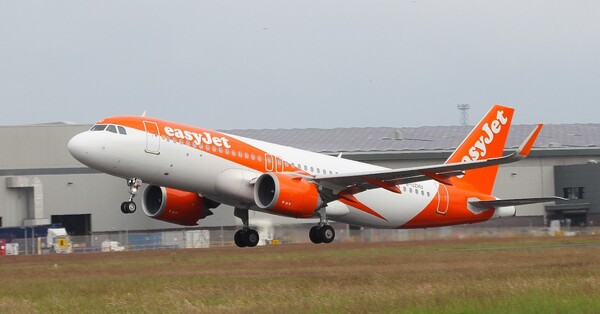
Almost 100 passengers due to fly to Manchester with easyJet were left behind at Milan’s Linate airport on Sunday but faced queues of up to three hours a because of the new border control checks, the BBC reported.
An easyJet spokesperson said: "We continue to urge border authorities to ensure they make full and effective use of the permitted flexibilities for as long as needed while European Entry/Exit System is implemented, to avoid these unacceptable border delays for our customers.”
This followed ACI Europe and Airlines for Europe (A4E) reiterating a call on the European Commission to “immediately” introduce additional flexibility in the operation of EES as the first day of full operations was marked by passenger disruptions, delays and missed flights.
The two industry groups have for weeks cautioned about challenges to the operational introduction of EES.
“On this first day of full operations, these major concerns are now a reality,” a joint statement said.
“The European Commission noted that registering a traveller takes on average only 70 seconds when the EES is functioning at full capacity.
“However, initial reports from a number of airports and airlines across the Schengen area confirm that the mandatory registration of all third-country nationals as of 31 March – combined with the end of the possibility to fully suspend the system - is now resulting in passenger waiting times of two to three hours at airport border control during peak travel periods.
“These delays are occurring despite border authorities making extensive use of partial suspension measures, which allow biometrics data not to be captured.”
There was also “significant disruption to flight operations, with passengers missing flights and delays due to prolonged border processing times”.
Olivier Jankovec, director general of airports organisation ACI Europe, and Ourania Georgoutsakou, managing director of A4E, said: “While we will continue to closely monitor developments in the coming days, it is already evident that greater flexibility is immediately needed.
“Border control authorities must be allowed to fully suspend the EES when waiting times become excessive.
“This is essential not only in the coming weeks, but throughout the peak summer travel season.
“Our support for the EES and its objectives is unwavering. However, strengthening border management must not come at the expense of operational efficiency or the passenger experience.
“Safeguarding Europe’s reputation as an accessible and well-functioning tourist and business destination is at stake, particularly as air travel is already facing significant disruption due to the ongoing situation in the Middle East.”
The long-delayed EES digital border system started being introduced in October but was put into full operation on April 10.
The UK government said: “EES may take each passenger extra time to complete so be prepared to wait longer than usual at the border.”
The European Commission insisted that “for each subsequent entry and exit, only a quick verification will be needed, making the process faster”.
Related Content


















Jacobs Media is a company registered in England and Wales, company number 08713328. 3rd Floor, 52 Grosvenor Gardens, London SW1W 0AU
© 2025 Jacobs Media
