




You are viewing 2 of your 2 free articles
Analysis: Jet fuel fears persist as peace talks falter
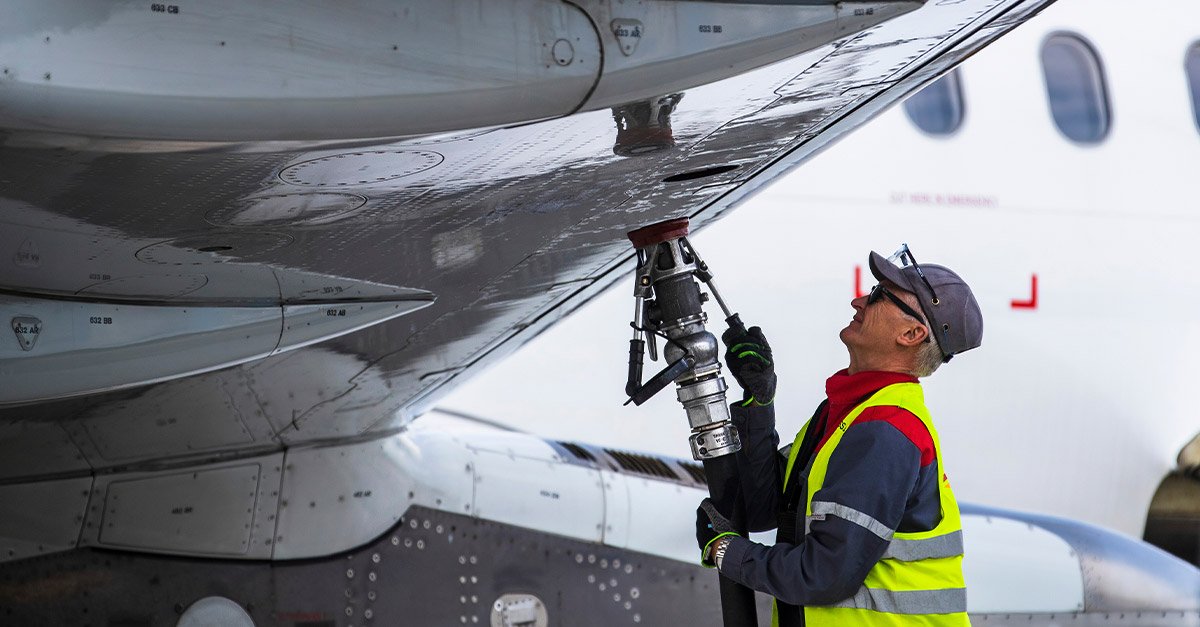
Energy crisis worsens in wake of US blockade. Ian Taylor reports

The breakdown of talks on peace in the Gulf at the weekend and US imposition of a blockade on Iranian shipping from Monday took the war and resulting energy crisis to a new level.
Now even Iranian oil, in large part destined for China, will no longer contribute to global supplies.
The oil price predictably rose back over $100 a barrel as President Trump appeared to give up on attempts to talk it down.
German chancellor Friedrich Merz’s reaction that “this is now going to be a lengthy process” seems all too right, as does his warning: “We will feel the consequences of this war for a long time to come.”
Analysts forecast “a stagflationary shock” – a combination of stagnation and inflation – to the world economy, with the UK likely to be worst hit of the major economies given its weak outlook pre-war.
A report by UK-based think-tank the Resolution Foundation suggested living standards in Britain would fall this year, noting the “squeeze will run right through the income distribution [levels] . . . [with] damage to household finances already done”.
It remained unclear, as Travel Weekly went to press, whether a fortnight’s ceasefire between the US and Iran would hold through a second week – as Pakistan mediators reportedly continued to shuttle between negotiators.
But the odds appear against it, with further escalation more likely, while the US blockade deepens the energy supply crisis and risks antagonising China.
The failure of tankers to transit through the Strait of Hormuz during the ceasefire demonstrates the futility of hopes for a speedy resolution.
But even were fuel flowing, a Financial Times analysis suggests it would take two years to restore oil and gas supplies to pre-war levels and longer before energy markets stop factoring risks of disruption into prices.
The full impacts are poised to bite. A hike in UK inflation is expected from July, dealing a fresh blow to consumer confidence.
Shortages of jet fuel across Europe could hit well before that. Airports association ACI Europe warned the EC last week of “increasing concerns over the availability of jet fuel”, saying “systemic jet fuel shortage is set to become a reality for the EU if passage through the Strait of Hormuz does not resume in any significant and stable way within the next three weeks”.
It called for EU-wide monitoring of supplies as summer approaches. Iata director general Willie Walsh, speaking in Singapore, warned it could take “many, many months” for the impact on air traffic to subside even when supplies resume.
The Financial Times reported the UK aviation sector has attempted to address the shortfall in supply by ramping up imports of US jet fuel, with a quarter of US jet fuel exports delivered to Britain in March.
Unfortunately, it’s unlikely – on its own – to be enough to replace supplies from the Gulf.













Jacobs Media is a company registered in England and Wales, company number 08713328. 3rd Floor, 52 Grosvenor Gardens, London SW1W 0AU
© 2025 Jacobs Media
