




Advantage sees Greece market share rise after suspending EES for Brits

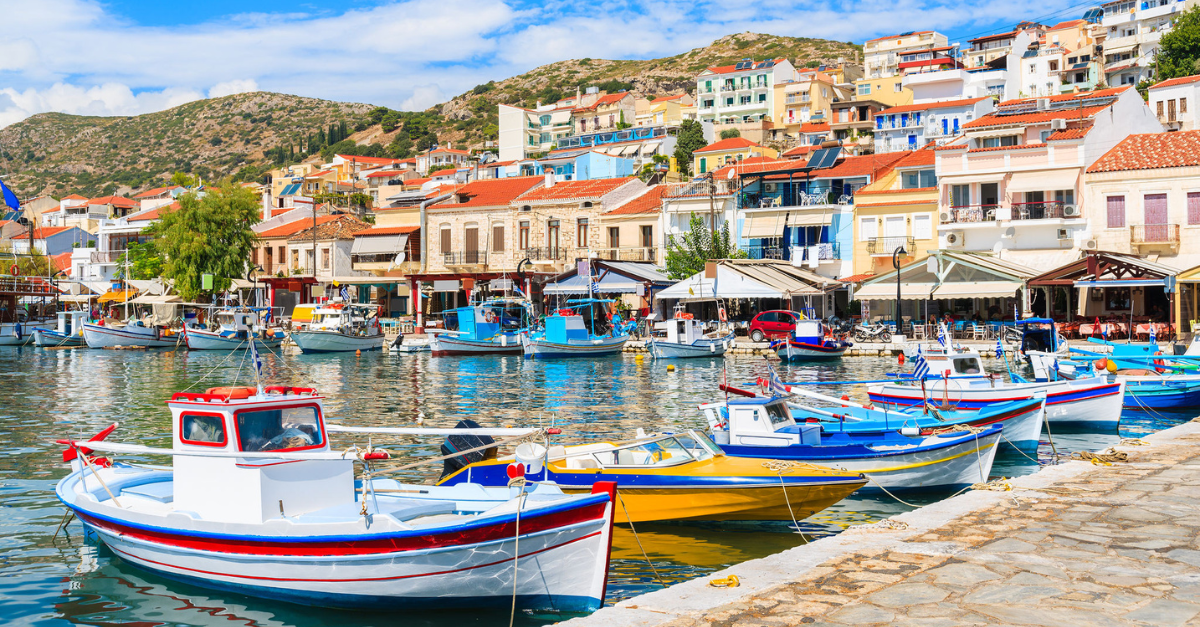
Advantage Travel Partnership says Greece has increased its market share since mid-April thanks to suspending new entry rules for British arrivals.
Biometric registration of non-EU citizens, including UK passport holders, became mandatory from April 10 as the Entry-Exit System (EES) became fully operational.
But many British travellers reported long queues at European airports – and Greece suspended biometric border checks for UK passport holders last month.
Julia Lo-Bue-Said, Advantage Travel Partnership chief executive, said: “Following Greece’s decision to remove EES requirements for UK travellers, we have seen a clear and consistent uplift in demand, with Greece’s share of sales rising from 7.7% in mid-April to 9.8% by the end of the month.
“In contrast, we’ve seen a softening in share for typically dominant markets like Spain and the Islands.
“This shift suggests that travellers are actively factoring border friction into their decision-making, opting for destinations where the arrival experience is smoother and more predictable.”
More: British holidaymakers to avoid ‘burden’ of biometric check delays this summer, Greece pledges
Looking at travel trends for May half-term and summer 2026, she said: “It’s clear that the British traveller has become a master of navigating economic and geopolitical noise.
“We are seeing a market that refuses to compromise on the annual holiday but is becoming far more strategic in how they secure it.
“Consumers are being intentional with their spend and this is evident from those locking in cost certainty through all-inclusive packages, as well as those investing in experience-led long-haul bookings and cruises.”
Advantage said its figures for the summer 2026 season, from May 1-October 31, reveal “a resilient market defined by two distinct consumer behaviours, a high demand for cost certainty and a commitment to high-value, bucket-list experiences”.
It noted a “dual dynamic” where families “prioritise budget-friendly all-inclusive packages while couples and premium travellers invest heavily in long-haul and cruise itineraries”.
“However, the continued momentum in the late-booking market also underlines that appetite for travel remains resilient,” added the consortium.
“Holidays departing in May have taken the top spot for bookings made since the start of the month, accounting for nearly 22% of all bookings, while travel booked within the next 12 weeks represents more than 41% of all bookings overall.
“Spain, the Canary Islands, the Greek iIslands and Turkey are the most popular destinations for the half-term period.”
All-inclusive remains the favourite choice for holidaymakers, accounting for 38% of all bookings, and Turkey has seen sales recover thanks to tactical recovery campaigns.
Destinations such as the US, Caribbean and Far East are seeing average booking values increase by 7% versus last year.
But travel to the Far East in particular faces logistical hurdles as the Middle East conflict has forced airlines to navigate significant airspace restrictions.
The cruise sector now represents 15% of total booked revenue, “emerging as a distinct, less price-sensitive segment dominated by couples”, said the consortium.
More Content













More Content







Jacobs Media is a company registered in England and Wales, company number 08713328. 3rd Floor, 52 Grosvenor Gardens, London SW1W 0AU
© 2025 Jacobs Media
