




You are viewing 1 of your 2 free articles
Updated: Heathrow submits £49bn ‘shovel-ready’ third runway and expansion plan

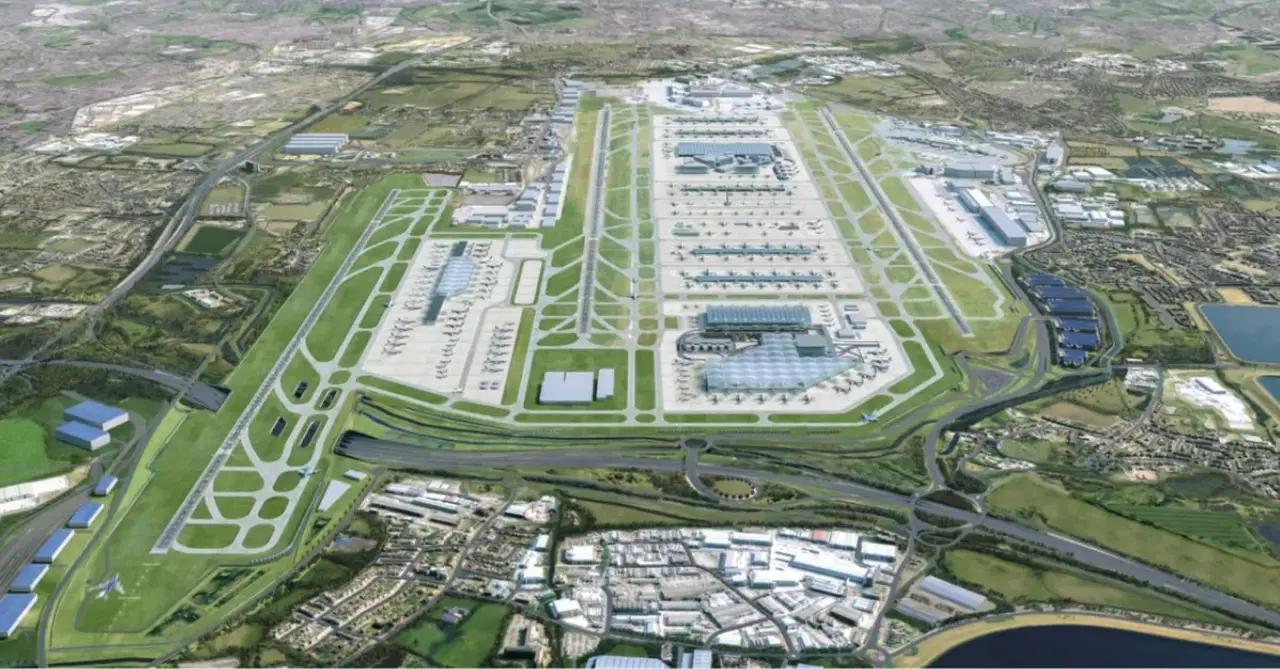
Heathrow has submitted “shovel-ready” proposals for a third runway and expansion costing £49 billion.
EasyJet chief executive Kenton Jarvis revealed that the budget airline would be able to start flying from Heathrow for the first time if the airport’s third runway is approved.
Such a move would challenge British Airways’ dominance at the London hub.
Jarvis said: “Expansion at Heathrow will provide consumer and economic benefits and represents a unique opportunity for easyJet to operate from the airport at scale for the first time and bring with it lower fares for consumers.”
The “100% privately financed” project comprises three main elements including £21 billion for the new runway and airfield infrastructure – up from £14 billion in 2018 due to what it described as construction inflation.
An additional £12 billion would go towards for new terminal and stand capacity and £15 billion for modernising the current airport by expanding Terminal 2 and ultimately closing Terminal 3.
Heathrow said: “A third runway and supporting infrastructure can be ready within a decade, and the full investment across all terminals would take place over the coming decades.”
The expansion scheme would enable at least 30 new daily routes, extra domestic connections and a better selection of flight times to the most popular destinations.
The plans include a full-length 3,500-metre runway to the northwest of the existing airport.
“We are open to discussing with airlines how this might be shorter, but the case must be made on how it can deliver the same operational, community and economic benefits as a full-length runway,” Heathrow noted following a rival shorter runway option put forward to the government by Arora Group.
Heathrow’s plan would see up to 276,000 new flights a year, taking the total from 480,000 to 756,000.
Increased terminal capacity would cater for 150 million passengers a year from the current capacity of 84 million.
A new terminal complex called T5XW and T5XN would be added together with upgrades to existing terminals, including demolition of Terminals 1 and 3 and extension of Terminal 2 to full capacity.
The new full length runway would require the realigning and widening of the M25 motorway between junctions 14-15 at Heathrow – unlike the Arora alternative.
Expanding Heathrow will deliver new long-haul routes to growing economies.
“Without action, the UK is at risk of losing its global aviation hub status in the face of growing competition from European hubs,” the airport claimed.
Heathrow said: “Alongside more reliable journeys and cheaper fares through an expanded airline selection, terminals will be more spacious and accessible and flights quicker to take off, thanks to a once-in-a-generation redesign of the airfield.
“For the airport’s nearest neighbours, a community fund is being proposed, and Heathrow will continue to engage on how to be a better neighbour to its local community.
“If the government implements the necessary policy changes, Heathrow plans to consult with airlines, the local community, local authorities, businesses and others from next year.”
Heathrow chief executive Thomas Woldbye said: “It has never been more important or urgent to expand Heathrow.
“We are effectively operating at capacity to the detriment of trade and connectivity.
“With a green light from government and the correct policy support underpinned by a fit for purpose regulatory model, we are ready to mobilise and start investing this year in our supply chain across the country.
“We are uniquely placed to do this for the country; it is time to clear the way for take-off.”
A spokesperson for the Heathrow Reimagined coalition of airlines and other organisations said: “We are supportive of expansion at Heathrow, but not at any cost.
“Heathrow’s flawed regulatory model incentivises high passenger charges that harm consumers, businesses and economic growth.
"These proposals from Heathrow Airport Ltd do not sufficiently demonstrate where passengers will get value for money.
“The CAA has confirmed a review of the regulatory framework at Heathrow from the autumn and we welcome this crucial step to ensure that the UK’s only hub airport is competitive and affordable.
"This review must evaluate an alternative regulatory approach that brings competition and capital efficiency in time for a third runway and capacity expansion.”
Joji Waites, director of flight safety at the British Airline Pilots’ Association (Balpa), said: “We’re pleased to see this big step forward towards a third runaway at Heathrow, which is essential to better meet existing – and enable future – demand for air travel.
“What matters to us is that any plans are developed and delivered responsibly – that means putting safety first, committing to genuine environmental sustainability, minimising noise and disruption for local communities, and creating secure, high-quality jobs.
“It’s also crucial that this goes hand-in-hand with airspace modernisation. These new plans will need review, but assuming all those needs are met, this will represent significant progress for workers, passengers, and the UK economy.”
Sharon Graham, general secretary of the Unite union, said: “Unite welcomes Heathrow’s plans and is pleased that the government continues to support building a third runway. Now ministers must put their words into action and ensure that construction begins as quickly as possible.
“A third runway must be about more than just improving infrastructure – it must provide real material benefits to the thousands of workers who will build and run it. That means ensuring that the jobs created are well-paid and unionised.
“As well as providing much needed support to our steel industry, the expansion at Heathrow must be accompanied by joined up thinking when it comes to the sustainable aviation fuel (SAF) planes must soon start using.
“Scotland’s Grangemouth refinery is ideally suited to transition to SAF production and it is frankly outrageous that there currently are no plans for this to happen when it would safeguard hundreds of jobs and bolster UK industry.”











Related Content







Jacobs Media is a company registered in England and Wales, company number 08713328. 3rd Floor, 52 Grosvenor Gardens, London SW1W 0AU
© 2025 Jacobs Media
