




Virgin Atlantic chief says Seoul route will withstand challenges

By Nick Boulos
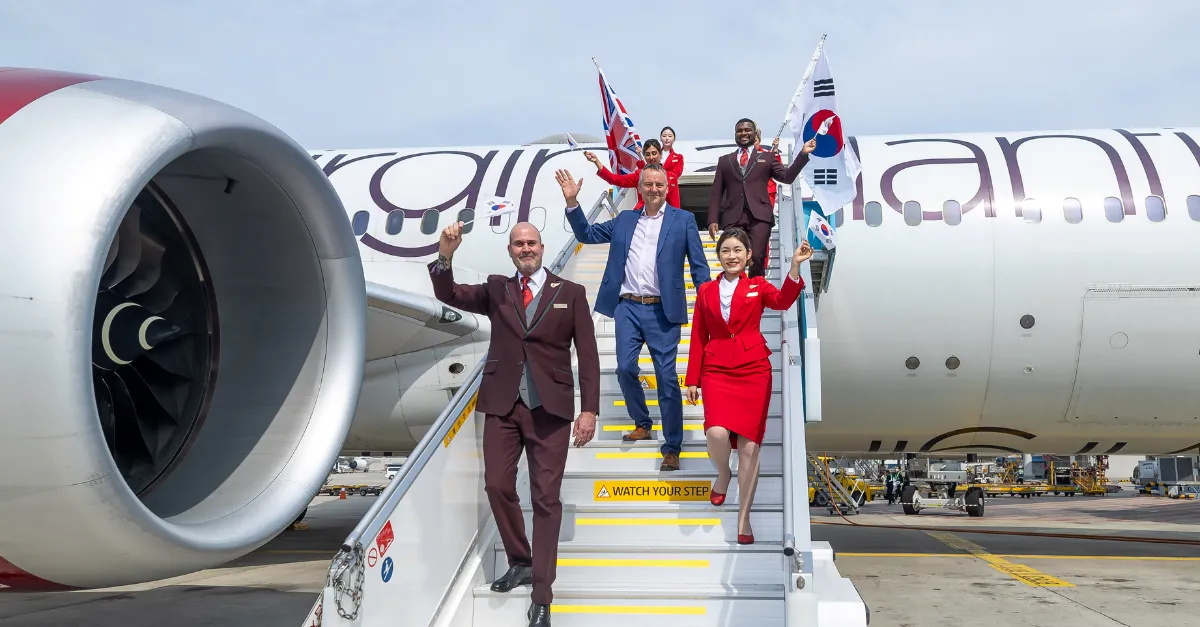
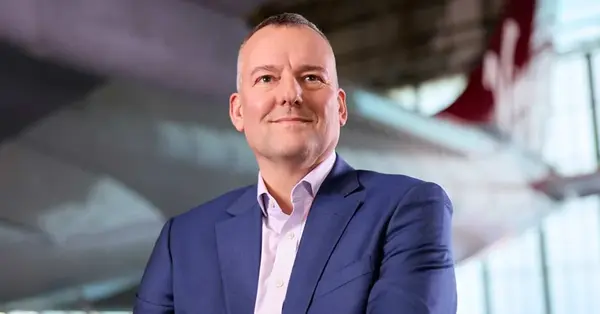
Virgin Atlantic chief executive Corneel Koster has said the new route to Seoul will be a “big success” despite outlining the challenges of recommencing operations in the Far East.
In the time since the carrier scrapped its Shanghai service in 2020 due to the pandemic, a number of geopolitical pressures have developed – including Russia’s ban on UK airlines from its airspace.
“It’s not a level playing field,” said Koster, speaking to Travel Weekly in the South Korean capital. “Asian and Middle Eastern airlines operate over Russia but European carriers cannot and we don’t expect that to change anytime soon.”
Re-routing to the south in order to avoid airspace that was once freely open has increased journey times by around two or three hours, with a knock-on effect on costs.
Inbound services from Seoul Incheon to Heathrow are nudging 14 hours in the air compared with 11-12 hours on a course over northern China and Siberia that was routine prior to the restrictions.
“It’s not for us to say whether changes should be made to that policy,” said Koster. “Of course, flying over Russia would be shorter, so that would be good news but we’ll leave it to the UK government to determine whether it’s appropriate. At the moment we completely understand why it’s not.”
Despite the challenges, Koster – who took over the role from Shai Weiss in January – remains bullish about Seoul becoming a long-term addition to the network, with load factors of over 80% during the route’s first month.
“We’re confident, even flying around Russia, that this route will be a big success,” he said.
The service forms part of Virgin Atlantic’s larger plan that spans the next five years and beyond.
Covering all aspects of the business, the plan was presented to airline founder Sir Richard Branson during Koster’s recent visit to the billionaire’s Caribbean base in the British Virgin Islands.
Koster’s primary focus remains firmly fixed on growth, an objective he plans to achieve by strengthening partnerships, stabilising the network, improving the financials to progress towards sustainable profitability and also embracing technology to modernise systems in a bid to operate more efficiently.
“We’re very focused on this year and our immediate plans but we’re also looking ahead to the future,” he said. “We’ll work hard to execute our strategy but at the same time we’ll move fast, be nimble and roll with the punches.”
Russia’s ban on UK airlines from its airspace was introduced in 2022 in response to Boris Johnson’s decision to bar Russian carrier Aeroflot from landing in the UK. The then-prime minister’s decision formed part of the sanctions imposed after Russia’s full-scale invasion of Ukraine.
Related Content












Jacobs Media is a company registered in England and Wales, company number 08713328. 3rd Floor, 52 Grosvenor Gardens, London SW1W 0AU
© 2025 Jacobs Media
