




You are viewing 1 of your 2 free articles
Advantage reports marked softening in the corporate travel sector


Advantage Travel Partnership has reported a “marked softening in sentiment” in the business travel market as geopolitical instability continues to impact confidence and planning.
The travel agency consortium said there was a “significant reversal from the optimistic mood” among corporate buyers at the end of last year, with safety and security now top of the agenda due to the situation in the Middle East.
The findings echo recent reports from the Global Business Travel Association (GBTA), which highlighted Europe as the only region where pessimism outweighed optimism in the outlook for 2026. In January 58% of European respondents expressed optimism, with the figure falling sharply to 21% by April, and 38% now taking a less positive view.
The consortium said recent events were highlighting issues the corporate travel sector needed to address, such as response protocols, and observed a clear divide in how buyers are approaching travel decisions.
For businesses where travel budgets sit internally, there is a growing requirement for every trip to show a “clearly defined” and demonstrable return on investment, the consortium said.
For organisations where travel costs are paid by external clients, such as consultancies, businesses are continuing to operate as usual.
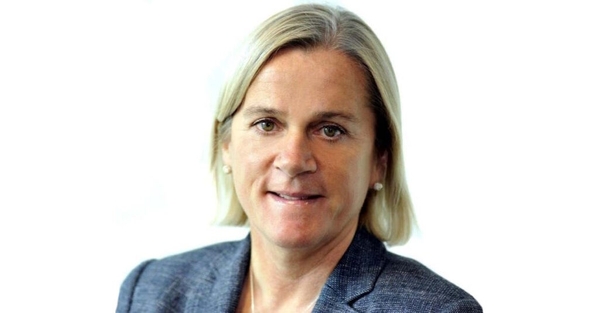
Andrea Caulfield-Smith, managing director, Global Business Travel, Advantage Travel Partnership, said: “As you would expect, traveller safety and security has risen to the top of the corporate agenda against the current backdrop in the Middle East.
“The current crisis has shone a spotlight on the importance of proactive duty of care tools that can identify traveller locations in real time and enable swift engagement between travel management companies (TMCs) and client security teams.
“We have also noted that recent events have exposed gaps in both tool capabilities and TMC response protocols and areas the industry must urgently address.”
Advantage also highlighted that technology continued to play an increasingly important role to mitigate disruption, with agentic AI proving a “critical asset” to identifying cancelled and changed flights earlier to inform and reroute travel clients quickly.
Caulfield-Smith added: “Time is money for the business traveller. Keeping people informed, in the moment, is no longer a nice-to-have, it is a fundamental expectation.”
She also said there were growing operational challenges to Entry/Exit System (EES) destinations, with long queues often resulting in missed connections and meetings. The lost time is becoming a mounting concern for corporate travel managers and their clients, she added.
“We continue to work closely with our member TMCs and technology partners to navigate these challenges, ensuring that travellers are supported, informed and protected in an increasingly complex global environment,” she said.
More Content











More Content





Jacobs Media is a company registered in England and Wales, company number 08713328. 3rd Floor, 52 Grosvenor Gardens, London SW1W 0AU
© 2025 Jacobs Media
