




Air Canada hails ‘new era in long-haul’ with latest aircraft order

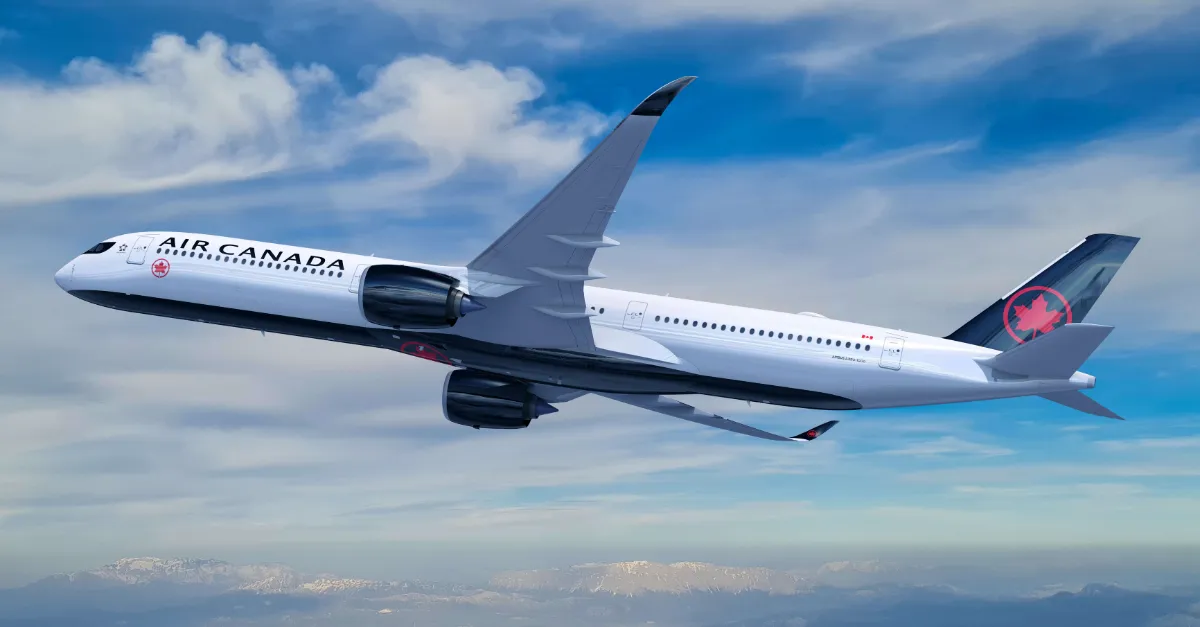
Air Canada has signalled international growth ambitions with an order for new generation ultra long-haul aircraft.
The latest stage of the airline’s fleet modernisation plan will see the addition of Airbus A350-1000 widebody aircraft from 2030.
The airline hailed a “new era in long-haul” by confirming an order for eight aircraft, capable of flying up to 9,000 nautical miles, and rights to purchase another eight for an undisclosed sum.
The A350-1000 is estimated to deliver up to 25% less fuel consumption compared to previous generation aircraft.
The order is in addition to 14 Boeing 787-10 Dreamliners expected to start entering service later this year and the first of 30 new long range single aisle Airbus A321XLRs.
Chief commercial officer Mark Galardo said: “Air Canada’s acquisition of the Airbus A350-1000 will further solidify our position as a leading global airline through the next decade.
“This state-of-the-art aircraft adds a new dimension to Air Canada’s long-haul capabilities, with impressive range, enhanced payload, and proven economics that unlock new possibilities for long-haul flying for our customers.
“These highly capable aircraft complement our existing fleet by providing flexibility in support of a growing, resilient, and diversified future network.
“The Airbus A350-1000 will play a central role in defining Air Canada’s next era, connecting our customers, our hubs and our country to the world.”
Chief financial officer John Di Bert added: “The addition of the Airbus A350-1000 to our fleet is a forward-looking investment that strengthens Air Canada’s long-term cost efficiency.
“These aircraft will deliver improved operating economics, enhance our operational reliability and ensure we remain competitive across our global network.
“The aircraft’s lighter materials and advanced engines deliver meaningful fuel-burn improvements versus the aircraft they replace, supporting our financial and environmental objectives.
“This order is another step in the modernisation of our fleet and is aligned with our capital allocation priorities and our target to maintain capital investments at or below 12% of revenues.”













More Content






Jacobs Media is a company registered in England and Wales, company number 08713328. 3rd Floor, 52 Grosvenor Gardens, London SW1W 0AU
© 2025 Jacobs Media
