




You are viewing 1 of your 2 free articles
Booking Holdings counts cost of Iran conflict

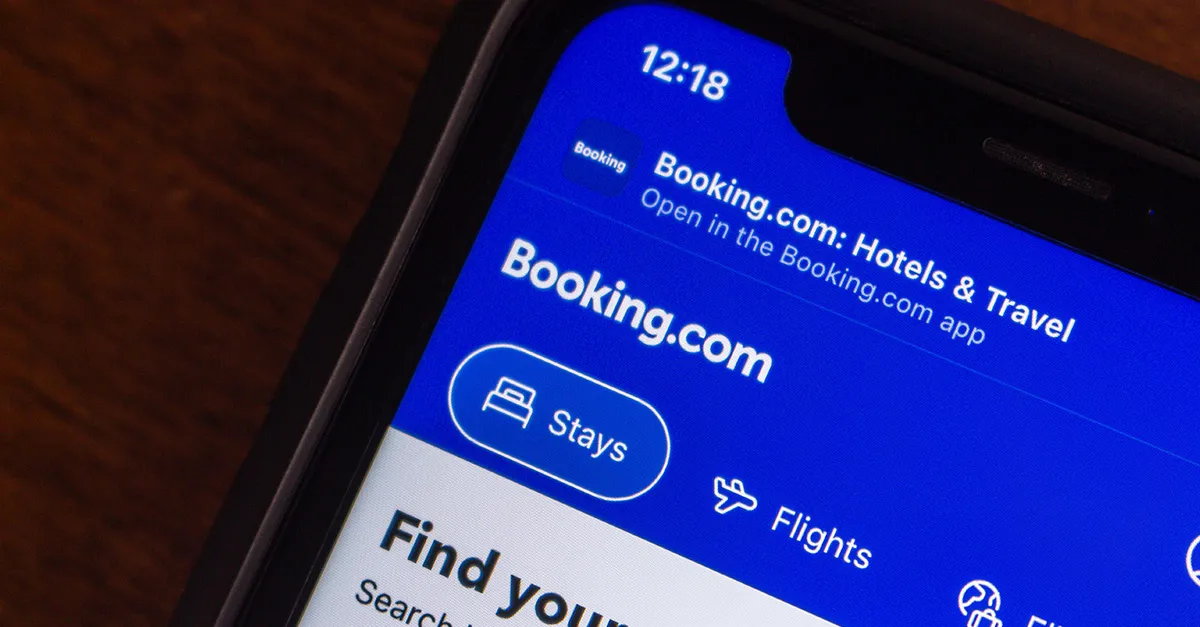
Booking Holdings estimated the war on Iran reduced its bookings and revenue growth by six percentage points in March and warned of a significantly greater impact in the three months to June.
The company, which owns Booking.com, Priceline in the US and Agoda in Asia, reported a 6% rise in room nights year on year in the three months to March and a 15% rise in gross bookings, with net profit surging to $1.18 billion despite the war – up from $333 million a year ago.
It forecast 4%-6% growth in bookings in the quarter to June despite assuming impacts from the crisis in the Middle East continue “through [to] the end of June”, hitting demand “across Middle Eastern inbound, outbound and intra-region routes” and disrupting “major transit corridors”.
More: Warning issued after Booking.com data breach [April 26]
Booking.com halves Atol capacity in two years but hails Connected Trips ‘milestone’ [Oct 25]
Booking’s full-year forecast assumes “a recovery in the second half of the year”.
Chief executive Glenn Fogel acknowledged: “A sustained disruption could introduce broader inflationary pressures, including fluctuations in jet fuel prices [and] airline capacity reductions, as well as weigh on traveller sentiment.”
But he argued: “Since these extended impacts are harder to estimate, we’ve not included them in our guidance assumptions.”
He insisted: “Periods of uncertainty are not new to our industry. This will end. We don’t know when, but it will. Travel will normalise.”
Chief financial officer Ewout Steenbergen reported “elevated cancellations and a moderation in new bookings in March”, saying “about half the impact” of the six-point reduction in room nights came from reduced bookings “and half from increased cancellations”.
However, he said: “We expect the associated impact on revenue from the conflict will not be fully realised until future quarters.”
Steenbergen told analysts: “Given the uncertain macro backdrop, we’ve begun strictly managing discretionary spend and recalibrating business-as-usual hiring.”
He said: “Our assumption is that the impacts from the conflict continue for four months [to the end of June] and this is followed by a recovery.”
More Content












More Content






Jacobs Media is a company registered in England and Wales, company number 08713328. 3rd Floor, 52 Grosvenor Gardens, London SW1W 0AU
© 2025 Jacobs Media
