




You are viewing 1 of your 2 free articles
The bright lotus: why this Tamil Nadu city is a hit with India lovers
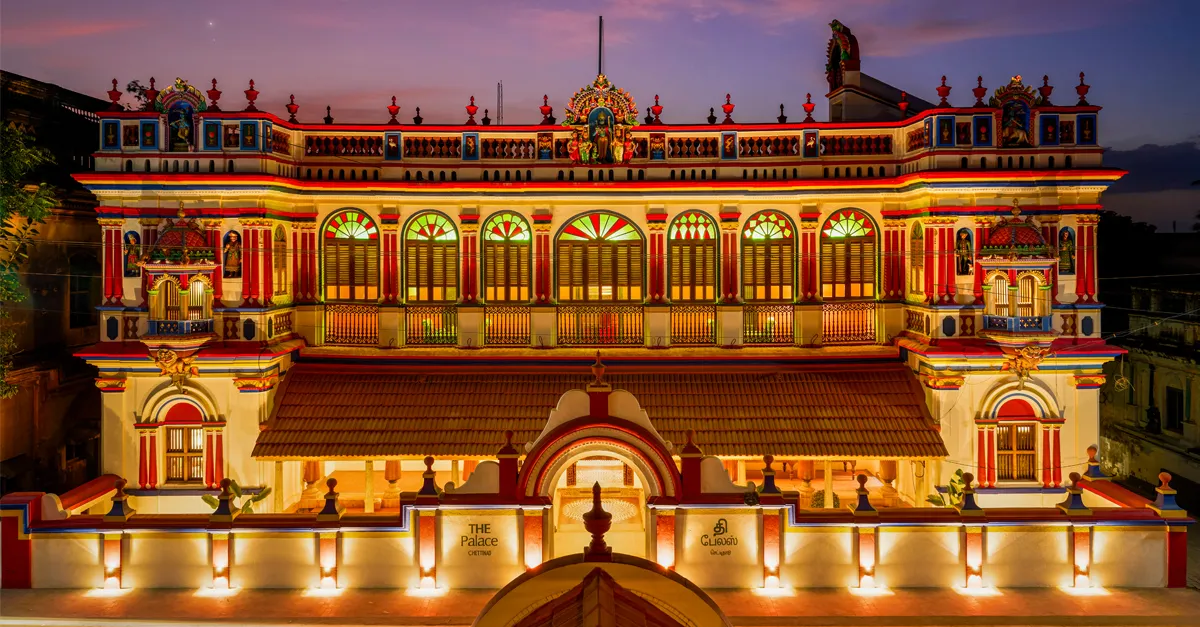
Culture, cuisine and distinctive, colourful mansions make Chettinad in southern India an under-the-radar hit for repeat visitors

Click here to download and save as a PDF
Deep in Tamil Nadu in the south of India, far from the country’s familiar tourist circuits, sits the rural region of Chettinad. Once home to large numbers of the influential Nattukottai Chettiars, a global trading community whose wealth flowed in from across southeast Asia, it’s now famed for its thousands of palatial mansions, built by the Chettiars between the 18th and early 20th centuries.
At its heart lies Kanadukathan, whose broad streets boast the highest concentration of these large, courtyard centred manor houses. Many of the original families have since moved away, but the faded glamour of these magnificent homes – a unique combination of Tamil, art nouveau, art deco and neoclassical architectural styles – gives them a haunting, almost poetic quality.
The town and its environs are a dream for photographers, foodies and architecture enthusiasts looking for a quieter, more reflective side of India.
Chettinad mansions
A handful of mansions have been converted into boutique accommodation or homestays, and our hotel, The Lotus Palace (pictured main), is one of them.
Built in the late-17th century and reopened as a 15 room hotel in October 2024, it features ornately carved Burmese teak doors and pillars set around expansive courtyards. A skilful restoration celebrates old and new with historic features sitting side by side with a luxury spa, bar, pool and lounge area.
At the top of the building, the Sunset Terrace offers panoramic views of the surrounding village, while rooms are furnished with antique pieces and custom-made light fixtures. The colour palette of greens, browns and reds is drawn from the traditional Athangudi tiles crafted in this area for centuries.
For the Chettiars, these homes indicated status and some are open for guided visits. We step inside several with guide Kavita on a walking tour, which reveals yet more handsome teak, cast iron from England, crystal chandeliers and mirrors from Belgium, tiles from Japan and Germany, marble floors from Italy and many exotic materials imported from around the world.
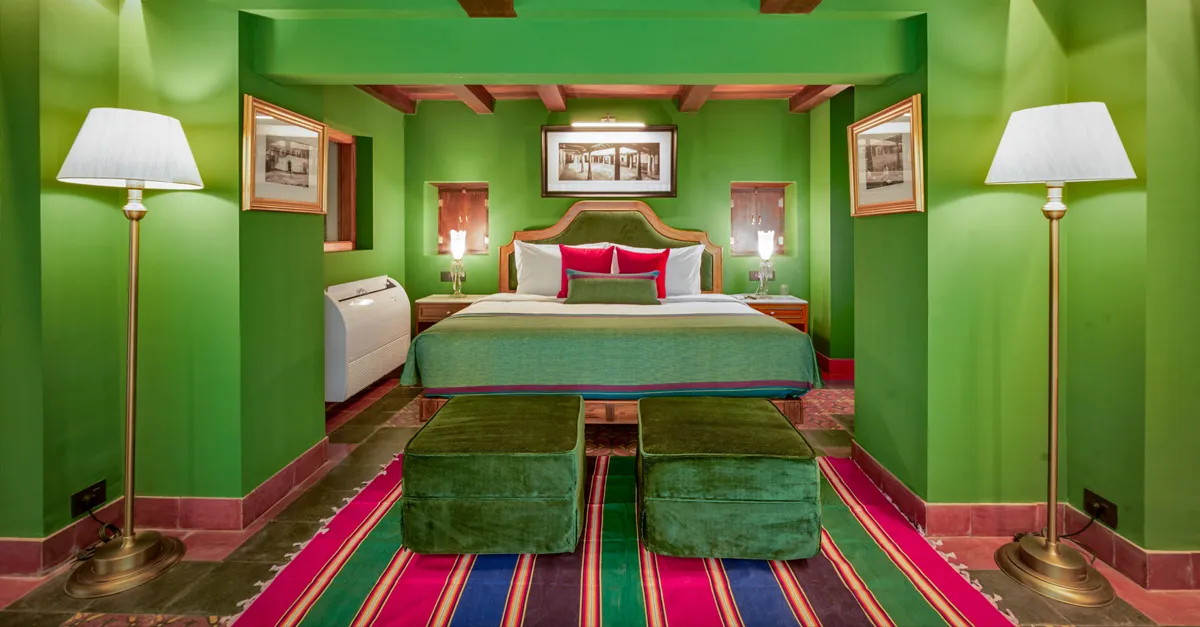
The Lotus Palace Chettinad
Things to do in Chettinad
The mansions aren’t the only examples of fine architecture. The vast Kotravaleeswarar temple in Koviloor dates back more than 1,000 years and is notable for Dravidian architecture, with pyramid-shaped towers known as vimanas, carved pillars and sandstone and stucco embellishments. A huge, stone-lined pool is used for ritual bathing and festival processions.
More glimpses of the past are in store during a wander through nearby Karaikudi antique market, where narrow lanes are lined with carved doors, brass lamps, vintage mirrors and a treasure trove of artefacts and household items salvaged from the Chettiar mansions.
I resist the larger decorative pieces and instead pick up a couple of charming vintage photographs and some Czechoslovakian enamelware, once imported by wealthy families.
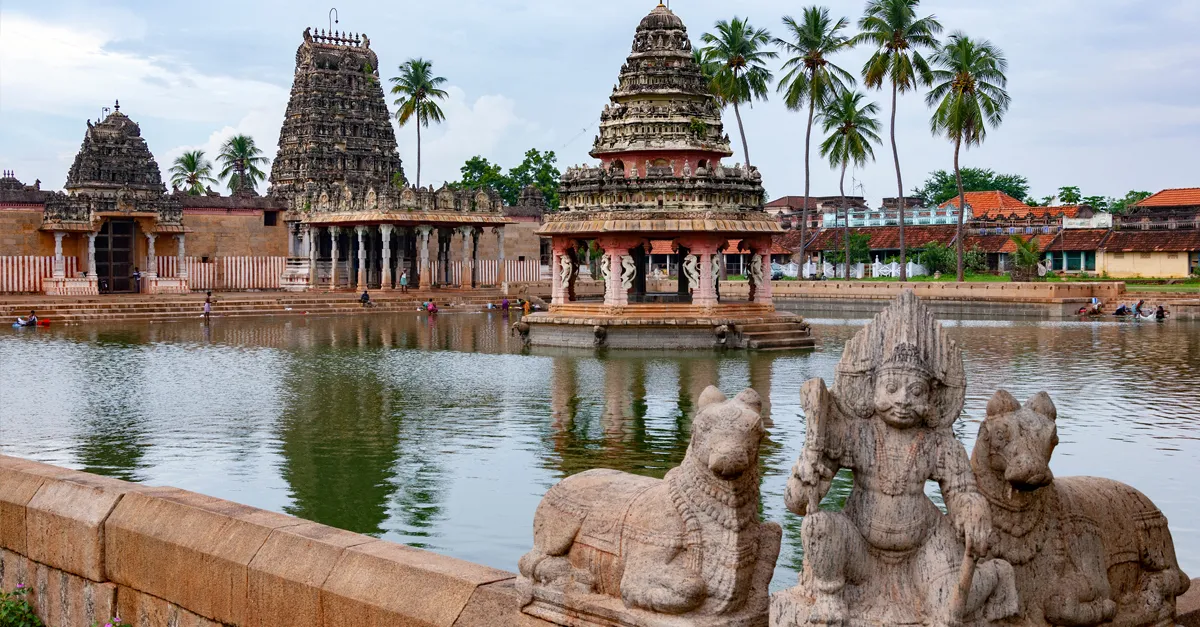
Hindu temple in Karaikudi. Image credit: Shutterstock/Steve Allen
Next is a visit to Athangudi’s workshops, where the region’s famous hand-pressed tiles are still made using traditional methods. We watch as craftspeople place moulds onto glass plates before pouring liquid cement coloured with oxide pigment into the intricate designs.
These are compressed, cured in water for several days then air-dried. The result is the smooth, cool tiles that have long been used to clad the floors of Chettinad’s homes.
More traditional techniques are on show at Venkatramani Thari, a textile manufacturer in Kanadukathan, where we see cotton sarees and fabrics being woven on hand-operated looms. These are sold from the adjoining shop, which helps support local artisans and preserve age-old weaving techniques.
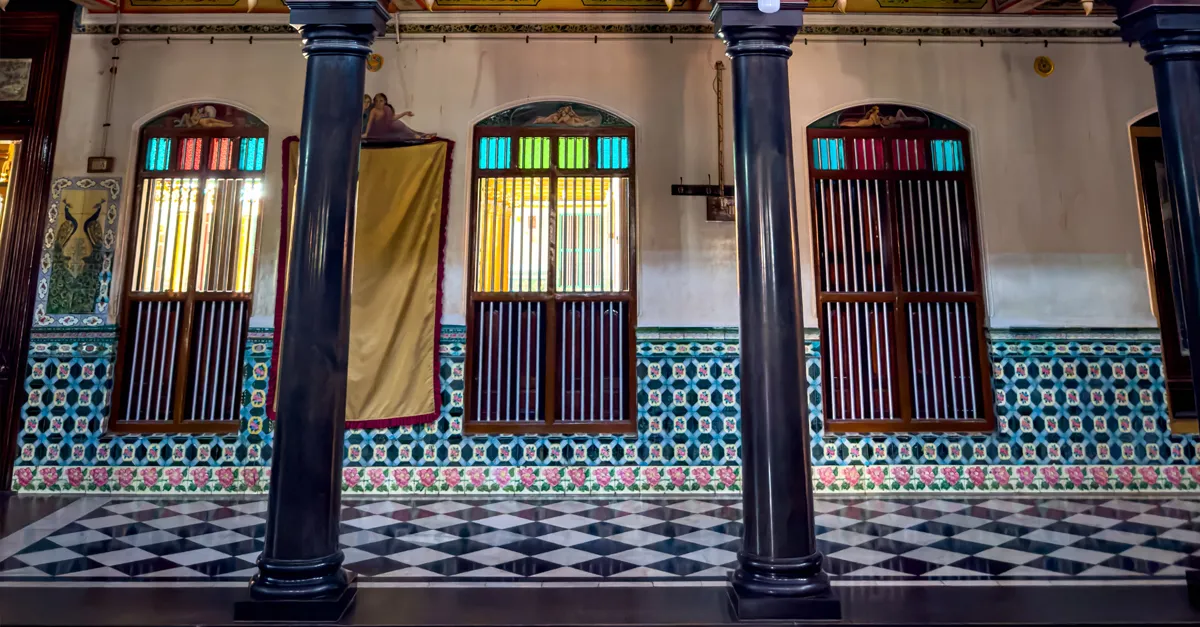
Chettinad mansion in Athangudi. Image credit: Shutterstock/Manivannan T
Best food in Chettinad
Chettinad cuisine is known as one of the spiciest and most aromatic in India and this is on full display at the hotel’s restaurant, christened 86 Pillars in homage to the number of hefty supports throughout the building. We sit down to a feast known as Raja Virundhu, which translates as ‘meal fit for a king’.
No fewer than 21 dishes, ranging from aubergine chutney brinjal thokku to chicken and fish curries, fish fry and mutton sukka, a goat meat dish roasted with spices, are served on a glossy banana leaf. We eat with our fingers, scooping up the saucebased dishes with rice and crispy appalam, similar to poppadoms.
More tasty treats await beyond the hotel as we swing out to roadside tea shop Chittal Chettinad Mess to sip sweet ginger chai and sample vegetarian bhaji, fried alfresco in searing-hot pans of oil.
Also on the menu is paper-thin dosai, a savoury crepe made from a fermented batter of rice and ground black gram flour, served with coconut chutney and spicy sambar.
The culinary journey continues at Soundaram’s Chettinad Sweets and Snacks, a local business famous for its handmade treats. Skilled artisans deftly roll, press and shape a soft dough made from rice flour, lentils, sesame seeds, jaggery (an unrefined sugar made from sugarcane juice or palm sap) and local spices, into a range of delicate shapes, which are then fried in large, heavy-bottomed woks.
We head back to the hotel for high tea in The Red Room, a glamorous private lounge exclusively for hotel guests, where we learn to mix a strong, sweet, milky coffee poured back and forth from a height between a steel tumbler and a saucer known as a dabarah, which creates a rich froth while cooling it to a perfect temperature.
The mix of age-old traditions and modern-day comforts, local crafts and global influences, all in the heritage-filled surroundings of a restored mansion, unfold to make Chettinad one of the country’s most extraordinary regions, worth recommending for repeat visitors in search of a unique India experience.
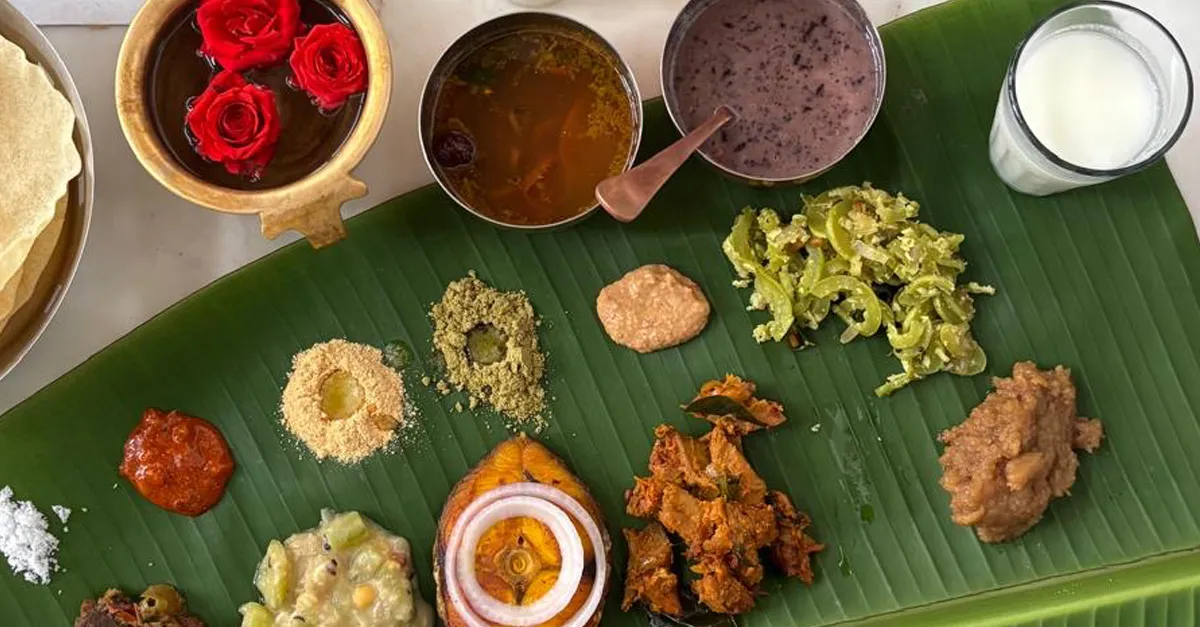
Traditional Tamil Nadu dishes served on a banana leaf. Image credit: Claudia Baillie
Getting to Chettinad
British Airways has direct flights from Heathrow to Chennai, which is the closest large city to Chettinad. From Chennai, IndiGo flies to Tiruchirappalli, and Kanadukathan is a further 1.5 hours by road. Alternatively, travel by train from Chennai to Chettinad station, which takes six to nine hours. From Chettinad station, it’s a 10-minute drive to Kanadukathan.
Book it
The Lotus Palace Chettinad has rooms ranging from The Den, starting at £167 plus taxes per night, to The Lotus Suite, from £325 per night.
Travelpack offers a Flavours of South India: A Culinary Odyssey private guided tour from £3,259 per person for 14 nights, based on two sharing, travelling on May 4. It includes two nights at The Lotus Palace Chettinad, plus stays in Chennai, Puducherry, Madurai, Periyar, Alleppey and Cochin, with flights from Heathrow, guided tours, Tamil cooking class, cooking demonstrations and street-food sampling, plus a visit to Chettinad’s historic mansions, temples and tile workshop.
travelpack.com
Lead image credit: The Lotus Palace Chettinad










Jacobs Media is a company registered in England and Wales, company number 08713328. 3rd Floor, 52 Grosvenor Gardens, London SW1W 0AU
© 2025 Jacobs Media
