




You are viewing 2 of your 2 free articles
Plans underway to support British passengers on ship with hantavirus outbreak

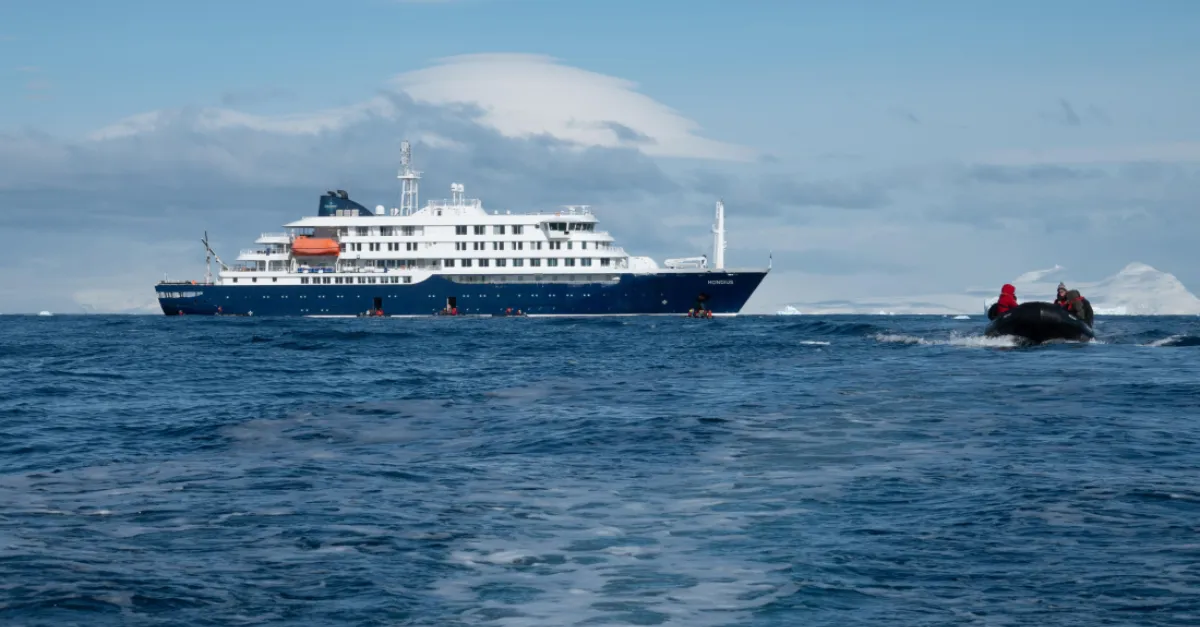
Plans are being prepared to support British passengers on board an expedition cruise ship struck by a hantavirus outbreak, prime minister Sir Keir Starmer has confirmed.
The ship is moored off the coast of Cape Verde and is set to then sail to the Canary Islands where passengers and crew would be examined.
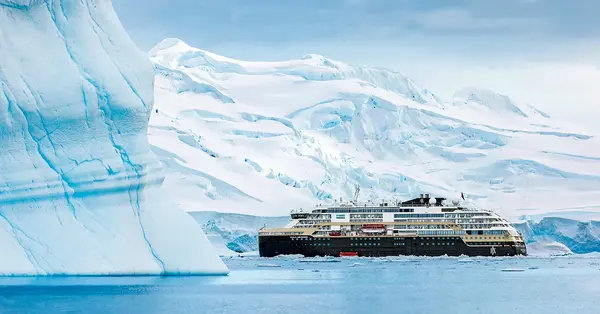
Three people who were on board the MV Hondius have died and medical evacuations are being prepared for two crew members who need urgent medical attention.
The World Health Organisation confirmed that seven cases of the severe respiratory illness – two confirmed and five suspected - were identified on the Dutch-flagged ship carrying 147 passengers and crew, leading to three deaths.
Passengers and crew on board MV Hondius represent 23 nationalities, including 22 reportedly from the UK.
Starmer said in a posting on X: “My thoughts are with those affected by the hantavirus outbreak onboard the MV Hondius.
“We are working closely with international partners to support British nationals on board and we’re putting plans in place for their safe onward travel.
“The risk to the wider public remains very low - protecting the British people is our number one priority.”
The ship’s operator Oceanwide Expeditions said in an update yesterday (Tuesday): “The medical evacuation of two individuals currently requiring urgent medical care, and the individual associated with the guest who passed away on 2 May, will occur using two specialised aircraft that are en route to Cape Verde.
“From here, the patients are to be medically evacuated to the Netherlands. At this stage, we do not have an exact timeline.
“Once these three individuals have been safely transferred from the vessel and are in transit to the Netherlands, the MV Hondius will begin repositioning.
“Our plan is to proceed to the Canary Islands, either Gran Canaria or Tenerife, which will take three days of sailing.
“Discussions are ongoing with relevant authorities. This will be shared when concrete plans are available.”
The vessel departed Ushuaia in Argentina, on April 1 and followed an itinerary across the South Atlantic, with multiple stops in remote and ecologically diverse regions, including mainland Antarctica, South Georgia, Nightingale Island, Tristan da Cunha, Saint Helena, and Ascension Island.
“The extent of passenger contact with local wildlife during the voyage, or prior to boarding in Ushuaia remains undetermined,” the WHO said.
“Human hantavirus infection is primarily acquired through contact with the urine, faeces, or saliva of infected rodents. It is a rare but severe disease that can be deadly.”
One man died on board the ship on April 11 and a female close contact died on arrival in hospital in Johannesburg on April 26 after being transferred on a flight from Saint Helena, according to the WHO. They had both travelled in South America, including Argentina, before boarding the ship
Another woman died on May 2 following symptoms of fever.
A man who was on the ship remains in intensive care in hospital after being medically evacuated from Ascension to South Africa on April 27, with hantavirus infection confirmed on May 2, the WHO added.
“Three suspected cases have reported high fever and/or gastrointestinal symptoms and remain on board,” the WHO said.
Medical teams in Cape Verde are evaluating the patients and collecting additional specimens for testing.









More Content







Jacobs Media is a company registered in England and Wales, company number 08713328. 3rd Floor, 52 Grosvenor Gardens, London SW1W 0AU
© 2025 Jacobs Media
