




You are viewing 2 of your 2 free articles
Food for thought: Uniworld's mission to make river cruises more sustainable
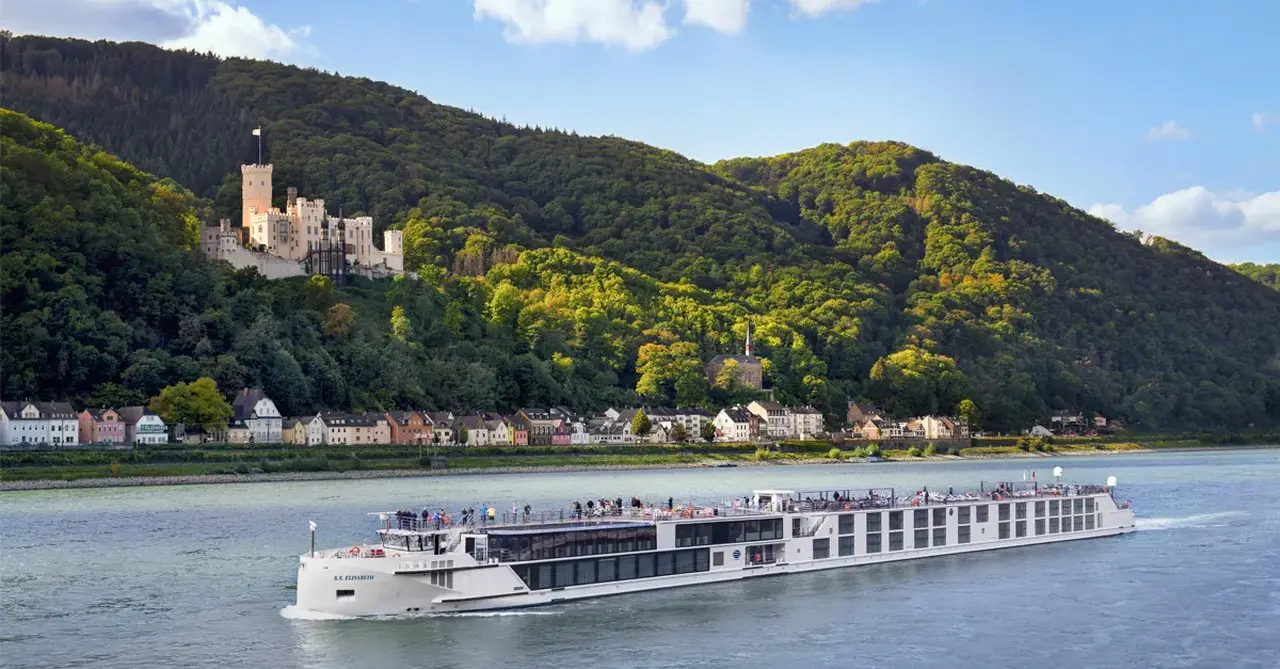
How can cruise lines think outside the box to reduce their environmental impact? Find out on a Uniworld sailing on the Rhine

Click here to download and save as a PDF
Cruises are rarely associated with sustainable travel, but the sector is going through a period of rapid change. Clia has pledged that its member lines are aiming to reach net-zero greenhouse gas emissions by 2050, as part of the International Maritime Organization’s global strategy for shipping, and many of its ocean and river lines are introducing ships powered by a variety of alternative fuels.
Uniworld Rhine cruise
Uniworld is one of those experimenting with biofuel, with all sailings that refuel in the Netherlands running entirely on recycled cooking oil and fats.
To find out more about Uniworld’s sustainability practices, I boarded the newest addition to its Rhine fleet, Elisabeth, moored just 700 metres from the Eurostar terminal in Amsterdam and a short walk from the historic centre.
Yet this prime spot is not a given, as the city intends to cut its river berths by 10% this year and ban ships that don’t comply with its environmental requirements from docking anywhere in the city.
What the port does offer, however, is a supply of HVO (hydrogenated vegetable oil), a diesel substitute used by all three of Uniworld’s Super Ships on the Rhine – first by 152 passenger Antoinette, followed by Elisabeth and sister ship Victoria, which carry just 110 passengers each.
Built in 2017, Elisabeth has an airy, modern style and its glass-roofed lounge offered a spectacular view as we slid silently out of the city.
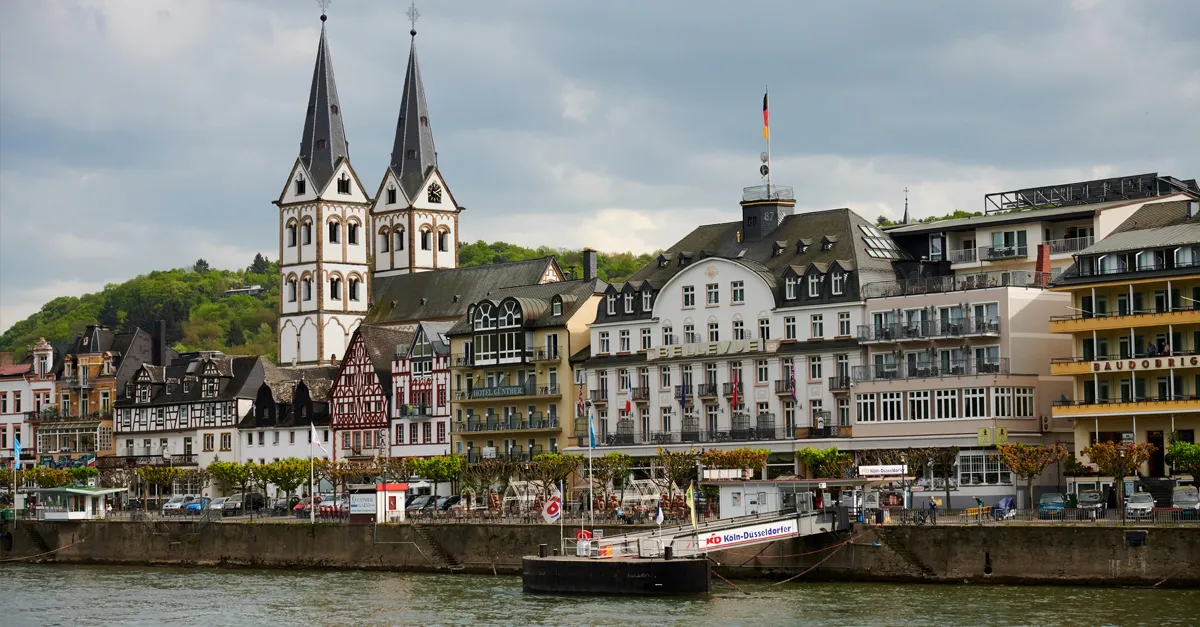
Boppard, Germany. Image credit: Uniworld
Sustainable river cruise ships
Dutch cruise manager Rik Sprengers had advised us to keep the cabin curtains closed for the “ugly” stretch of the sailing through Germany’s Ruhr Valley, but a beautiful bright red sunrise revealed many of the industrial plants involved in recycling, using this very river as an efficient mode of transport – one barge can carry hundreds of lorry-loads of goods.
We docked in Cologne under the awe-inspiring spires of its cathedral. Here, Captain Mihai Marcu showed me around the wheelhouse. He has been filling the ship solely with HVO since April, using 55,000 litres – three-quarters of a tank – for the 14-night round trip from Amsterdam.
However, Mihai explains that HVO is more expensive than diesel and, at current prices, he can’t see more ships using it unless it becomes mandatory.
We pass charming Koblenz and historic Boppard before reaching the Rhine’s most scenic stretch, admiring the castles dotted high up on the banks as staff served rum and cream coffee on deck to keep us warm.
This is also the most difficult section for the captain to navigate, as the gorge’s steep sides narrow the river into a fast-flowing stream before it opens out again at the beautiful village of Rüdesheim, the wine-making capital of the region.
On the newest river ships, docking can be done solely with battery power. A-Rosa and Amadeus River Cruises have put batteries on two of their ships, and Uniworld will do so on Emilie, launching this year on the Danube. While in many ports we switched to shore power, the weight of batteries means sailing port-to-port on electric power is a distant dream.
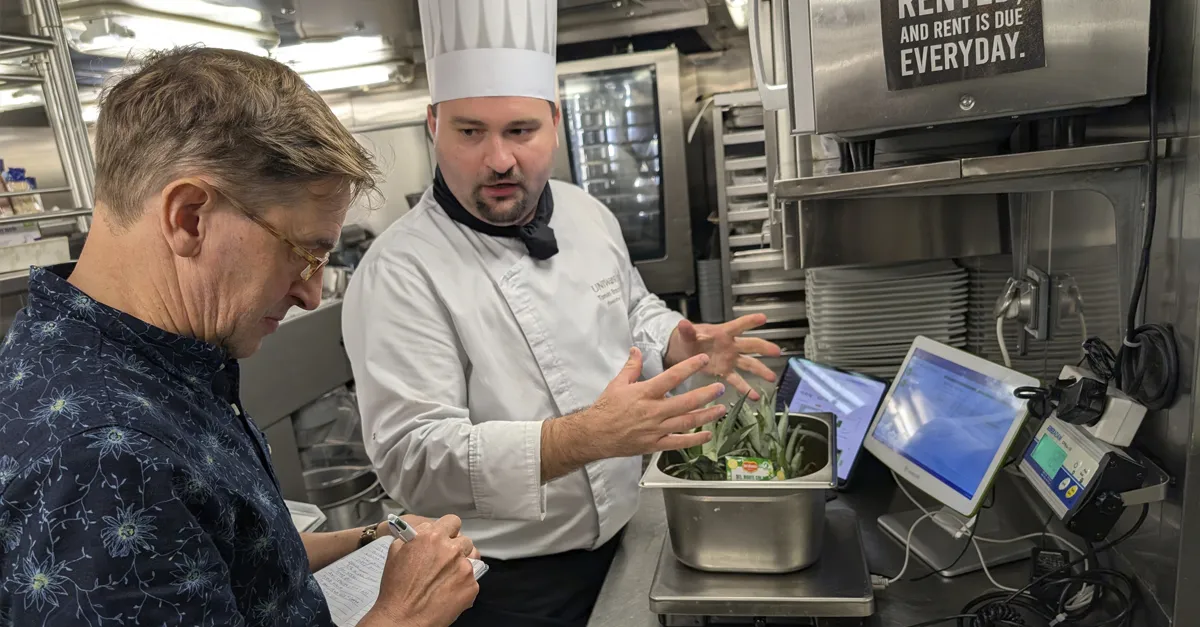
Writer Colin meets chef Tomas. Image credit: Uniworld
Food on Uniworld
It was to France, specifically stunning Strasbourg and its culinary delights, that we headed next – which was apt, since Uniworld is making strides in reducing food waste.
Back when I worked as a waiter, I was told chefs liked to see the dirty plates to ascertain what customers hadn’t liked. The AI-powered LeanPath technology Uniworld has adopted on all ships takes this concept to a new level.
In the galley, I met executive chef Tomas Breziansky. He and the enthusiastic staff weigh food as it goes into the dining room and after it comes back, categorising waste into proteins or starches, fruit or vegetables, and are told by the system how to modify both the buffet selection and portion sizes to increase efficiency.
When catering for 110 guests, three times a day, using AI to help calculate supplies is a smart move.
Between the first sailing of the season last April and my journey in September, Elisabeth’s galley team had reduced food waste by 23%. Of the food that does end up as waste, 90% is sent off to be turned into biofuel, which by this time was powering us towards Basel.
So I went for an elegant dinner of escargots, tender beef sirloin and chocolate lava pudding before arriving at the illuminated Swiss city – and pondered the thought that it was food power that got us there.
Book it
Uniworld’s Castles Along the Rhine on board Elisabeth costs from £3,239 per person, based on two sharing, including return Eurostar travel to Amsterdam, drinks and excursions, departing on April 4.
uniworld.com

Rheinstein Castle, Germany. Image credit: Uniworld
3 Uniworld experiences
Castle heights: One of Uniworld’s more unusual excursions is its night-time trip to Rheinstein Castle, where the owner explains over a glass of bubbly how it fell into his family’s hands.
Getting there involves eight steep ramps and 80 steps, though these weren’t what floored me. I attempted to clamber to one of Rheinstein’s towers but backed down when I saw the 90-metre vertical drops into the Rhine either side.
Tasting notes: The vinegar-tasting tour at Weinessiggut Doktorenhof, in Venningen, saw us dressing in medieval capes to explore the cellars where the vinegar is aged in barrels with the same precision as the wine-making processes we had witnessed in vineyards along the route.
The tasting afterwards revealed you could serve the vinegars as aperitifs, with all the subtle notes of fine sherries and ports but without the alcohol.
Behind the scenes: If clients are interested in finding out how Uniworld ships are run, suggest the ‘progressive dinner’ (from €110 per person), where each course is served in an area of the ship passengers don’t usually see, such as the wheelhouse and engine room.
Lead image credit: Uniworld
Related Content







More Content







Jacobs Media is a company registered in England and Wales, company number 08713328. 3rd Floor, 52 Grosvenor Gardens, London SW1W 0AU
© 2025 Jacobs Media
