




You are viewing 1 of your 2 free articles
Our guide to the islands of Tahiti

From its misty mountain peaks to the myriad marine life in its ocean depths, here’s why French Polynesia is worth the journey

Click here to download and save as a PDF
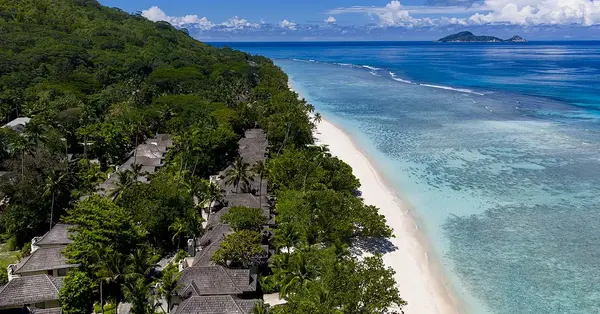
Marooned in the middle of the South Pacific, French Polynesia comprises 118 islands scattered over a vast area of ocean.
Its landscapes are relatively young, geologically speaking, having burst out of the sea from volcanic hotspots just 40 to 60 million years ago (by contrast, Europe’s terrain is billions of years old) and eventually settling into an array of islands and atolls.
Younger still is its human history, with the first Polynesian settlers arriving around 1,000 years ago, using only canoes and the stars for navigation. The islands are now under French jurisdiction, as they have been since 1842.
Today, these coral-sand beaches, verdant landscapes and teeming oceans are a perennial draw for visitors, with each island’s unique character, culture and wildlife lending itself to a multi-centre trip.
Recommend spending at least two weeks here, starting in main island Tahiti, followed by a short domestic flight to one of its other archipelagos.
Understandably, the long journey to get here – around 22 hours, with changes in Paris and Los Angeles – might give clients pause. Yet this island nation’s isolation is its reward. Once here, guests may have many of the beaches and islets all to themselves.
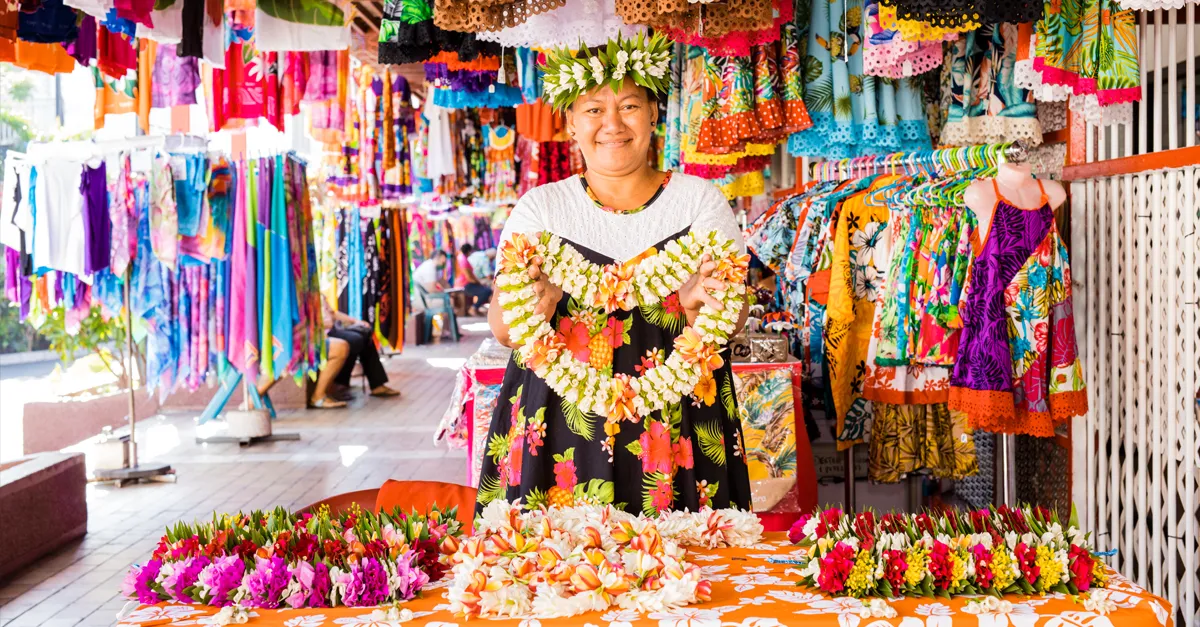
Papeete Market. Image credit: Tahiti Tourisme
Tahiti: Surf and sail
International visitors will begin their adventure at Faa’a International Airport on Tahiti, the largest island in the archipelago. During the 2024 Paris Olympics, surfing events were held at the wave break of Teahupo’o, where the surf can regularly reach up to seven metres.
I took a day trip with Tahiti Boat Excursion & Surf to see the waves and the Vaipo’iri Cave; in fact, the big blue is best viewed from a boat, as the surf is too challenging for beginners.
If clients prefer to keep their feet on dry land, suggest exploring Papeete, the colourful capital of French Polynesia.
Papeete Market is open from 5.30am most days, selling woven and carved souvenirs as well as moreish snacks including firi firi (sugary Tahitian doughnuts) and poisson cru (lime‑marinated tuna in coconut milk).
The cuisine of the islands is typically served home‑style, but those seeking a more upscale experience will find it at Marina Taina, a 10‑minute drive from Papeete, where waterfront restaurant Yellowfin serves ocean‑fresh fish and seafood.
To put French Polynesia’s unique geology and history in context, add a stop at the Museum of Tahiti and the Islands. Inside, I found fascinating treasures such as mother‑of‑pearl fishing gear, carved tiki figures and a canoe said to have been used by Pōmare IV, the last queen of Tahiti.
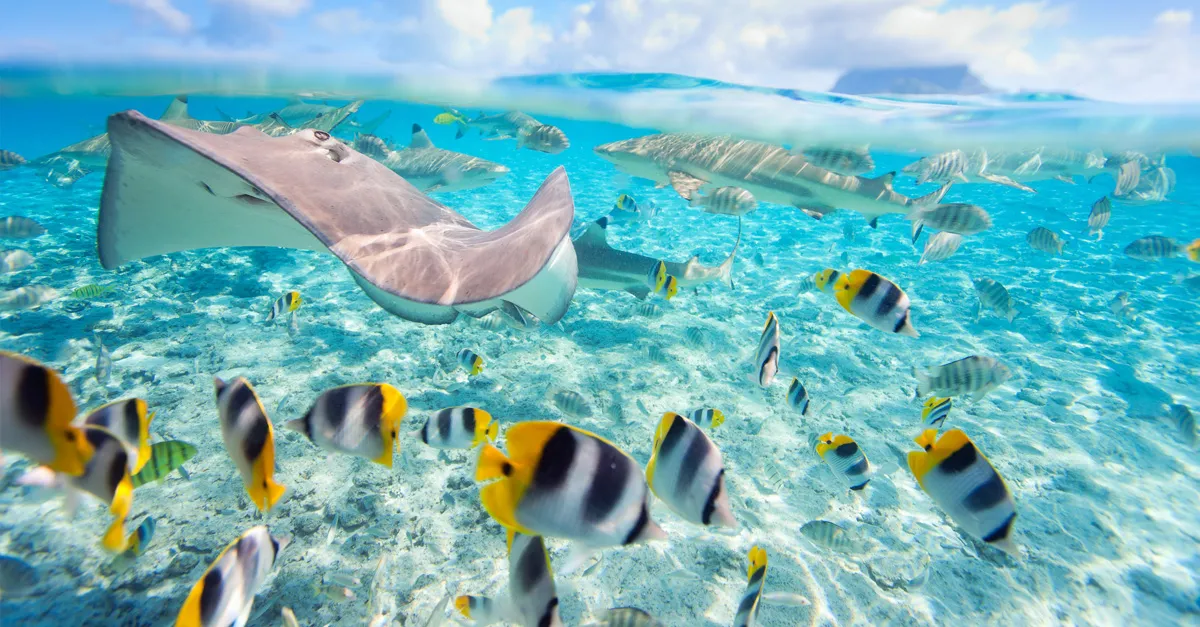
Diving in Tahiti. Image credit: TravelPhotoBloggers/Shutterstock
Moorea: Culture and canoes
Moorea is commonly visited as a day trip from Tahiti, as multiple ferries operate the 30‑minute journey each day – but make sure clients are aware that the last ferries return in the late afternoon.
However, the many overwater bungalows on offer at its resorts will be a strong temptation to stay longer. In fact, Moorea was the second island in the world (after Raiatea, also in French Polynesia) to use this style of accommodation.
Moorea’s jagged volcanic mountains are as wreathed in myth as they are in mist. The Belvédère d’Opunohu viewpoint affords a spectacular panorama; from here, hikers can follow the Three Coconut Tree Pass – a four‑mile round trip through banyan trees and bamboo – for yet more views.
Down at sea level, I paddled a va’a (double‑hulled canoe) around the lagoon with local operator Tahitian Pirates and charismatic Moorea‑born guide Poema du Prel.
Beneath the shark tooth‑shaped shadow of Mou‘a Puta – the ‘pierced mountain’ – she taught us to count in Tahitian as we pulled on the oars.
After we snorkelled among corals and parrotfish, Poema made an onboard lunch of poisson cru followed by po’e, a glutinous, cassava‑based dessert.
As we ate, she spoke of Polynesian legends, such as Hina – who placed the head of an eel on the ground to create the first coconut tree – and of the octopus god from which Moorea’s eight mountain ridges formed.
“First we had the octopus god, then when the French arrived, we had the Christian god – now we have the god of overwater villas!” she laughed. Tahitian Pirates also runs humpback whale‑watching tours from August to mid‑November.
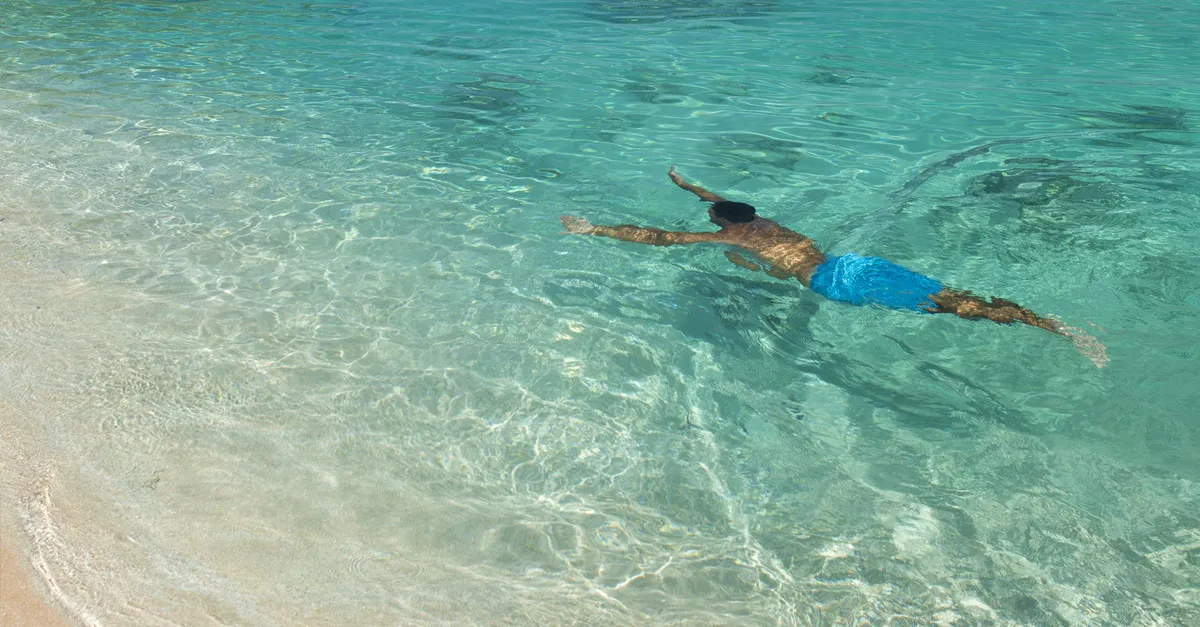
Swimming in Tahiti. Image credit: Tahiti Tourisme
Tikehau: Sunset and snorkelling
The tiny atoll of Tikehau, around an hour’s flight from Papeete, is known for its dazzling turquoise lagoon and all the diving and snorkelling opportunities that offers.
As a certified diver, I set out to the Tuheiava Pass site with Tikehau Diving around sunset, when the marine fauna is more active. Blacktip, whitetip and grey reef sharks burst from the haze while parrotfish and whitecheek tangs flickered behind the coral.
The next day brought a lagoon tour and I came with only my snorkel – that’s all you need here – with huge manta rays, sometimes three at a time, gliding just a few metres below.
After a barbecue lunch on a deserted island (with not a single other tourist in sight) we stopped at Motu Puarua, also known as Bird Island.
From the boat, I spied nesting colonies of frigate birds, red-footed boobies, brown noddies and white and crested terns – giving wildlife enthusiasts another reason to visit Tahiti.
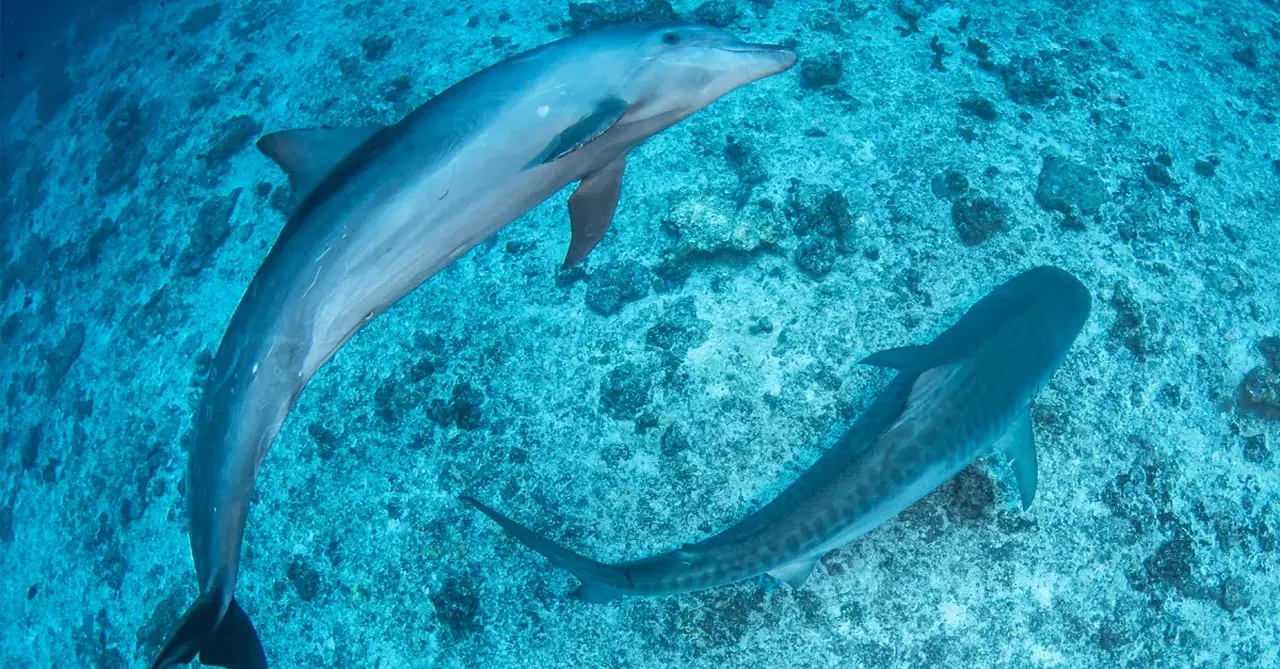
Dolphins in Tahiti. Image credit: Bernard Beaussier
Rangiroa: Dolphins and diving
Rangiroa – from the phrase for ‘vast sky’ in local dialect Tuamotuan – is one of the world’s largest atolls. It’s also one of the planet’s great diving destinations, beloved for drift dives where it’s possible to see bottlenose dolphins, grey reef sharks, eagle rays and great hammerheads from November to February.
I set out with Kaimana Tours to Blue Lagoon – all azure hues and white sand, where each tour group had its own island. While a lunch of unicorn fish and coconut bread sizzled on the barbecue, guide Tunui ‘Nui’ Mahuta took me out to the reef, where blacktip reef sharks swam around coral outcrops.
After lunch, he demonstrated palm-weaving techniques islanders use to make their distinctive open-topped hats. “We can do anything with the palm,” said Nui, “even build a house.”
We then headed to Tiputa Pass, the ultimate location for divers. While still in the boat, we saw silvery bottlenose dolphins slicing through the surf.
Nui steered the vessels to calmer waters, where we were mobbed by shoals of big-eye emperor fish and scissortail sergeants. I grabbed my mask and snorkel, jumped in and swam among them.
Though I had just a brief taste, I’m determined to return and sample Rangiroa’s other delights, including the pink sand beaches and manta ray ‘cleaning station’ at Avatoru Pass, where the magnificent creatures come to let smaller fish cleanse them of parasites hiding amid their gills.
And if these four Tahitian isles are anything to go by, one could easily spend a lifetime exploring them all.
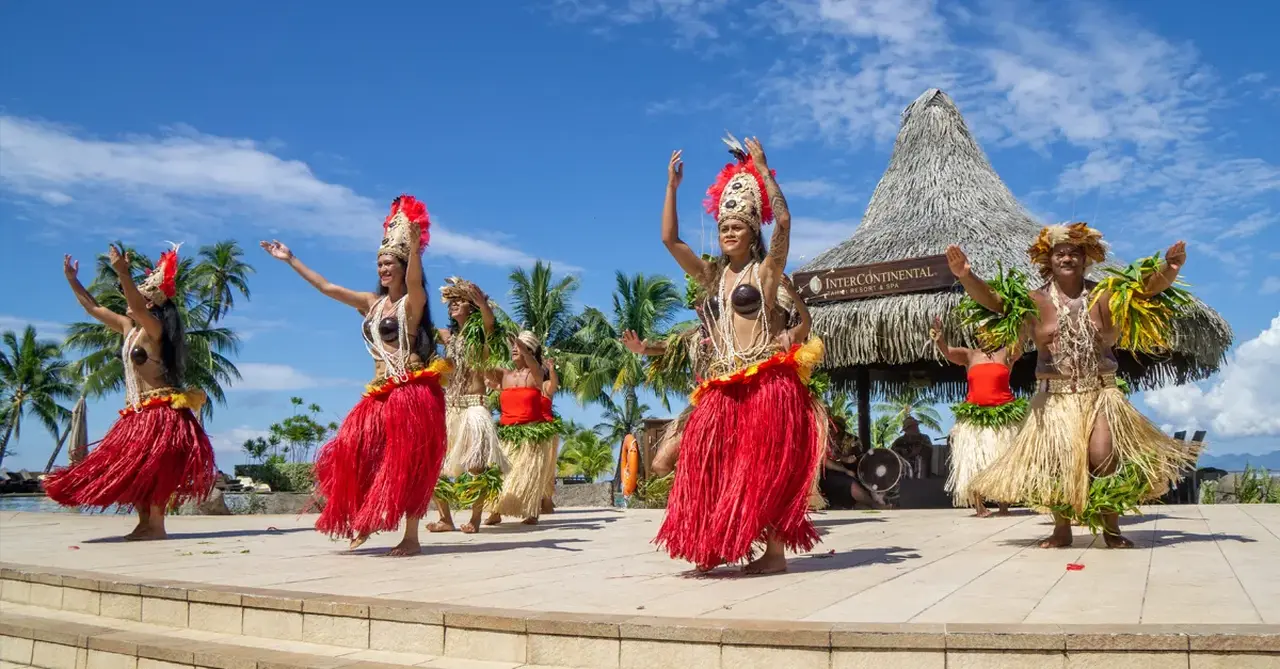
Traditional dancers at the InterContinental Tahiti. Image credit: Tahiti Tourisme/Kim Lawson
Book it
Audley Travel has an 11-night tailor-made French Polynesia trip with two nights on Tahiti, three on Moorea, three on Tikehau and three on Rangiroa, all with breakfast, economy flights to Papeete, inter-island flights and ferries, transfers and excursions, from £9,198 per person, based on two sharing.
audleytravel.com
Elegant Resorts offers three nights at InterContinental Tahiti Resort & Spa (Overwater Bungalow Ocean View, B&B) and four nights at Hilton Moorea Lagoon Resort & Spa (Overwater Bungalow, B&B), with international flights, internal flights with Air Tahiti, private transfers and UK airport lounge passes, from £6,460 per person. Based on two sharing and flights departing September 15.
elegantresorts.co.uk
Dive Worldwide sells a 12-night Tahiti Island Hopping Adventure, including Tahiti and Tikehau, from £5,465 per person, based on two sharing. Includes 12 boat dives, most meals, transfers and flights.
diveworldwide.com
Air Tahiti Nui offers flights to Tahiti from Heathrow (via Paris and Los Angeles) from £1,460 for a return economy-class fare.
airtahitinui.com
Ask the expert

Matt Eagle, French Polynesia specialist, Audley Travel
“Although it’s farther afield than more traditional tropical locations such as the Maldives or Mauritius, agents can sell Tahiti to clients by highlighting French Polynesia’s unmatched natural beauty, exclusivity and cultural richness.
As well as the overwater bungalows in Tahiti and Bora Bora, offer a range of unique resorts like The Brando, so the client understands French Polynesia delivers a once-in-a-lifetime experience that justifies the distance.”
Lead image credit: Tahiti Tourisme/Manea Fabisch







Jacobs Media is a company registered in England and Wales, company number 08713328. 3rd Floor, 52 Grosvenor Gardens, London SW1W 0AU
© 2025 Jacobs Media
