




You are viewing 1 of your 2 free articles
Will artificial intelligence replace travel agents?
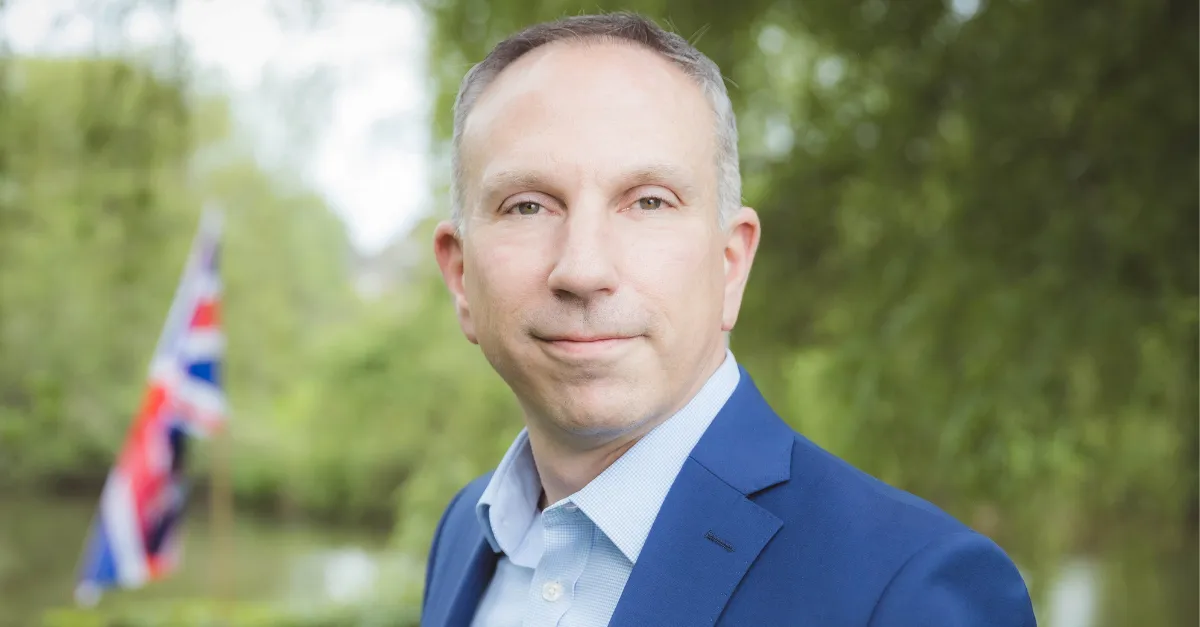
Steve Witt, co-founder of Not Just Travel and The Travel Franchise, believes travel agents can thrive if they harness AI effectively

Amazon and Google recently announced billions in fresh investment in artificial intelligence. The headlines continue daily: machines are coming for our jobs.
ChatGPT launched just over three years ago. Today it handles 2.5 billion prompts every single day. That’s more than one billion requests before most of us have finished our morning coffee.
In the first eight months of 2025 alone, UK users made 1.8 billion visits to ChatGPT. One in four UK businesses now actively uses AI, up from just one in 10 two years ago. The technology is adding £2 billion to UK GDP this year and the UK AI market is on track to hit £1 trillion by 2035.
AI has moved from Silicon Valley curiosity to everyday reality at breathtaking speed. A total of 73% of UK adults used an AI-powered service in the last month, often without even realising it. Your car suggests where you’re going before you’ve typed the destination. Netflix knows what you want to watch before you’ve decided. The NHS is using AI to speed up diagnosis and save lives.
With numbers like these, it’s fair to ask: is AI about to make travel consultants redundant?
The answer is no. If anything, AI makes the human travel consultant more valuable than ever.
Importance of trust
According to the most recent stats from Abta, 34% of the UK population actively want to book their holiday through a travel consultant rather than online. That’s tens of millions of people choosing a human conversation over an algorithm.
Why? Because a holiday is often the biggest single purchase someone makes with their disposable income each year. People want to be listened to. They want genuine conversation. They want someone who understands that a trip to celebrate a 25th wedding anniversary requires a completely different approach than a last-minute family half-term escape.
AI cannot replicate that. It can process data at extraordinary speed – 39% of UK workers now use AI to write content, and 74% of new webpages are AI-assisted – but it cannot sit across from you, read your hesitation, notice the glance you exchange with your partner, and ask the right follow-up question.
For all its power, AI lacks emotional intelligence. It cannot build trust. And trust is the foundation of every successful travel booking.
‘The filling, not the bread’
At last year’s Abta conference, a speaker neatly summarised the relationship: AI is the filling in the sandwich, but the personal travel consultant is the bread that holds everything together.
This framing matters. AI excels at searching thousands of options in seconds, generating destination guides, and handling repetitive administrative tasks. These capabilities don’t threaten consultants, they liberate them to do what humans do best: build relationships, provide reassurance, and deliver genuine expertise.
Consider the scale of what AI can process. A total of 60% of Google searches now end without a click because AI provides the answer directly. By late 2026, AI-powered search features will be three times more common than standalone AI apps. Teams using AI publish 42% more content and save 11 hours per week on average.
That’s not a threat to travel consultants. That’s an opportunity. Time saved on research and administration is time available to speak with customers, nurture relationships and grow a business.
The real disruption will hit elsewhere. Online travel agencies built entirely on price comparison and self-service booking face a far greater challenge from AI than consultants who trade on trust and personal service. When AI can comparison-shop faster than any website, the OTA model comes under serious pressure. The human model, built on expertise and relationships, becomes more distinctive, not less.
Leading with people
At Not Just Travel, we’re investing significantly in AI, but with a clear philosophy. We don’t lead with technology; we lead with people, process and business need. Then we ask: how can AI support this?
Too many businesses approach AI the wrong way round. They see a shiny new tool and ask: ‘How can I use this?’ The smarter question is: ‘What does my business need – and can AI help deliver it?’
Our focus is on giving travel consultants practical tools to run successful small businesses. That means saving time on routine tasks so they can spend more hours helping customers and finding new ones. It means training on using AI to grow a business, not chasing every new feature for its own sake.
The statistics tell a sobering story about those who fail to adapt. Businesses using AI see 19% higher turnover per employee. Yet 80% of small firms still have no AI plan whatsoever. AI is widening the gap between businesses that move fast and those that fall behind.
The bottom line
AI use in the UK has doubled in two years and continues to accelerate. Among 15-24-year-olds, one in four already uses AI daily. This is not a passing trend; it’s a fundamental shift in how people access information and make decisions.
But travel consultants who embrace these tools, while keeping the human relationship at the centre, will build stronger businesses than ever before. The consultants who thrive will be those who use AI to enhance their service, not those who fear it will replace them.
The question was never whether AI would replace travel consultants. The question is which consultants will use it best.













Jacobs Media is a company registered in England and Wales, company number 08713328. 3rd Floor, 52 Grosvenor Gardens, London SW1W 0AU
© 2025 Jacobs Media
