




Aviation delays are rarely caused by a single factor
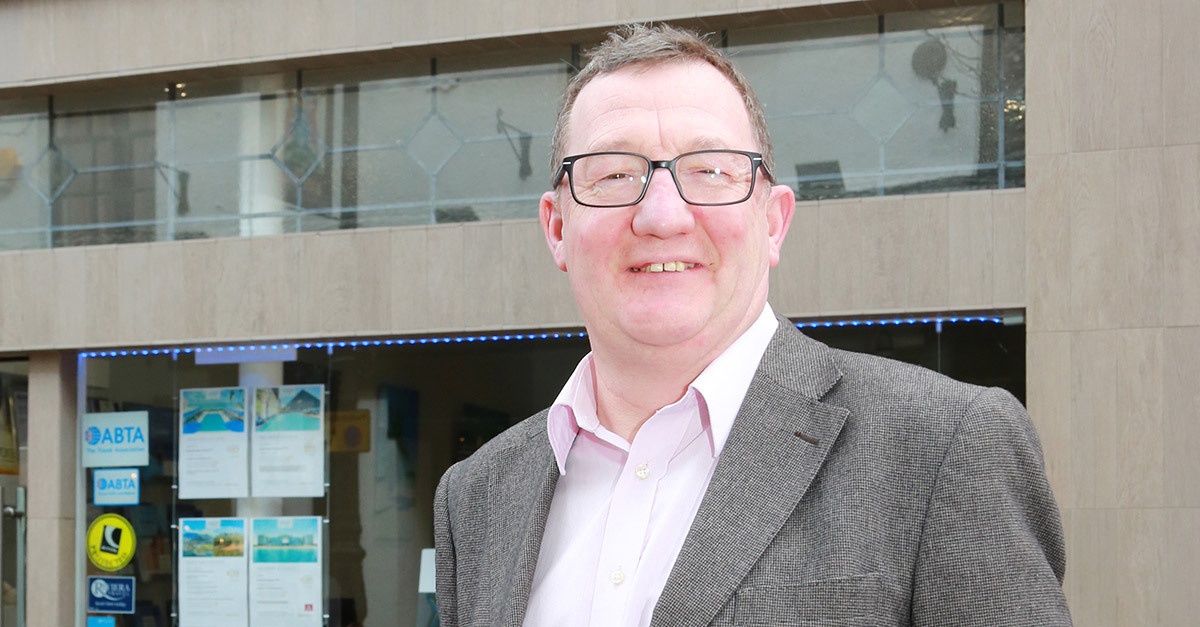
It’s important to challenge the perception that airports are always to blame, says Henbury Travel’s Richard Slater

Airports often take the blame when flights are delayed, but the reality is far more complex.
From my perspective at Henbury Travel, the airport itself is usually just one part of a much bigger operational picture – and not always the main issue.
Airlines control the aircraft, the crew, and the boarding process, and that’s where many delays actually begin. If an aircraft arrives late from its previous destination, the next flight is immediately on the back foot.
Turnaround times are tight – refuelling, cleaning, catering, and crew checks all have to happen quickly – and any delay upstream creates a knock-on effect.
Then there’s the human element, which we’ve all experienced. You can be sat on the aircraft, doors nearly closed, waiting for the last few passengers to arrive. Those final minutes are critical.
Aviation runs on very precise departure slots, and if the aircraft misses that allocated slot, it can lose its place in the queue and face a further delay – sometimes 20 or 30 minutes – simply because the airspace is at capacity.
Even once everyone is onboard, small things can slow the process. It only takes a few passengers struggling to find space in overhead lockers or taking longer than expected to get seated for boarding to overrun.
It sounds minor, but in a tightly scheduled system, those minutes really matter.
Air traffic control is another major factor, and one that sits completely outside the airport’s control. UK and European airspace is among the busiest in the world.
Flights operate within strict capacity limits, and if there’s congestion, weather disruption, or restrictions – such as closed airspace due to global events – aircraft may be held on the ground to manage the flow safely.
When pilots say they’re “waiting for a slot”, that’s exactly what they mean: a regulated departure time to ensure the skies don’t become overcrowded.
Weather also plays a part, often far beyond the UK. A storm in southern Europe or restrictions over certain regions can ripple right across the network, affecting departures from airports like Manchester hours later.
Now, having travelled through Manchester Airport frequently in recent months to a range of destinations, my own experience has actually been very positive on the ground.
Security processes have been efficient, queues well managed, and the overall passenger flow through the terminal has worked well. That’s why I think it’s important to challenge the perception created by league tables like this.
When Manchester is labelled as “one of the worst for delays”, it risks oversimplifying the issue. In reality, many of the delays passengers experience have very little to do with the airport operation itself.
They are far more likely to be driven by airline scheduling, late inbound aircraft, air traffic restrictions, and, at times, the simple practicalities of getting hundreds of people boarded efficiently.
For travellers, the key takeaway is that delays are rarely caused by a single factor.
Aviation is a finely balanced system, and when one element slips – whether it’s an aircraft arriving late, a missed slot, or congestion in the skies – the effects are felt across the entire journey.













Jacobs Media is a company registered in England and Wales, company number 08713328. 3rd Floor, 52 Grosvenor Gardens, London SW1W 0AU
© 2025 Jacobs Media
