




You are viewing 1 of your 2 free articles
Analysis: CAA notes ‘potential challenges’ to presenting flight emissions data
But information ‘should be available’ to consumers within 15 months, reports Ian Taylor

The Civil Aviation Authority (CAA) has acknowledged “potential challenges” for the industry in its requirement that all retailers of flights to and from the UK provide “clear, consistent and accurate” information on flight emissions from April next year.
But the CAA made clear its expectation in a Consumer Environmental Information framework document published in early February.
This states that “airlines and other organisations selling or advertising applicable flights in the UK (and package holidays that include applicable flights) should take adequate steps to publish environmental information for consumers on the forecast impact of individual consumers’ flight choices”.
‘Applicable flights’ are those which depart from or to UK airports.
The CAA noted: “This information should be available during the flight search and booking process . . . This includes where flights are sold as part of a package holiday.”
It stated the aim would be to “present emissions information in a clear and consistent format at the point of booking” and said: “Our expectations are that airlines and other relevant organisations will take adequate steps towards implementing this framework by April 30, 2027.”
The CAA added that it would “be reviewing flight booking providers – including airlines, travel agents and flight comparison sites – after this date [the end of April 2027].
“If airlines and other organisations . . . do not take credible steps to work towards the display of environmental information for consumers, the CAA will consider additional actions and whether a mandatory approach is necessary.”
The requirements are set out in the framework along with a summary of responses to the CAA’s 2024 consultation on draft Consumer Environmental Information proposals.
The regulator said it had “considered carefully” how flight emissions should be calculated, noting: “There are already several different methodologies used and we’re mindful of the need for harmonisation rather than creating further confusion for consumers and [an] additional burden for industry.”
It recommends airlines, tour operators and other flight retailers use one of four existing methods for calculating emissions – those developed by the UK Department for Energy Security and Net Zero, airline association Iata, EU Aviation Safety Agency EASA and Google.
The CAA acknowledged the four methodologies “use different approaches [and] result in different estimates”, but it said: “We consider these are within an acceptable tolerance for long-haul and medium-haul flights which create the bulk of aviation’s carbon emissions.”
It recommends calculations for short-haul flights be based on the either the flight distance or its duration, although it notes “a truly accurate calculation for a passenger on a specific flight can only be calculated retrospectively, using fuel-burn data for that flight”.
CAA ‘would like to see’ comparisons
The CAA began work on a framework for providing consumers with environmental information in 2021 and issued a Call for Evidence in 2023 followed by a consultation in 2024.
It noted it received more than 50 responses to the consultation responses. In a summary of these, the CAA reported: “Questions over voluntary/mandatory implementation and the inclusion of non-CO2 impacts were divisive.
“There was also disagreement on the financial/technical feasibility of integrating environmental information into booking platforms.”
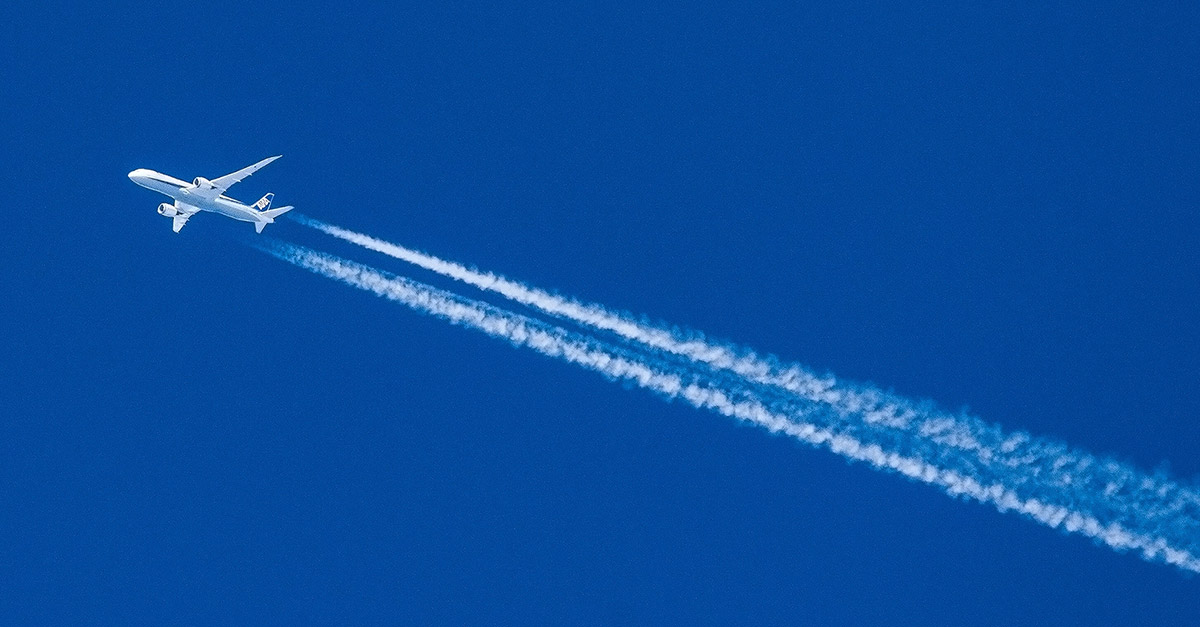
In discussing whether to include information on “non-CO2 impacts, particularly contrails [condensation trails]”, the CAA noted that there is “significant research being carried out here [in the UK] and internationally so that more accurate information on non-CO2 impacts can be provided”.
The CAA said it had considered whether emissions information on flights “should include comparisons to other modes of transport” such as road and rail, as requested in some responses to the consultation. It noted: “We would like to see this type of comparison available. However, we do not consider it airlines’ responsibility to acquire or calculate information on comparable routes on other modes [of transport].”
The regulator reported Abta had sought clarity on who would be responsible for providing emissions information when a flight formed part of a package holiday.


















Jacobs Media is a company registered in England and Wales, company number 08713328. 3rd Floor, 52 Grosvenor Gardens, London SW1W 0AU
© 2025 Jacobs Media
