




You are viewing 1 of your 2 free articles
Lower booking levels at NCLH ‘exacerbated’ by Iran war

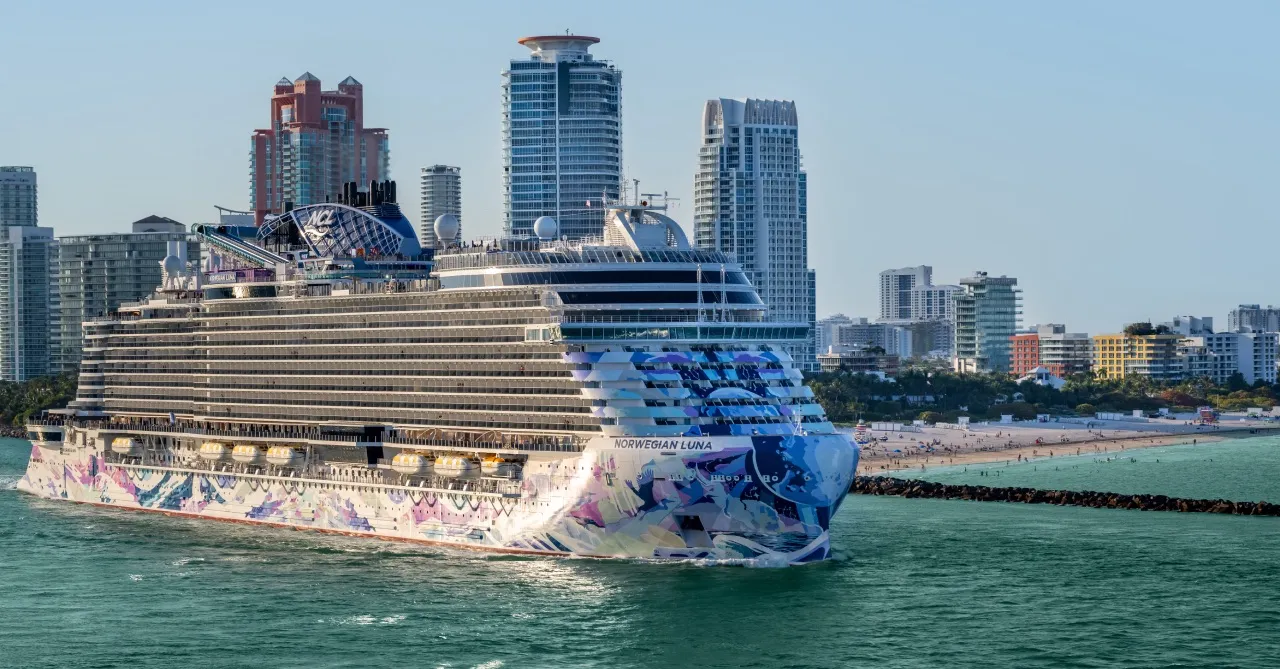
The Iran war has impacted bookings across all three brands under the Norwegian Cruise Line Holdings umbrella, forcing the company to lower its financial outlook for the year.
The company disclosed that it remains below its “optimal booking range following certain execution missteps” and this had been “exacerbated by softer demand related to heightened geopolitical uncertainty”.
The owner of Norwegian Cruise Line, Oceania Cruises and Regent Seven Seas Cruises, releasing first quarter financial results on Monday, said: “The company is experiencing headwinds related to disruptions in the Middle East, including higher fuel expense and signs of softer demand as consumers reevaluate travel plans, particularly to Europe.
“As previously noted, the company entered 2026 behind its targeted booking curve, and these headwinds have hindered the company’s ability to accelerate bookings and close that gap.
“These external pressures come as the company continues to enhance its revenue management system and improve execution, resulting in additional pressure on the business and a reduction in its full year guidance.”
Its forecast for adjusted ebitda [earnings before interest, taxes, depreciation and amortisation) was lowered to between $2.48 billion and $2.64 billion, down from $2.95 billion.
NCLH saw a change in leadership in February with former boss Harry Sommer stepping down to be replaced as chief executive by John Chidsey, who previously led Subway, Burger King, Avis and Budget Rent A Car in the US.
The first quarter results statement said: “The company remains below its optimal booking range following certain execution missteps.
“Recent events related to the conflict in the Middle East have impacted bookings across all three brands, especially in Europe during the summer season.
“While the near-term environment remains challenging, the company is taking targeted actions to better align commercial strategy, including marketing, with deployment and revenue management, with the benefits of these actions expected to materialize gradually over time.”
Action includes making $125 million in cuts to selling, general and administrative (SG&A) expenses and appointing five new independent directors “further strengthening the company’s governance and shareholder value focus”.
Chidsey said: “We delivered strong first quarter results, and more importantly we have already begun taking decisive actions to strengthen execution and accountability across the company, which will enhance results over the longer term.
“During the quarter, we acted with urgency to simplify, optimize, and streamline the organization, including executing SG&A savings initiatives totalling $125 million in expected run rate savings.
“These are long-term structural actions that we believe will help offset near-term pressures and position the business for stronger performance over time.
“As we move through the year, we will continue to manage costs and focus on revenue growth to align resources with the high-growth, high value areas of the business. I remain confident and encouraged that we are building a leaner, more effective and nimble organisation that positions NCLH for sustainable long-term value creation.”
The company had hedged approximately 51% and 28% of its total projected metric tons of fuel consumption for 2026, and 2027 respectively as of March 31. NCLH primarily hedges heavy fuel oil and marine gas oil.
Revenue for the past quarter rose by 10% year on year to $2.3 billion, driven by increased capacity, while adjusted ebitda rose by 18% to $533 million. This came as the company took delivery of new NCL ship Norwegian Luna.
Chief financial officer Mark Kampa said: “During the quarter we delivered better-than-expected cost performance across the business.
“As we navigate a more uncertain macroeconomic and geopolitical environment, we are acting diligently to offset those pressures through targeted SG&A savings and broader efficiency initiatives.
“Based on the actions taken during the quarter, we now expect full year adjusted net cruise cost excluding fuel to be approximately flat to last year, which should help support margins as we continue to strengthen execution across the business.”









More Content





Jacobs Media is a company registered in England and Wales, company number 08713328. 3rd Floor, 52 Grosvenor Gardens, London SW1W 0AU
© 2025 Jacobs Media
