




Aviation and cruise sustainability experts hopeful of progress next year

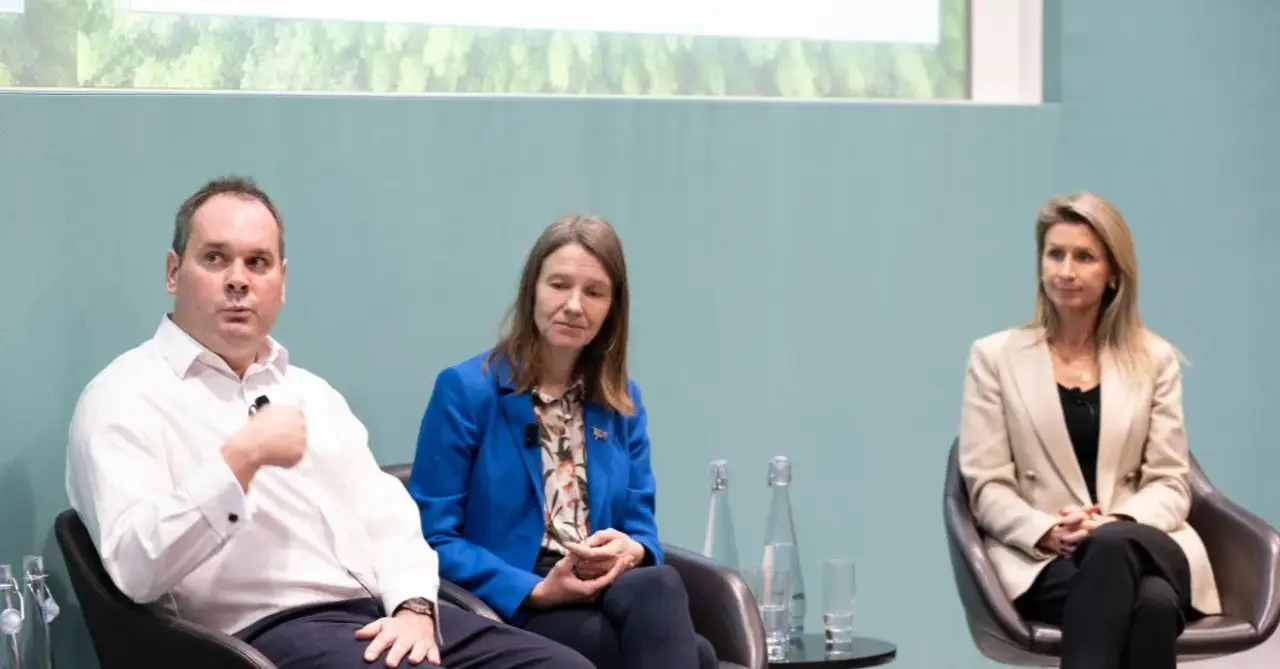
Aviation and cruise sustainability experts are hopeful of progress within the sectors next year but admit delays and increased emissions are also likely.
Speaking during a panel debate at Travel Weekly’s Sustainability Summit, Airlines UK chief executive Tim Alderslade was confident the Revenue Certainty Mechanism (RSM) – a UK government scheme to support investment in the production of Sustainable Aviation Fuel (SAF) – would come into law as planned by the end of 2026.
Progress would rely on “how quickly they can enrol contracts, depending upon the projects that come forward”, he said, but insisted: “There will be more momentum around RCM this time next year, and I think we’ll be much more developed in terms of our thinking and government’s thinking as well as the greenhouse gas removals market.”
Aviation Environment Federation policy manager Celeste Hicks agreed: “We’re not sure whether that means contracts being awarded at the end of next year, but that’s the idea. That will give us an indication of whether we’re going to hit the 2030 SAF targets.”
But she said she also expected to see “delay and increased international aviation emissions” over the next 12 months, and accused the industry as a whole of “dragging its heels” on the production of sustainable aviation fuel.
She added: “I’m not just talking about airlines here, I’m talking about the fuel suppliers, so the oil and gas companies, which are dragging their heels on producing sustainable aviation fuel. The airline manufacturers, so Boeing and Airbus, are also dragging their heels on developing new aircraft.
“Everybody’s dragging their heels. It’s easy for everybody to blame each other, but we don’t see the progress.”
Carnival UK vice-president sustainability and strategy Sophie Portlock was hopeful of progress in 2026 towards an International Maritime Organisation (IMO) deal to reduce carbon emissions globally to reach net zero by 2050, despite talks falling apart earlier this year.
Referring to a one year delay to a vote on adopting a global greenhouse gas (GHG) emissions pricing mechanism for international shipping, she said: “It will be interesting to see what happens as a result of the IMO discussions around the net zero framework.”
But she stressed the deal had not been “discarded”, adding: “It’s just been delayed by a year. That vote is now due to take place in October next year, and over the coming 12 months, there is work that is going to be done to look at some of these technical challenges and how we overcome some of those within that framework.”
While cruise only makes up 2% of the international shipping industry, ensuring alignment in the move to alternative fuels was “key” to provide confidence and clarity in the market, she stressed.
Carnival Corporation had already seen an 11% reduction in its total greenhouse gasses since a peak in 2011 following investment in energy efficiency measures and new technology, despite a 38% capacity increase over the same period of time, she said.
“That shows how these initiatives and these developments are leading to a reduction in our total carbon footprint,” she said, adding Carnival Corporation had 11 ships operating on liquefied natural gas (LNG), with 18 due to have LNG by 2033, around a third of total capacity.
She added more than 70% of the group’s fleet had shore power capability but said the challenge in Europe was the number of available ports.
“There are about 16 ports that have shore power capability that can support cruise ships of our size,” she said, but noted: “We are expecting to see a further seven ports of a shore power capability next year. So it is increasing.”






Related Content






Jacobs Media is a company registered in England and Wales, company number 08713328. 3rd Floor, 52 Grosvenor Gardens, London SW1W 0AU
© 2025 Jacobs Media
