




You are viewing 1 of your 2 free articles
BA owner ‘confident’ over summer jet fuel supplies amid ‘robust’ travel demand

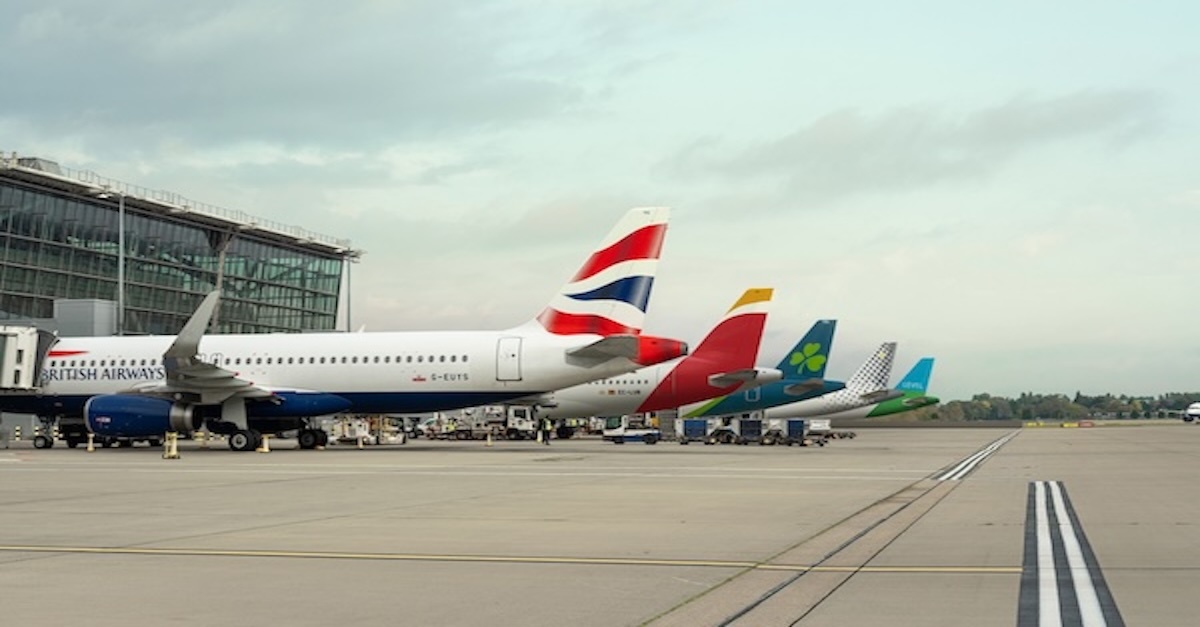
British Airways owner IAG is reviewing capacity while warning of potential global jet fuel supply restrictions if the Iran war is prolonged.
The airline group remains confident about availability across the summer, saying the situation today is more about the price of fuel than availability. It expects fuel costs to be around €9 billion for the rest of the year.
However, IAG said: “Whilst the first quarter was relatively unaffected by the Middle East conflict we expect it to have a more substantial impact throughout the rest of the year as the increase in the fuel cost starts to manifest itself.
“As a result we expect our profit to be lower than originally anticipated at the beginning of the year.”
Issuing first quarter results showing operating profit up 77% year on year to €351 million, the company said: “Demand for travel continues to be robust in our main markets and we have seen resilient booked revenue for the second quarter at 80%, which is in line with historical levels.”
IAG added: “Given the strength of our supply chain and inventory, and in particular the self-supply arrangements that we have invested in at our main hubs, based on what we know today we are confident of jet fuel supply in our main markets throughout the summer.
“If the current conflict continues to restrict flows of both crude oil and jet fuel from the Middle East, there is the potential for supplies of jet fuel to be restricted on a global basis.
“We are engaging with governments in each of our home markets as well as with the EU to ensure that the industry is getting the support it needs to navigate this situation.”
Just 3% of IAG’s capacity was exposed to the Gulf region prior to the start of the conflict, which was operated mostly by BA, with smaller amounts by Iberia and Vueling.
The group’s total affected network included the United Arab Emirates, Qatar, Saudi Arabia, Bahrain, Israel, Jordan and Cyprus.
“A large part of this network has been redeployed,” IAG noted. “In the short term this includes to add capacity on routes where there is now reduced seat supply due to fewer flights by Middle Eastern carriers.
“Examples include Bangkok, Singapore and Male. British Airways has also announced additional flights for this summer on routes that now have more direct demand, such as India and Nairobi to the United States, as well as for later this year to cater to an expected shift in demand to alternative winter sun destinations, such as the Caribbean and Sri Lanka.
“Iberia and Vueling have both reallocated Tel Aviv capacity to domestic Spain routes.
“We have also taken the opportunity of the additional aircraft availability to increase resilience into the schedules of all our brands to cover for maintenance and engineering supply chain issues and aircraft delivery delays.
“Looking longer term the group is reviewing its capacity across its networks and brands. Whilst demand is strong at the moment we remain vigilant about the upcoming winter season.”
IAG indicated that it was “well hedged” for fuel covering the rest of the year at 70%.
“Our hedging strategy has protected the business from the shorter term impact of the recent major increases in jet fuel prices. We continue to execute our policy, which gives the group a greater degree of certainty to make future pricing and capacity decisions,” a statement said.
"We have seen strong demand across most of our markets, particularly in our premium cabins and in both the north and south transatlantic markets, which together represent around half of our capacity.
“Business travel in particular continues to deliver good revenue growth.
“We have seen some long-haul yield pressure at Aer Lingus, due to the high levels of competition, as well as some softer demand in the eastern Mediterranean. The short-haul European market remains competitive.”
Chief executive Luis Gallego said: “We are pleased to report a strong first quarter, in which revenue grew by 1.9% and profit grew by 77.3% to €351 million, reflecting continued strong demand for our networks and airline brands.
“IAG is uniquely positioned to navigate the current headwinds created by the Middle East conflict thanks to our leading positions across diverse markets, strong brands, structurally high margins and strong balance sheet, as well as a strong track record of execution.
“We are actively managing the uncertainty created by the fuel price increase and its impact, taking the necessary action on yields, costs and capacity.
“We currently see no issues with fuel availability in our main markets, particularly as we benefit from our investment in fuel self-supply at our hubs.
“Whilst the impact of the higher fuel price will inevitably lead to lower profit this year than we originally anticipated, we are confident in our business model and strategy, which has made us one of the best-performing airline groups in the world, and which gives us the opportunity to prove our resilience.
“This confidence means we are on track to continue with the remaining €1 billion return of excess cash.”












More Content






Jacobs Media is a company registered in England and Wales, company number 08713328. 3rd Floor, 52 Grosvenor Gardens, London SW1W 0AU
© 2025 Jacobs Media
