




You are viewing 1 of your 2 free articles
Henbury Travel owner calls for ‘force majeure’ levy after Middle East shutdown

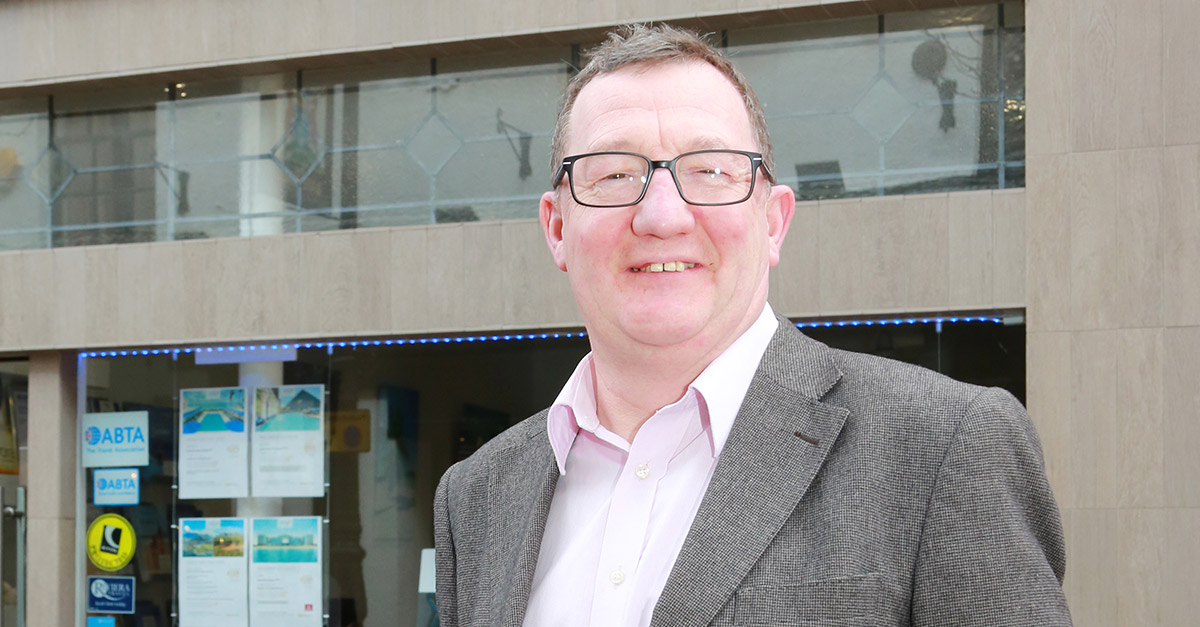
Henbury Travel managing director Richard Slater is calling for the industry to introduce a system allowing agents to receive a percentage of commission that would otherwise be lost in ‘force majeure’ cases.
The Abta board member, who is offering the proposal in a personal capacity, said the ongoing Middle East conflict has served as a reminder of the “vulnerability” of the trade’s income model, which can leave agents earning “nothing” or suffering a “direct loss”.
He has suggested several mechanisms, including a levy on every booking, with a view to creating a fund that can support agents when clients are refunded by suppliers.
In a comment article for Travel Weekly, he wrote: “If we want independent agents – and the wider retail distribution network – to invest, innovate and recruit, the commercial model must evolve. Because ‘force majeure’ should not automatically mean ‘zero pay’.
“And if we learnt anything from the last global shutdown, it should be this: hope is not a business strategy.”
More: Gulf carriers start reduced schedules to airlift stranded passengers from region
The levy, which he said could be £3-£7 per passenger or 0.5%-1% of the booking value, would be added at the point of sale, labelled on invoices and go into a ring-fenced fund.
If a booking were cancelled due to extreme circumstances, such as a conflict, natural disaster or strike, the client would receive their refund, while the fund would pay the agent “a fixed percentage of lost commission”, which could be up to 50%.
“This prevents agents earning zero on hours of work,” Slater wrote, adding: “This is not about avoiding refunds [but instead] about recognising that when global events intervene, the businesses advising, transacting and managing the crisis should not be financially punished for doing so.”
He said the levy could be described to customers as a “travel disruption support contribution”, helping to protect their booking process and ensuring agents can continue supporting when needed.
He added the alternatives could include an association or consortium-wide mutual risk pool, an opt-in ‘commission protection’ add-on or a micro-insurance model.
A more “radical” idea would be changing the timing of commission payments, so 50% is earned at the ticketing stage and 50% at departure.
Slater has invited the Abta board to discuss the proposal at its next meeting.
More Content











More Content






Jacobs Media is a company registered in England and Wales, company number 08713328. 3rd Floor, 52 Grosvenor Gardens, London SW1W 0AU
© 2025 Jacobs Media
