




You are viewing 1 of your 2 free articles
Ryanair warns of rising costs but demand remains ‘robust’

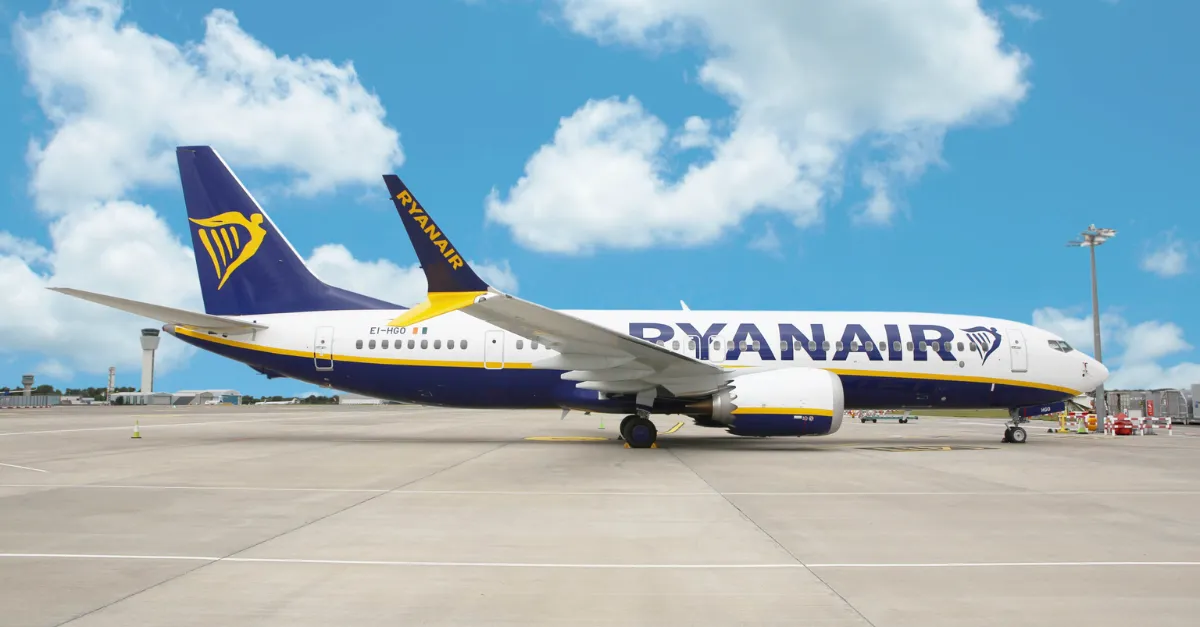
No-frills carrier Ryanair has warned its costs for 2026-27 could rise by a “mid-single digit percentage” – while fares for this coming summer season are “broadly flat”.
Its results statement for the year to the end of March said costs could increase because of rises in its unhedged fuel prices, EU environmental taxes, maintenance costs and some “significant” crew pay increases.
The statement added: “Pricing in recent weeks has eased somewhat in response to economic uncertainty caused by higher oil prices, the fear of fuel shortages and the risk of inflation adversely impacting consumer spending.”
Fares for the current quarter are expected to be behind the same period last year, which had covered a full Easter holiday period.
With constrained EU short-haul capacity, the carrier had originally expected summer 2026 fares to rise modestly ahead of last year but pricing is now trending “broadly flat”.
“With zero H2 visibility and significant fuel price/potential supply volatility it is far too early to provide any meaningful FY27 profit guidance at this time,” added the statement.
“The final FY27 outcome remains heavily exposed to adverse external developments, including conflict escalation in the Middle East and Ukraine, risks to fuel supply shortages, higher for longer fuel prices on our unhedged 20%, macro-economic shocks and European air traffic control strikes and mismanagement.”
Passenger numbers for 2025-26 rose 4%, from 200.2 million to 208 million, despite delivery delays on 29 Boeing aircraft.
It recorded a full-year profit after tax of €2.26 billion, up 40% from €1.61 billion last year, with fares up 10% – recovering last year’s 7% fare decline.
Ryanair Group chief executive Michael O’Leary, said: “Demand – despite the current Middle East conflict – remains robust, although the booking window is closer-in than last year.”
He noted Ryanair has 130 new summer 2026 routes on sale including new bases in Rabat, Tirana and Trapani.
“Our scarce FY27 capacity growth is allocated to those regions and airports who have cut aviation taxes and are incentivising traffic growth – such as Albania, Italy, Morocco, Slovakia and Sweden – as we switch flights and routes away from uncompetitive high tax markets like Austria, Belgium, Germany and regional Spain.”
Commenting on fuel prices, he said: “The conflict in the Middle East has created economic uncertainty and we still don’t know when the Strait of Hormuz will reopen.
“Despite this, Europe remains relatively well supplied with jet-fuel, with significant volumes sourced from West Africa, the Americas and Norway.”
He said jet-fuel prices are expected to remain at elevated levels for some months but noted Ryanair’s “conservative” hedging strategy “will insulate group earnings in the current very volatile oil markets”.
The group expects passenger numbers for the financial year ending March 31, 2027, to rise 4% to about 216 million – and it predicted profitable growth to more than 300 million annual passengers by FY34.
Furthermore, the group said its lawyers are “confident” that a fine levied in December 2025 by the Italian competition authority over its direct-sell policy in the country will be overturned on appeal.
An exceptional €85 million provision – about 33% of the €256 million fine – is included as an exceptional charge in the full-year results.
The statement also revealed O’Leary is in talks to extend his contract from 2028 until April 2032.
• Conroy Gaynor, consumer analyst at Bloomberg Intelligence, commented: “Ryanair’s weaker fares commentary suggests net income consensus for the fiscal year ending March 2027 could fall by a double-digit percentage despite its 4Q26 beat and better fuel hedging than peers.
“A later bookings curve since the Iran war appears to be adding to demand risk for the key summer period, while environmental costs and a spike in unhedged fuel price add further margin pressure.”
More: Ryanair profits slip in face of ‘baseless’ €256m Italian direct-sell fine












More Content





Jacobs Media is a company registered in England and Wales, company number 08713328. 3rd Floor, 52 Grosvenor Gardens, London SW1W 0AU
© 2025 Jacobs Media
