




Airbus projects almost 100 extra aircraft deliveries this year

Airbus expects to raise airliner deliveries by almost 100 this year after reporting a “landmark” 2025.
The European manufacturer delivered 793 commercial aircraft last year, a number projected to rise to 870 this year.
The forecast came as the company delivered a net profit of €5.2 billion against €4.2 billion in 2024 as revenues rose 6% year on year to hit €73.4 billion.
The order backlog amounted to a record of 8,754 commercial aircraft at the end of 2025.
However, Pratt & Whitney’s failure to commit to the number of engines ordered by Airbus is “negatively impacting” this year’s guidance for the A320 range.
“As a consequence, the company now expects to reach a rate of between 70 and 75 aircraft a month by the end of 2027, stabilising at rate 75 thereafter,” Airbus noted.
Airbus continues to target a rate of five a month for the A330 in 2029 and 12 for the A350 in 2028.
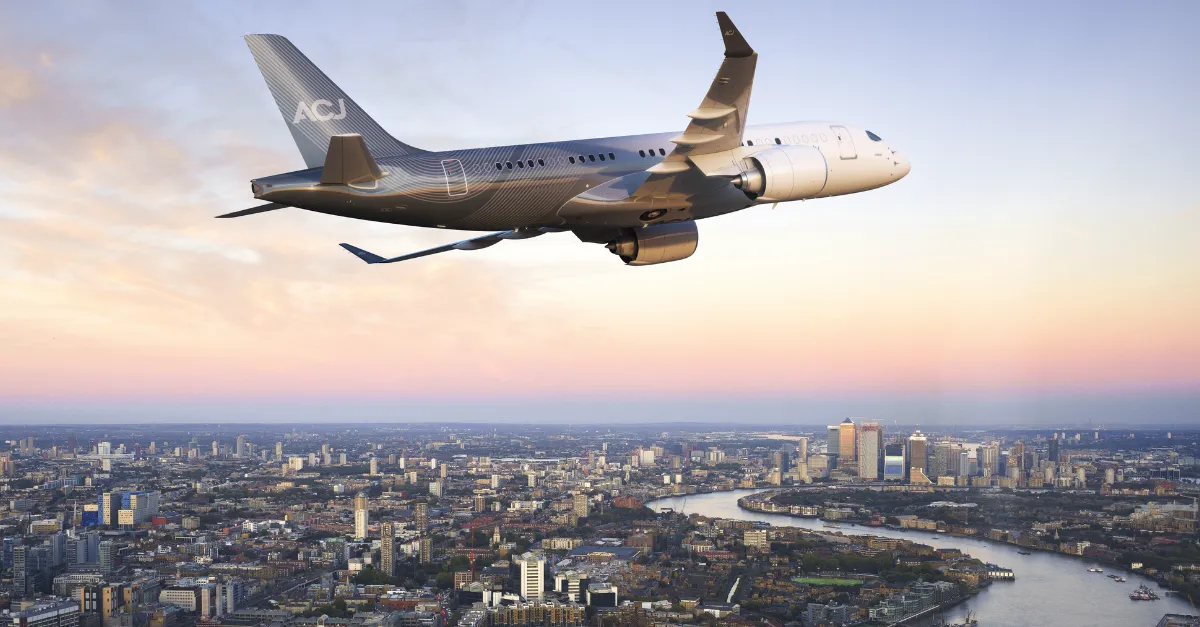
The company also continues to make “tactical adjustments” the ramp-up of production of A220 short-haul aircraft (pictured).
It is now targeting a rate of 13 aircraft a month in 2028.
“The A220 production ramp-up is ongoing and still paced by the integration of [supplier] Spirit AeroSystems work packages and the balance between supply and demand,” Airbus said.
Spirit AeroSystens was taken over by Airbus rival Boeing in December.
The company’s 2026 guidnace “assumes no additional disruptions to global trade or the world economy, air traffic, the supply chain, its internal operations, and its ability to deliver products and services”.
Airbus chief executive Guillaume Faury said: “2025 was a landmark year, characterised by very strong demand for our products and services across all businesses, a record financial performance, and strategic milestones.
“We successfully navigated a complex and dynamic operating environment to deliver on our updated guidance.
“Global demand for commercial aircraft underpins our ongoing production ramp-up, which we are managing while facing significant Pratt & Whitney engine shortages.
“These 2025 results and the confidence in our future financial performance support the proposed higher dividend payment.”













Related Content







Jacobs Media is a company registered in England and Wales, company number 08713328. 3rd Floor, 52 Grosvenor Gardens, London SW1W 0AU
© 2025 Jacobs Media
