




You are viewing 2 of your 2 free articles
More than 100 disabled air passengers’ wheelchairs a month lost or damaged

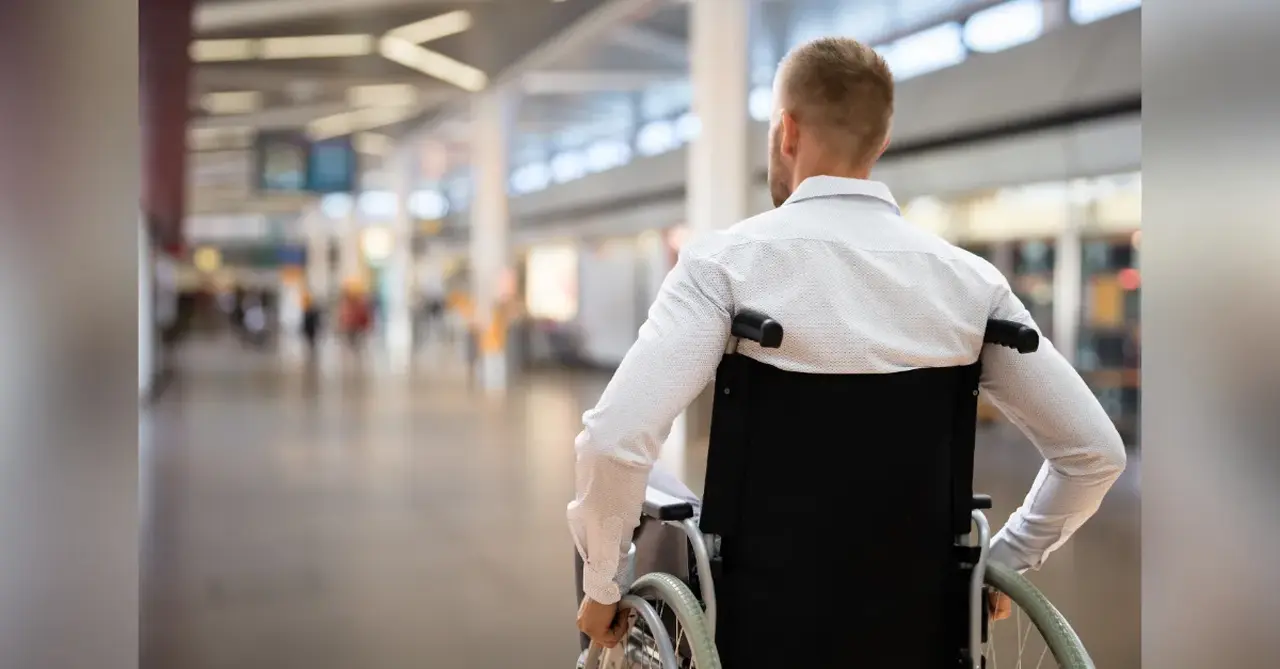
The Civil Aviation Authority (CAA) launched a consultation on airlines’ mishandling of mobility aids last week to gauge the extent of loss, delay and damage to aids.
It noted anxiety at the prospect of loss or damage affects mobility aid users’ willingness to travel and greater transparency would help users “make an informed choice” about travelling and “incentivise airlines and airports” to improve the handling of aids.
The CAA proposes airlines publish quality and uniform data on the extent of mobility aid carriage and incidence of loss, delay and damage, noting this information “should already be collected” under existing regulation.
However, when the CAA requested information from 13 airlines on the transport of wheelchairs in August last year, the type and quality of information for 2023 and 2022 varied and not all had data on the number of wheelchairs delayed, lost or damaged.
The 13 airlines carried 77% of all international passengers and 95% of UK domestic passengers at the time.
Five carriers provided information based on their own reporting systems, five based on consumer claims for damage – with the CAA noting some consumers would claim on their insurance, not with the airline – and three had no information on damaged wheelchairs.
Of the 283,000 wheelchairs carried in 2023, the data suggested 0.43% or 1,217 had been damaged – meaning a rate of more than 100 a month.
In 2022, when almost 20% fewer wheelchairs (230,000) were carried, the proportion damaged was higher at 0.44%.
The CAA concluded the total number damaged was almost certain to be higher given the airlines’ failure to meet the data requirements.
Only three airlines could provide information on how they remedied the damage and none could differentiate between different types of wheelchairs, such as manual or electric or mobility scooters.
The CAA concluded: “The limited nature of the information provided suggests there are gaps in information collection amongst airlines [which] raises concerns that businesses are not consistently monitoring their own performance and meeting their obligations under the Regulation.”
It noted: “Airlines should already be capturing this information.”
The consultation proposes airlines be required to publish quarterly data on the number of mobility aids they carry, the number carried from and to each UK airport of departure or arrival, and the proportion lost, delayed or damaged broken down by UK airport.
This would apply to all airlines operating at least 0.5% of international or domestic flights to and from the UK.
The government-commissioned an Aviation Accessibility Task and Finish Group, chaired by Baroness Tanni Grey-Thompson, last year to provide recommendations on making flying more accessible.
These were published in July, when Travel Weekly reported the CAA was poised to consult on airlines’ carriage of wheelchairs and the rate at which loss or damage occurs.
An industry source noted then: “Certain airlines and airports are worse in this regard. The consultation will shine a light on this and whether the CAA can do some targeted enforcement.”


















Jacobs Media is a company registered in England and Wales, company number 08713328. 3rd Floor, 52 Grosvenor Gardens, London SW1W 0AU
© 2025 Jacobs Media
