




You are viewing 1 of your 2 free articles
Cruise lines and governments should focus on ‘fuel flexibility’ to reach ‘crucial’ emission targets

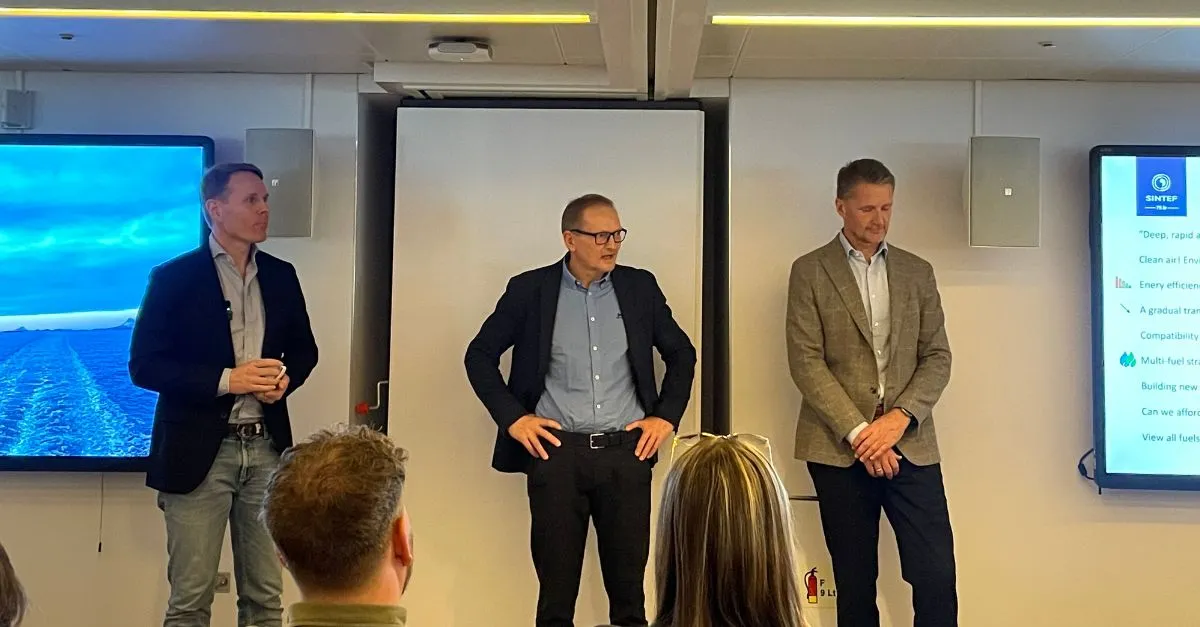
Norwegian coastal specialists and environmental and fuel experts have urged the cruise industry and governments to focus on “fuel flexibility” and “stepping stone” options to reach emissions targets.
These targets come from the International Maritime Organisation, which is the chief regulating body for shipping, which say emissions need to be reduced by 20% to 30% by 2030, and 70% to 80% by 2040.
Currently these emissions are the equivalent to the top sixth or seventh highest-emitting country in the world and have doubled since 1990 and stayed around the same level since 2008.
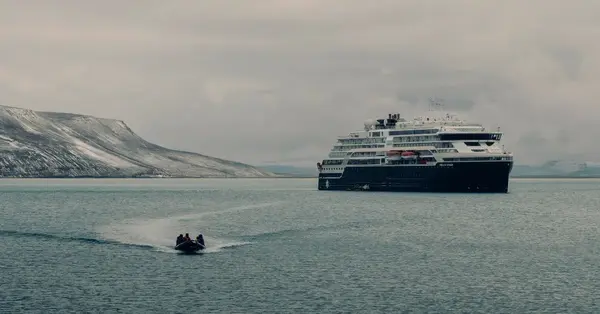
Speaking on board Havila Voyages’ first hybrid biogas and battery-powered sailing through the Norwegian fjords, experts said these emissions targets “need to be considered” in the next tender process for the Norwegian Coastal Express Route in 2030, with an uptake of 5 to 10% in alternative fuels needed to reach those goals.
Gunnar Malm Gamlem, project manager at research body SINTEF Ocean, said the industry needed “rapid, deep and sustained decarbonisation” and that it was “crucial” to evaluate environmental technology using more metrics.
He said: “We need all of those three [things together- rapid, deep and sustained], so we should not evaluate environmental technology only on their potential, as we tend to do, but also on their maturity, availability, realism and technology readiness level.”
Gamlem added: “We do not get to zero [emissions] unless we start working on alternative fuels.
“Regulations so far, and all the efforts from the shipping companies, have indeed focused only on the energy efficiency side, and therefore renewed effort on the alternative fuels issue itself is needed.”
He acknowledged there was “no clear answer” as to which fuel would be best in the long run given none were “inherently good or bad”.
However, Gamlem said the “family of biofuels” were a “fantastic solution” as there are many production avenues and it can be made from many waste substances.
He suggested “multi-fuel engines” were “a good way forward” to have “more options in an uncertain fragmented supply landscape”, which governments and regulators should consider more, rather than options with “no way back”.
“The important thing is gas is a step forward compared to diesel, and if you take that today, you have a head start,” he said. “It may not be the best solution, but it’s a step forward, and that’s important as it provides you with a stepping stone.”
He said: “All fuels should be based on their environmental performance and not ideology.
“In my opinion, if the cat is white or black, it doesn’t matter as long as it catches mice, and it’s the same with fuels, reducing emissions is the key, not which one.”
He said it was “a major mistake” to think everyone “should all end up with the same fuel or energy source”, as there are “plenty” across bio, electricity, nuclear and carbon capture and storage technology to research and “implement eventually”.
Havila Voyages chief executive Bent Martini revealed the company had invested at least 500 million Norwegian krone since 2017 in building vessels that were “as environmentally friendly as possible, knowing the [environmental] technology was not necessarily there”.
He described using biogas as “low-hanging fruit” for the operator to reduce emissions and “a fantastic way to become climate neutral quickly”.
Martini added: “We are very ambitious as a company and our target is to be climate neutral by the end of 2028, and by starting to blend in in like biogas, to be emission-free by 2030.”
He highlighted the “enormous potential” in Norway to produce more biogas, from 800 gigawatts per year to 12 terawatts, which would be more than enough to support the four-ship fleet’s requirements of 300 gigawatts.
“There is a win-win situation for everyone where you utilise the waste, reduce the footprint enormously and create a lot of potential work and employment along the Norwegian coast in producing the biogas,” he said.
However, when asked why, if there are so many benefits, more are not getting involved in biogas, Martini said: “I think it is easiest for everyone is just to wait until someone decides what to do.
“That is not in our DNA. We would like to be at the forefront, and we are sharing whatever we are doing, so it is not a secret activity.”
Martini added that the costs were currently “very expensive” but with incoming EU regulations, the cost of emissions will be “very, very high” in the next two years.
Molgas Energy director of marine Gunnar Helmen, who was involved in producing the biogas for the sailing, agreed gas was “the best path for the moment” from fossil fuels, although he acknowledged “we may not know what may happen in future”.
“I feel politically, we are dragging our feet behind,” he said. “My main takeaway is time is of essence, and we need to do all the steps we can.”
He said EU regulations could change the energy landscape and introduce a mechanism where “slow movers have to pay for first movers”
He said he was “scared” that not enough progress had been made since the first ferry sailing using LNG 25 years ago, and discussions and developments around new fuels such as hydrogen and ammonia “are going to drag us back another 25 years”.
HAV Group chief executive Gunnar Larsen, who designed the ships in the Havila Voyages fleet, said developing available technology and infrastructure, the high cost and low uptake of new fuels was “a big problem”.
Larsen added: “As a ship designer, we can look at all types of technologies, and we can implement them to make the ships as environmentally friendly as possible, and we can do it now, but it’s also about regulations, international regulations, and about support and engagement with technologies that are mature.”
Related Content










Jacobs Media is a company registered in England and Wales, company number 08713328. 3rd Floor, 52 Grosvenor Gardens, London SW1W 0AU
© 2025 Jacobs Media
