




Ryanair adds Marrakesh, Tirana and Warsaw to Liverpool network

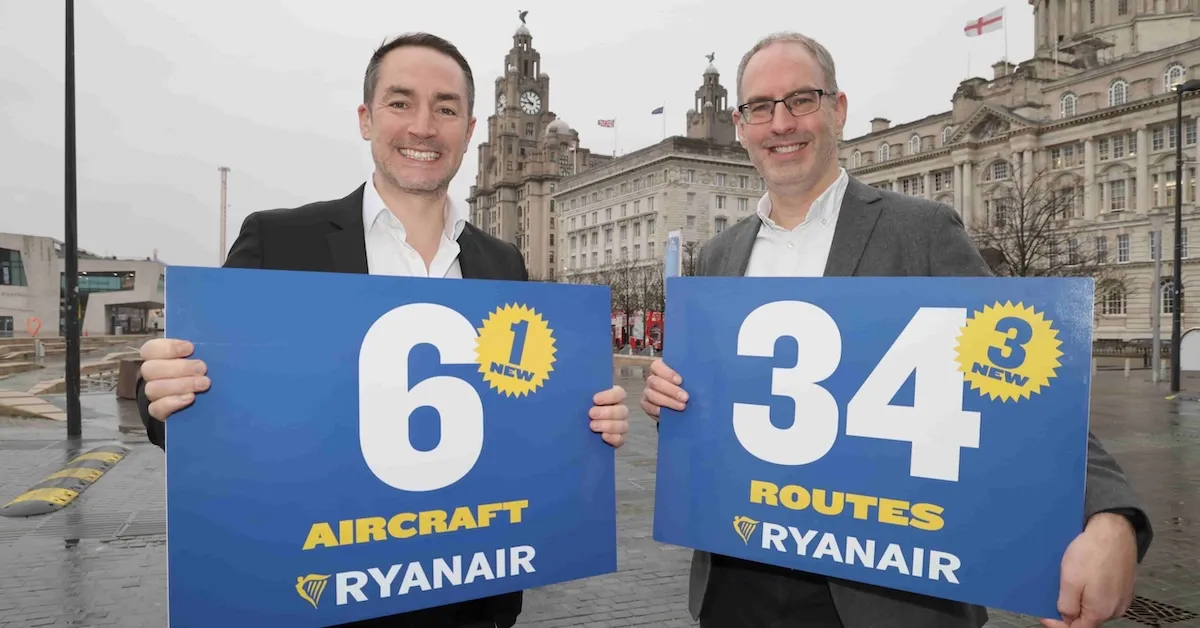
Budget carrier Ryanair will add a sixth based aircraft in Liverpool for summer 2026, enabling the addition of three new routes and extra capacity on 11 existing services.
It said the extra aircraft will deliver 250,000 additional seats – representing growth of 15% – with new routes to Marrakesh, Tirana and Warsaw, plus extra flights to other European sunshine and city destinations.
The total number of destinations served from Liverpool will rise to 34 and Ryanair’s annual passenger numbers at Liverpool are expected to grow to a record 2.4 million.
John Irving, chief executive at Liverpool John Lennon Airport, said: “As our longest serving airline partner of nearly 40 years with around 40 million of their passengers having chosen to travel via Liverpool in that time, firstly I’d like to thank Ryanair for their continued support and for this latest commitment.
“As 2025 draws to a close, on what has been one of Liverpool Airport’s busiest years ever, Ryanair’s decision to base a sixth aircraft at Liverpool in 2026 with an additional 250,000 seats on sale, is likely to help the airport go on to break all previous passenger records.”
The airline said the move represents an investment of $600 million (about £450 million) in the northwest.
Jason McGuinness, Ryanair’s chief commercial officer, said: “Ryanair’s supercharged investment and growth at Liverpool will deliver more than two million low-fare seats to 34 European destinations, offering customers in the northwest more choice at the lowest fares in Europe, while simultaneously driving inbound tourism.”
He also took a swipe at the chancellor’s decision to continue increasing Air Passenger Duty, commenting: “While Ryanair is growing at Liverpool next summer, other regional airports across the UK are being hamstrung by Rachel Reeves’ idiotic decision to increase APD.
“If the UK government is serious about delivering growth, they should abolish this penal and damaging APD tax, which makes the UK (particularly regional airports) uncompetitive compared to EU countries like Sweden, Hungary, Slovakia and regional Italy, which are abolishing aviation taxes and lowering access costs to stimulate traffic, tourism and jobs growth.”















Jacobs Media is a company registered in England and Wales, company number 08713328. 3rd Floor, 52 Grosvenor Gardens, London SW1W 0AU
© 2025 Jacobs Media
